Kankakee committee debates gaming limits, closing times and license rules; sends Chapter 4 amendments to council
May 08, 2026 | Kankakee City, Kankakee County, Illinois
This article was created by AI summarizing key points discussed. AI makes mistakes, so for full details and context, please refer to the video of the full meeting. Please report any errors so we can fix them. Report an error »
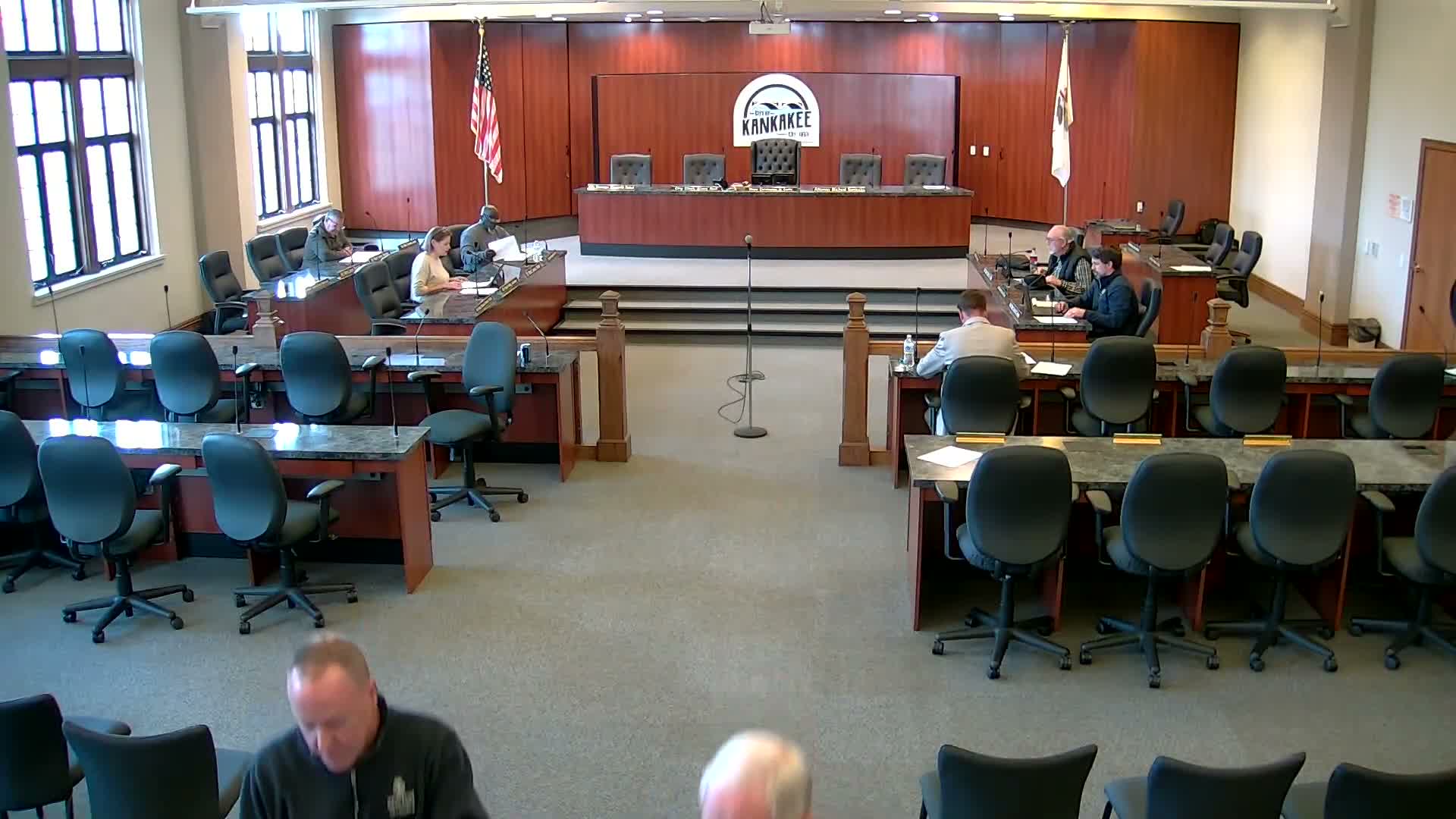
The License & Franchise Committee debated tighter local controls on video gaming, renewal rules and other Chapter 4 liquor‑code changes and voted to forward a package of proposed amendments to the City Council.
Committee members reviewed model language from Palatine and discussed several policy options: require businesses to be in operation for a year before becoming eligible for video gaming, separate gaming approval from municipal liquor licenses, cap the number of class A liquor licenses and restrict gaming in certain license classes (for example, convenience stores and grocery stores). Alderman Barron and others raised social‑impact concerns and cited figures they described as $1.6 million in player losses flowing through local machines in a month; the figure was used to argue for stricter local limits.
The liquor commissioner outlined a draft set of amendments to Chapter 4 the committee reviewed: move the municipal renewal deadline and create tiered late fees ($250–$750 depending on delay); establish a time limit for an approved applicant to purchase and activate a license (committee settled on 90–180 days during discussion, with the final text to allow commissioner discretion to extend); create an automatic termination if a licensed business remains closed for more than 90 days without submitting a written plan to the liquor commissioner; tighten closing‑time enforcement (committee agreed entry doors should be locked at 2 a.m. so no one may enter after closing hours) and limit special‑use licenses to in‑county entities or impose a higher fee for out‑of‑county applicants.
Supporters argued these changes will prevent businesses from holding licenses indefinitely, reduce administrative confusion and give the city stronger enforcement tools. Opponents cautioned that small restaurants and taverns often rely on gaming revenue and that overly restrictive rules could force closures or push customers to neighboring municipalities. The mayor (speaking as liquor commissioner) and multiple aldermen said the committee should adopt a cautious path that allows attrition and targeted limits rather than an across‑the‑board ban.
By motion, the committee approved forwarding the proposed Chapter 4 amendments to the full City Council for consideration, with edits discussed during the meeting (including a 90‑day default purchase window with commissioner discretion to extend, and 02:30 as the acceptable locked‑door closing time). The liquor commissioner said the ordinance language will be finalized by in‑house counsel before the June council meeting.
Committee members reviewed model language from Palatine and discussed several policy options: require businesses to be in operation for a year before becoming eligible for video gaming, separate gaming approval from municipal liquor licenses, cap the number of class A liquor licenses and restrict gaming in certain license classes (for example, convenience stores and grocery stores). Alderman Barron and others raised social‑impact concerns and cited figures they described as $1.6 million in player losses flowing through local machines in a month; the figure was used to argue for stricter local limits.
The liquor commissioner outlined a draft set of amendments to Chapter 4 the committee reviewed: move the municipal renewal deadline and create tiered late fees ($250–$750 depending on delay); establish a time limit for an approved applicant to purchase and activate a license (committee settled on 90–180 days during discussion, with the final text to allow commissioner discretion to extend); create an automatic termination if a licensed business remains closed for more than 90 days without submitting a written plan to the liquor commissioner; tighten closing‑time enforcement (committee agreed entry doors should be locked at 2 a.m. so no one may enter after closing hours) and limit special‑use licenses to in‑county entities or impose a higher fee for out‑of‑county applicants.
Supporters argued these changes will prevent businesses from holding licenses indefinitely, reduce administrative confusion and give the city stronger enforcement tools. Opponents cautioned that small restaurants and taverns often rely on gaming revenue and that overly restrictive rules could force closures or push customers to neighboring municipalities. The mayor (speaking as liquor commissioner) and multiple aldermen said the committee should adopt a cautious path that allows attrition and targeted limits rather than an across‑the‑board ban.
By motion, the committee approved forwarding the proposed Chapter 4 amendments to the full City Council for consideration, with edits discussed during the meeting (including a 90‑day default purchase window with commissioner discretion to extend, and 02:30 as the acceptable locked‑door closing time). The liquor commissioner said the ordinance language will be finalized by in‑house counsel before the June council meeting.
View the Full Meeting & All Its Details
This article offers just a summary. Unlock complete video, transcripts, and insights as a Founder Member.
✓
Watch full, unedited meeting videos
✓
Search every word spoken in unlimited transcripts
✓
AI summaries & real-time alerts (all government levels)
✓
Permanent access to expanding government content
30-day money-back guarantee
