North Clackamas CARE program faces at least $65,000 loss; staff propose 7–8% fee increase and scholarship cap
May 08, 2026 | North Clackamas SD 12, School Districts, Oregon
This article was created by AI summarizing key points discussed. AI makes mistakes, so for full details and context, please refer to the video of the full meeting. Please report any errors so we can fix them. Report an error »
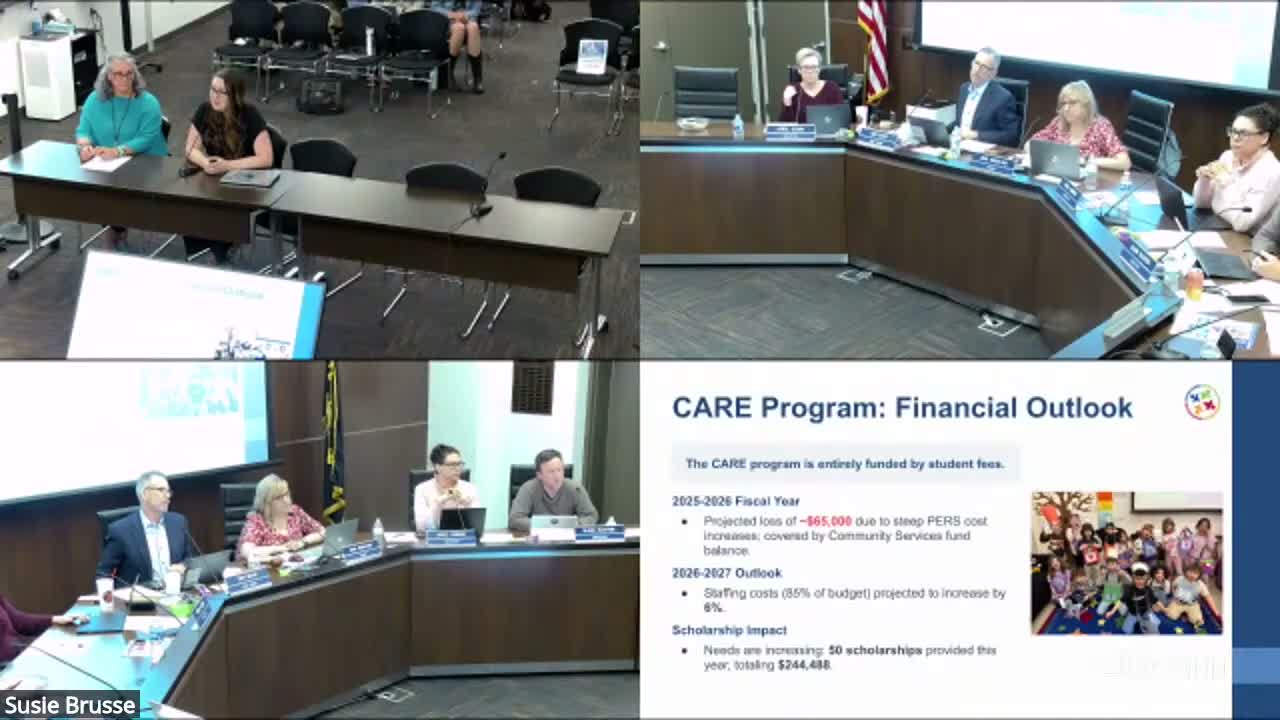
Natalie Whisler, director of community services, and Chief of Operations Teresa Webster presented the annual CARE program update and told the board the program is entirely fee‑funded and designed to be self‑sustaining. The program has doubled in size since 2018; spring program quality scores averaged 4.56 on a 1–5 scale, staff said.
Whisler reported that the program is projecting at least a $65,000 loss this year, primarily because staffing accounts for roughly 85% of CARE’s budget and PERS cost increases and substitute staffing pushed costs higher. The program provided 50 scholarships this year totaling $244,000; staff said they have capped scholarships to preserve financial sustainability, noting that the cap reflects available funds rather than total need.
To close the gap, staff proposed a 7–8% fee increase effective Sept. 1; an example shown to the board increased an after‑school monthly fee from $400 to $430. Whisler said the increase and conservative enrollment assumptions make it likely the program could break even next year, but that outcome remains close and depends on staffing costs and enrollment trends.
Board members asked about waitlists, capacity, and whether CARE could accept federal ERDC funds. Staff said CARE is not licensed as a daycare and therefore cannot accept ERDC without significant operational changes, including staffing and background‑check requirements; some districts do accept ERDC but state and federal rules create substantial obstacles at the moment.
Directors thanked CARE staff for program improvements and noted the social value of keeping families able to work. No formal vote on fees was taken; staff said proposed fee increases will return to the board for action at a future meeting.
Whisler reported that the program is projecting at least a $65,000 loss this year, primarily because staffing accounts for roughly 85% of CARE’s budget and PERS cost increases and substitute staffing pushed costs higher. The program provided 50 scholarships this year totaling $244,000; staff said they have capped scholarships to preserve financial sustainability, noting that the cap reflects available funds rather than total need.
To close the gap, staff proposed a 7–8% fee increase effective Sept. 1; an example shown to the board increased an after‑school monthly fee from $400 to $430. Whisler said the increase and conservative enrollment assumptions make it likely the program could break even next year, but that outcome remains close and depends on staffing costs and enrollment trends.
Board members asked about waitlists, capacity, and whether CARE could accept federal ERDC funds. Staff said CARE is not licensed as a daycare and therefore cannot accept ERDC without significant operational changes, including staffing and background‑check requirements; some districts do accept ERDC but state and federal rules create substantial obstacles at the moment.
Directors thanked CARE staff for program improvements and noted the social value of keeping families able to work. No formal vote on fees was taken; staff said proposed fee increases will return to the board for action at a future meeting.
Don't Miss a Word: See the Full Meeting!
Go beyond summaries. Unlock every video, transcript, and key insight with a Founder Membership.
✓
Get instant access to full meeting videos
✓
Search and clip any phrase from complete transcripts
✓
Receive AI-powered summaries & custom alerts
✓
Enjoy lifetime, unrestricted access to government data
30-day money-back guarantee
