Alton zoning board approves replacement of long-vacant trailer with conditions after abutter objections
May 08, 2026 | Alton Town, Belknap County, New Hampshire
This article was created by AI summarizing key points discussed. AI makes mistakes, so for full details and context, please refer to the video of the full meeting. Please report any errors so we can fix them. Report an error »
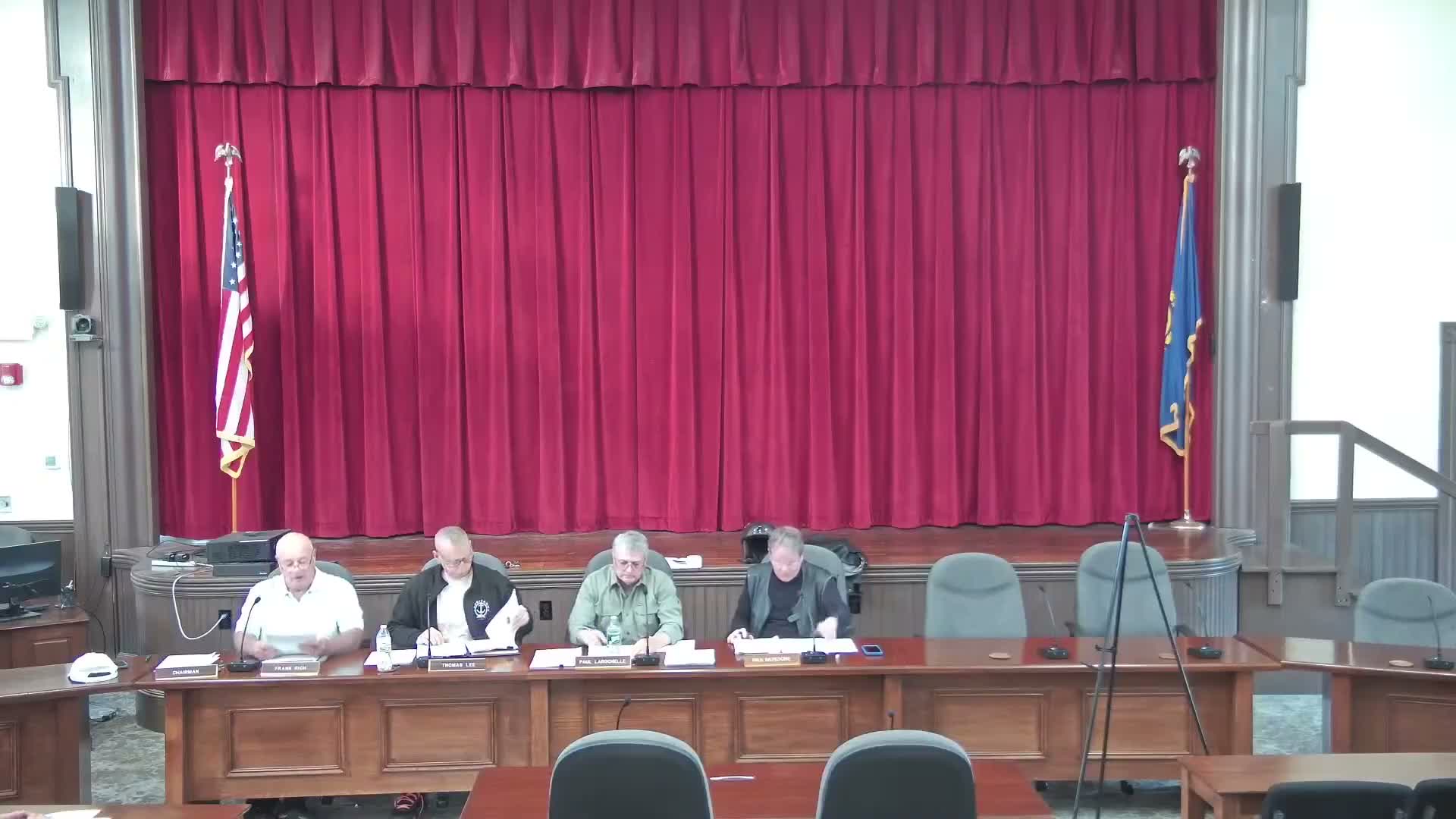
The Town of Alton Zoning Board of Adjustment on Thursday approved special-exception application Z26-08 to replace an aging trailer on Loom Cove with a stick-built dwelling, imposing conditions aimed at limiting its size and future use after several neighbors urged denial.
Abutter Anne Normansito told the board she had walked past the property daily and that the trailer had been vacant for “several years, probably 5 to 8 years,” and urged the board “not to grant the special exception to tear down and enlarge this trailer.” Multiple neighbors described the structure as an eyesore, questioned whether the use had been abandoned, and warned that enlarging living space could increase occupancy and invite short-term rental activity.
Board members framed their decision around the town ordinance provisions governing replacement of nonconforming structures (3 20 e 2) and the standard for abandonment. Paul Monzioni, the alternate member seated for the meeting, said the board must apply the replacement rule: “If they meet the requirements of 3 20 e 2, then I think the board has to approve.” The board said replacement is allowed so long as applicable limits — notably on bedroom counts and nonconformity increases — are met.
The applicant, identified at the hearing as the agent for 47 Loom Cove LLC, said the project would move the building out of setbacks, add living space by enclosing a porch, and be offered as a long-term rental. The applicant told the board he did not intend to operate short-term rentals and said he was “trying to make it better.”
To address neighbors’ concerns, the board approved the application with the following conditions: the structure must not be expanded to include a second story (height not to exceed the current trailer height), parking shall accommodate at least three vehicles, and the unit must be restricted to long-term rental (leases over 30 days) only. The applicant indicated acceptance of the conditions during the hearing. The motion passed with the board answering “Aye” on the record.
The board’s discussion emphasized a narrow reading of its authority: members said they were bound to apply the ordinance criteria rather than broader neighborhood-impact hypotheticals. The record shows the board relied on a DES septic approval cited by the applicant and on site plans showing the building pulled back out of the setback.
What happens next: the applicant must comply with the stated conditions as part of the zoning approval; neighbors retain enforcement remedies if conditions or representations are violated. No further appeal or enforcement action was recorded during the meeting.
Abutter Anne Normansito told the board she had walked past the property daily and that the trailer had been vacant for “several years, probably 5 to 8 years,” and urged the board “not to grant the special exception to tear down and enlarge this trailer.” Multiple neighbors described the structure as an eyesore, questioned whether the use had been abandoned, and warned that enlarging living space could increase occupancy and invite short-term rental activity.
Board members framed their decision around the town ordinance provisions governing replacement of nonconforming structures (3 20 e 2) and the standard for abandonment. Paul Monzioni, the alternate member seated for the meeting, said the board must apply the replacement rule: “If they meet the requirements of 3 20 e 2, then I think the board has to approve.” The board said replacement is allowed so long as applicable limits — notably on bedroom counts and nonconformity increases — are met.
The applicant, identified at the hearing as the agent for 47 Loom Cove LLC, said the project would move the building out of setbacks, add living space by enclosing a porch, and be offered as a long-term rental. The applicant told the board he did not intend to operate short-term rentals and said he was “trying to make it better.”
To address neighbors’ concerns, the board approved the application with the following conditions: the structure must not be expanded to include a second story (height not to exceed the current trailer height), parking shall accommodate at least three vehicles, and the unit must be restricted to long-term rental (leases over 30 days) only. The applicant indicated acceptance of the conditions during the hearing. The motion passed with the board answering “Aye” on the record.
The board’s discussion emphasized a narrow reading of its authority: members said they were bound to apply the ordinance criteria rather than broader neighborhood-impact hypotheticals. The record shows the board relied on a DES septic approval cited by the applicant and on site plans showing the building pulled back out of the setback.
What happens next: the applicant must comply with the stated conditions as part of the zoning approval; neighbors retain enforcement remedies if conditions or representations are violated. No further appeal or enforcement action was recorded during the meeting.
View the Full Meeting & All Its Details
This article offers just a summary. Unlock complete video, transcripts, and insights as a Founder Member.
✓
Watch full, unedited meeting videos
✓
Search every word spoken in unlimited transcripts
✓
AI summaries & real-time alerts (all government levels)
✓
Permanent access to expanding government content
30-day money-back guarantee
