Strawberry growers tell committee they can grow without Paraquat; others warn transition costs
May 08, 2026 | Agriculture, Food Resiliency, & Forestry, HOUSE OF REPRESENTATIVES, Committees, Legislative , Vermont
This article was created by AI summarizing key points discussed. AI makes mistakes, so for full details and context, please refer to the video of the full meeting. Please report any errors so we can fix them. Report an error »
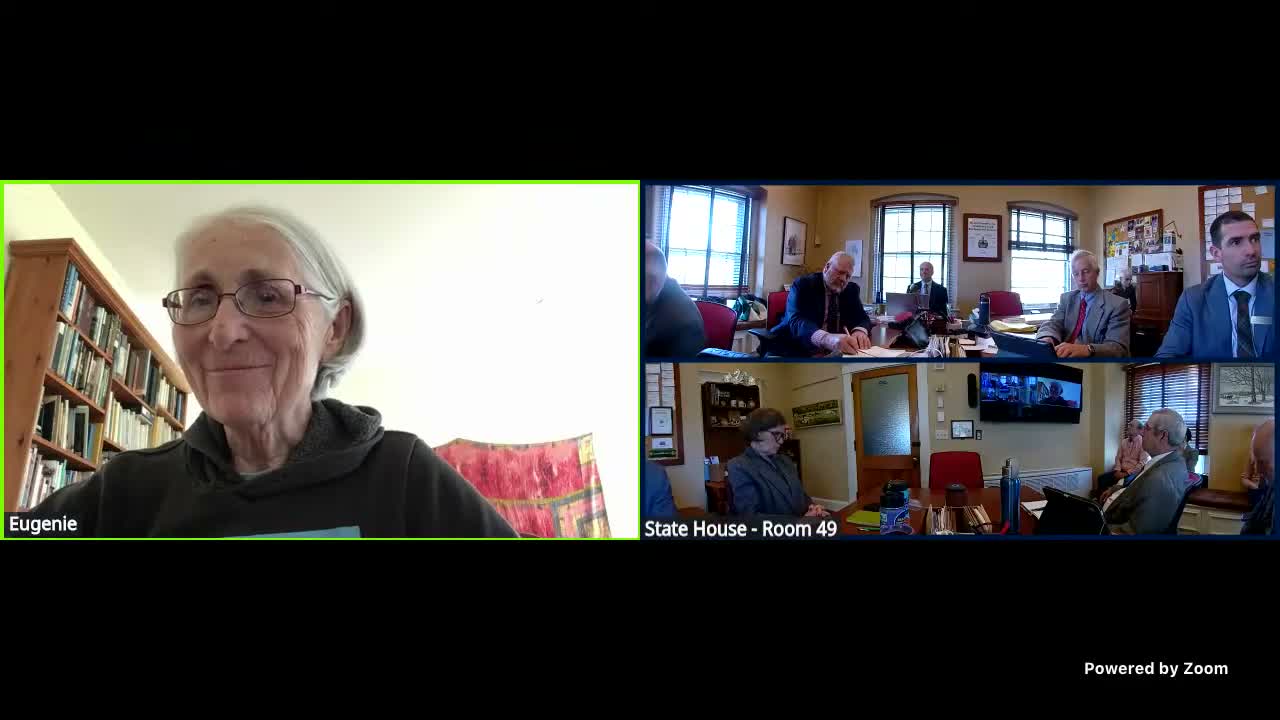
Two strawberry growers testified about weed control and the possible impacts of limiting Paraquat under pending legislation.
Eugenie Doyle, co‑owner of Last Resort Farm in Addison County, said she has grown strawberries organically since 1983 and challenged the premise that strawberries cannot be grown without herbicides. "You can indeed grow strawberries without any herbicide," Doyle told the committee, describing a system of cover cropping, cultivation, mulching and hand weeding that she said made organic production economically viable for her pick‑your‑own and wholesale markets.
Doyle said organic production raises labor and equipment tradeoffs but noted improvements in mechanical weeders and mulching techniques. She asked the legislature to include assistance for growers transitioning away from products like paraquat.
Charles Gray of Four Corners Farm, who identified himself as a certified applicator and former Marine, described how he uses Paraquat (trade name Gramoxone) as a directed, shielded contact herbicide for runner control and quick post‑harvest cleanup. Gray emphasized federal restrictions on the chemical: "Paraquat is a federally designated restricted use pesticide," he said, noting certified applicator training and re‑certification requirements.
Committee members pressed both witnesses on alternatives, costs and transition timelines. One lawmaker cited studies suggesting drift can travel long distances; growers maintained that small, shielded, targeted applications on small farms present lower drift risk and that changes in scale or broadcast spraying create different exposure dynamics. Growers suggested a multi‑year transition: Doyle indicated conversions take time; Gray said a five‑year horizon would be reasonable for some operations.
The committee heard about market realities: pick‑your‑own strawberries sold for about $4.50 a pound last season at one organic farm; smaller farms reported tight margins and seasonality that affect transition capacity. Lawmakers said the agricultural innovation board and any study of alternatives should include practical, cost‑effective options and possible cost‑share assistance for berry growers.
Next steps: committee members said the bill’s transition timing and support measures need refinement; no vote occurred during the hearing.
Eugenie Doyle, co‑owner of Last Resort Farm in Addison County, said she has grown strawberries organically since 1983 and challenged the premise that strawberries cannot be grown without herbicides. "You can indeed grow strawberries without any herbicide," Doyle told the committee, describing a system of cover cropping, cultivation, mulching and hand weeding that she said made organic production economically viable for her pick‑your‑own and wholesale markets.
Doyle said organic production raises labor and equipment tradeoffs but noted improvements in mechanical weeders and mulching techniques. She asked the legislature to include assistance for growers transitioning away from products like paraquat.
Charles Gray of Four Corners Farm, who identified himself as a certified applicator and former Marine, described how he uses Paraquat (trade name Gramoxone) as a directed, shielded contact herbicide for runner control and quick post‑harvest cleanup. Gray emphasized federal restrictions on the chemical: "Paraquat is a federally designated restricted use pesticide," he said, noting certified applicator training and re‑certification requirements.
Committee members pressed both witnesses on alternatives, costs and transition timelines. One lawmaker cited studies suggesting drift can travel long distances; growers maintained that small, shielded, targeted applications on small farms present lower drift risk and that changes in scale or broadcast spraying create different exposure dynamics. Growers suggested a multi‑year transition: Doyle indicated conversions take time; Gray said a five‑year horizon would be reasonable for some operations.
The committee heard about market realities: pick‑your‑own strawberries sold for about $4.50 a pound last season at one organic farm; smaller farms reported tight margins and seasonality that affect transition capacity. Lawmakers said the agricultural innovation board and any study of alternatives should include practical, cost‑effective options and possible cost‑share assistance for berry growers.
Next steps: committee members said the bill’s transition timing and support measures need refinement; no vote occurred during the hearing.
View the Full Meeting & All Its Details
This article offers just a summary. Unlock complete video, transcripts, and insights as a Founder Member.
✓
Watch full, unedited meeting videos
✓
Search every word spoken in unlimited transcripts
✓
AI summaries & real-time alerts (all government levels)
✓
Permanent access to expanding government content
30-day money-back guarantee
