Board approves long-term substitute settlement; members debate retroactive pay for departed substitutes
May 08, 2026 | Dayton City, School Districts, Ohio
This article was created by AI summarizing key points discussed. AI makes mistakes, so for full details and context, please refer to the video of the full meeting. Please report any errors so we can fix them. Report an error »
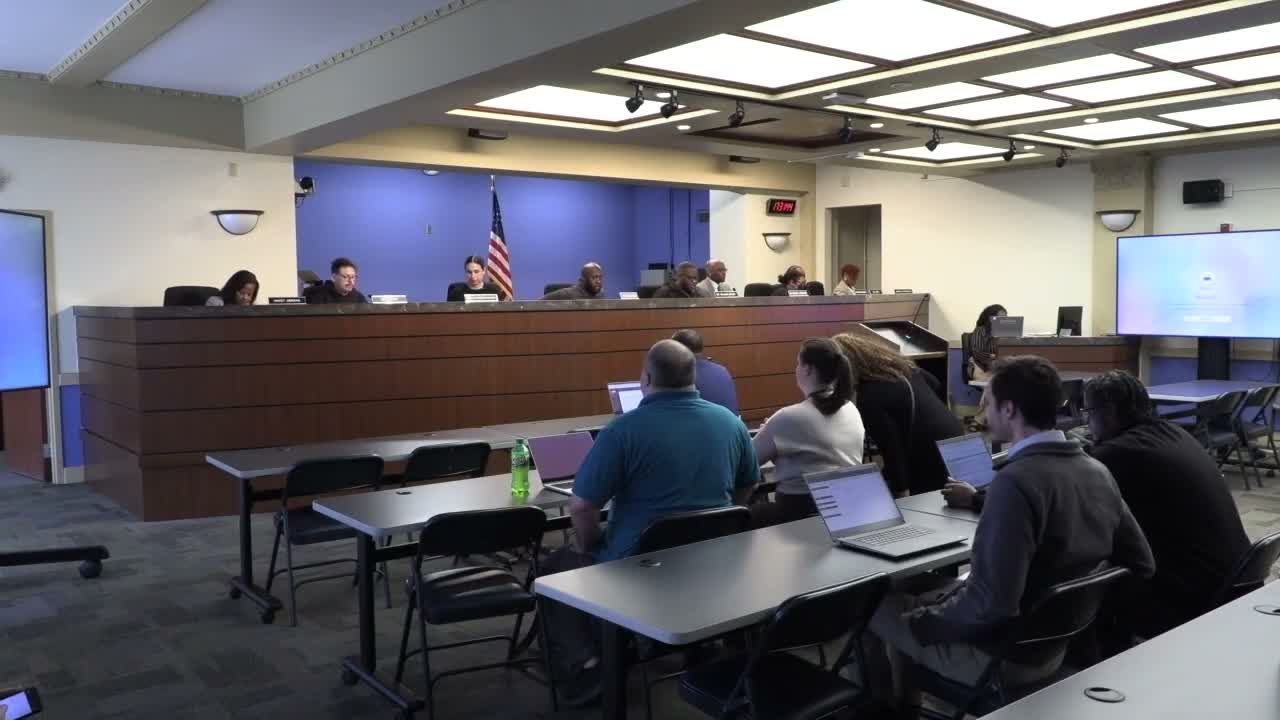
The Dayton City Board of Education voted to approve a two-year settlement agreement for long-term substitute teachers that places such substitutes at step 1 of the pay scale and is backdated to July 1, 2025. The motion passed unanimously after discussion.
Presenter (speaker 7), who introduced the agreement, said the settlement had been in negotiations for “about 7 to 10 months” and that while an earlier two-year deal with the union had not been reachable, “we weren't able to settle it then, but we're able to settle it now.” The agreement makes long-term substitutes immediate members of the DEA with a 60-day probationary period, Presenter said.
Several board members pressed administrators on whether the retroactive pay would be paid to substitutes who had since resigned in good standing. Committee member (speaker 5) asked specifically why the retro would not apply to “those whom it would benefit, who were with us as long term serve subs in good standing, but are no longer active.” Committee member (speaker 4) reiterated the concern: “For the people who resigned and told us they was leaving because the pay was not what they thought it was gonna be for the upcoming year, why are we not paying them the money as well?”
Presenter (speaker 7) and Staff member (speaker 6) said locating and verifying former employees would be difficult and that compensating departed staff would require separate negotiation with the union. Presenter said the board had discussed the issue and it was not “relatively feasible” to track down every former substitute; Staff member noted that any change affecting departed staff would be an additional agreement to be negotiated with the union rather than a unilateral board change.
Committee member (speaker 2) and others clarified the pay mechanics: the board was being asked to apply step-1 placement for eligible long-term substitutes for the 2025–26 school year, and the negotiated terms could not be altered unilaterally by the district. After discussion, the board approved the settlement. The clerk recorded seven yes votes.
The board did not specify how many former substitutes might be affected if the board or district later sought to negotiate retroactive payments for departed employees; administrators said that count would require HR follow-up.
Presenter (speaker 7), who introduced the agreement, said the settlement had been in negotiations for “about 7 to 10 months” and that while an earlier two-year deal with the union had not been reachable, “we weren't able to settle it then, but we're able to settle it now.” The agreement makes long-term substitutes immediate members of the DEA with a 60-day probationary period, Presenter said.
Several board members pressed administrators on whether the retroactive pay would be paid to substitutes who had since resigned in good standing. Committee member (speaker 5) asked specifically why the retro would not apply to “those whom it would benefit, who were with us as long term serve subs in good standing, but are no longer active.” Committee member (speaker 4) reiterated the concern: “For the people who resigned and told us they was leaving because the pay was not what they thought it was gonna be for the upcoming year, why are we not paying them the money as well?”
Presenter (speaker 7) and Staff member (speaker 6) said locating and verifying former employees would be difficult and that compensating departed staff would require separate negotiation with the union. Presenter said the board had discussed the issue and it was not “relatively feasible” to track down every former substitute; Staff member noted that any change affecting departed staff would be an additional agreement to be negotiated with the union rather than a unilateral board change.
Committee member (speaker 2) and others clarified the pay mechanics: the board was being asked to apply step-1 placement for eligible long-term substitutes for the 2025–26 school year, and the negotiated terms could not be altered unilaterally by the district. After discussion, the board approved the settlement. The clerk recorded seven yes votes.
The board did not specify how many former substitutes might be affected if the board or district later sought to negotiate retroactive payments for departed employees; administrators said that count would require HR follow-up.
View the Full Meeting & All Its Details
This article offers just a summary. Unlock complete video, transcripts, and insights as a Founder Member.
✓
Watch full, unedited meeting videos
✓
Search every word spoken in unlimited transcripts
✓
AI summaries & real-time alerts (all government levels)
✓
Permanent access to expanding government content
30-day money-back guarantee
