Dennis‑Yarmouth superintendent highlights K–12 pathways, warns override failure would force cuts
May 08, 2026 | Dennis-Yarmouth Regional School District, School Boards, Massachusetts
This article was created by AI summarizing key points discussed. AI makes mistakes, so for full details and context, please refer to the video of the full meeting. Please report any errors so we can fix them. Report an error »
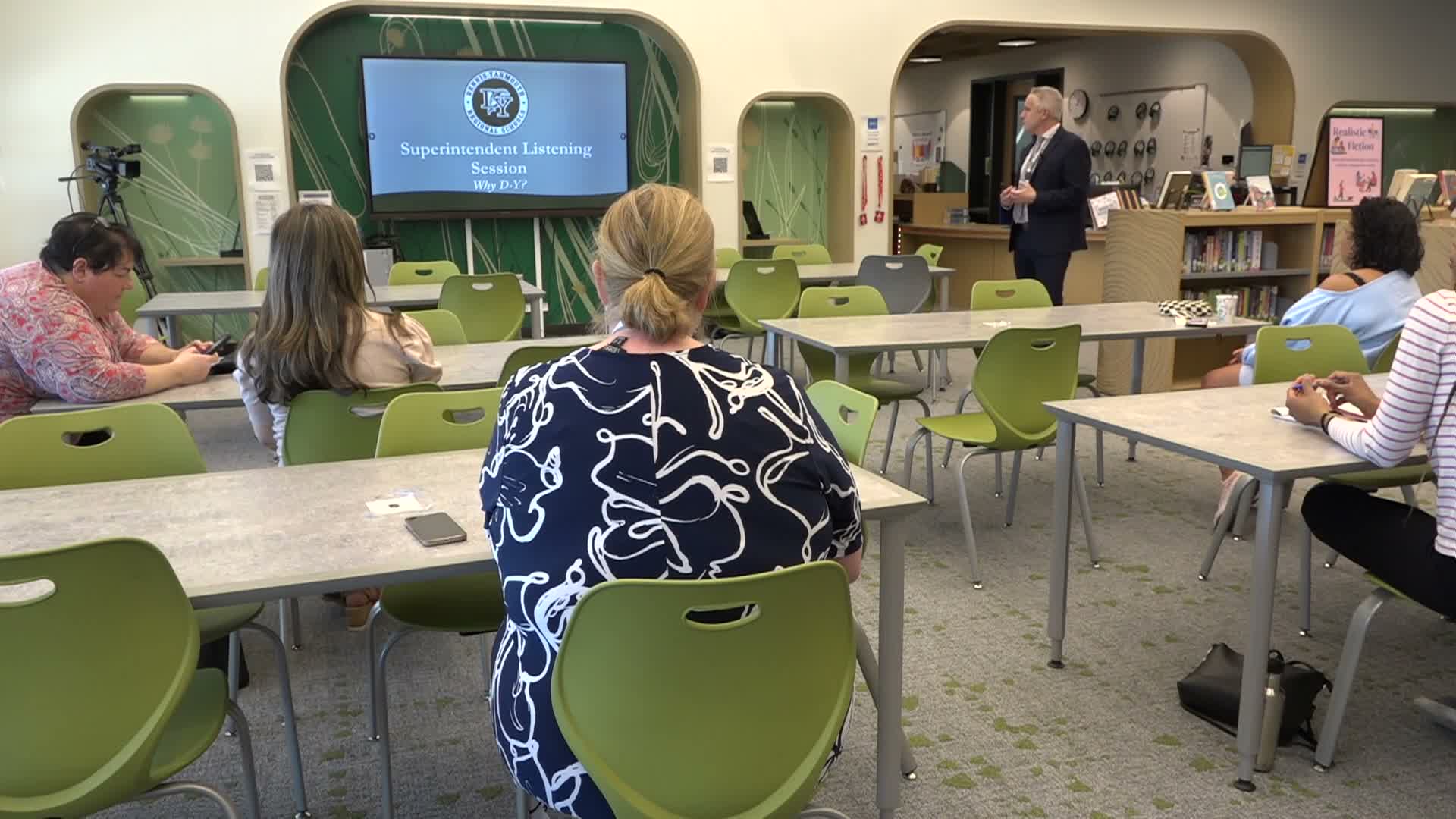
The superintendent of the Dennis‑Yarmouth Regional School District opened a community listening session by saying the meeting was intended to gather input to inform the district’s strategic planning. He described the district’s K–12 approach — building a foundation in preschool and elementary years, offering exploratory programs in the intermediate grades, and providing pathway and career‑preparation options at the high‑school level.
“This session here is a listening session for me as superintendent,” the superintendent said, noting the district is recording the session and offering multiple meeting times to reach more families. He outlined new and expanded offerings, including an integrated preschool program that this year is free for participating students and a partnership with AlphaBEST that expanded before‑ and after‑school care and enrichment through grade 5.
At the middle‑school level he described new student‑led conferences and grant‑supported STEM programming such as Project Lead The Way. For high school students he cited innovative career pathways in biotechnology and health sciences with 100‑hour internships and capstone projects, applied technology classes, AP courses and dual‑enrollment options through Mass. Maritime and Cape Cod Community College.
The superintendent framed those program descriptions inside the district’s budget context. He said the school committee received a proposed budget that is a “reduced service” budget intended to preserve core programming — math, English, science, special education, English‑language‑learner instruction and transportation — but that some reductions will affect extracurriculars. “If the override doesn’t pass, there’s a whole — that’s a whole different conversation,” he said, adding his role is to advocate for what the district needs while recognizing elected officials and voters make fiscal decisions.
Parents raised concerns about particular program details: how dual‑enrollment courses are weighted compared with AP for GPA and scholarship implications, and whether internship or credentialing opportunities can expand without duplicating programs already offered by the regional technical school. The superintendent said some programs are limited by legal and regulatory constraints and that staff are evaluating how to broaden real‑world experiences while respecting those limits.
There were no motions or formal votes at the session. The superintendent said the district has hired a communications position to better share successes and plans to fix small accessibility issues (for example, linking a digital school store on the website) and to continue collecting community feedback to inform district decisions.
The session closed with the superintendent thanking participants and noting additional engagement opportunities later that evening and digitally; no formal policy decisions were made during the meeting.
“This session here is a listening session for me as superintendent,” the superintendent said, noting the district is recording the session and offering multiple meeting times to reach more families. He outlined new and expanded offerings, including an integrated preschool program that this year is free for participating students and a partnership with AlphaBEST that expanded before‑ and after‑school care and enrichment through grade 5.
At the middle‑school level he described new student‑led conferences and grant‑supported STEM programming such as Project Lead The Way. For high school students he cited innovative career pathways in biotechnology and health sciences with 100‑hour internships and capstone projects, applied technology classes, AP courses and dual‑enrollment options through Mass. Maritime and Cape Cod Community College.
The superintendent framed those program descriptions inside the district’s budget context. He said the school committee received a proposed budget that is a “reduced service” budget intended to preserve core programming — math, English, science, special education, English‑language‑learner instruction and transportation — but that some reductions will affect extracurriculars. “If the override doesn’t pass, there’s a whole — that’s a whole different conversation,” he said, adding his role is to advocate for what the district needs while recognizing elected officials and voters make fiscal decisions.
Parents raised concerns about particular program details: how dual‑enrollment courses are weighted compared with AP for GPA and scholarship implications, and whether internship or credentialing opportunities can expand without duplicating programs already offered by the regional technical school. The superintendent said some programs are limited by legal and regulatory constraints and that staff are evaluating how to broaden real‑world experiences while respecting those limits.
There were no motions or formal votes at the session. The superintendent said the district has hired a communications position to better share successes and plans to fix small accessibility issues (for example, linking a digital school store on the website) and to continue collecting community feedback to inform district decisions.
The session closed with the superintendent thanking participants and noting additional engagement opportunities later that evening and digitally; no formal policy decisions were made during the meeting.
Don't Miss a Word: See the Full Meeting!
Go beyond summaries. Unlock every video, transcript, and key insight with a Founder Membership.
✓
Get instant access to full meeting videos
✓
Search and clip any phrase from complete transcripts
✓
Receive AI-powered summaries & custom alerts
✓
Enjoy lifetime, unrestricted access to government data
30-day money-back guarantee
