Broomfield officials outline trade‑offs as budget planning begins amid falling property revenues
May 08, 2026 | Broomfield County, Colorado
This article was created by AI summarizing key points discussed. AI makes mistakes, so for full details and context, please refer to the video of the full meeting. Please report any errors so we can fix them. Report an error »
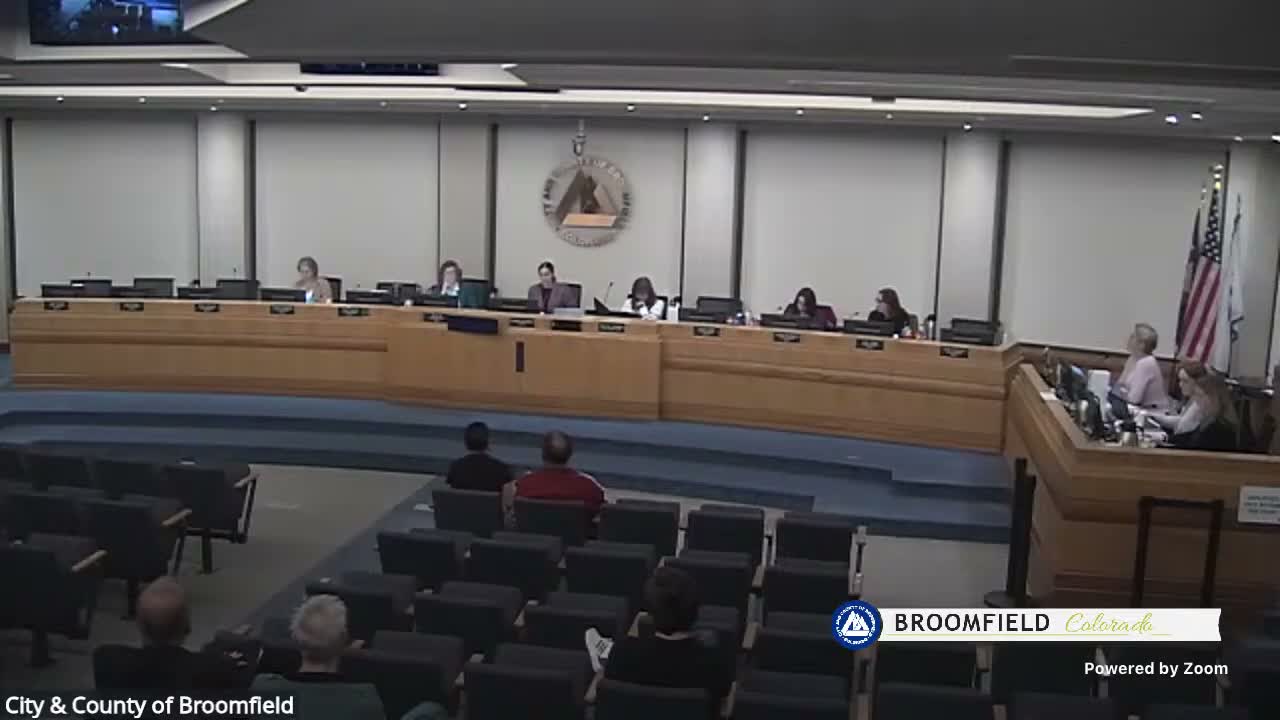
City and County of Broomfield leaders opened the 2027 budget planning season with a call for disciplined trade‑offs as the community moves toward build‑out and faces structural revenue changes.
City Manager Hoffman and Finance Director Graham Clark presented a framework that emphasizes mandates, obligations and critical operations, warning that past one‑time budget levers are largely exhausted and that personnel costs dominate municipal budgets. Clark said staff is preparing more detailed numbers in June but recommended policy direction now so council can frame choices that will shape the 2027–2030 fiscal path.
Why it matters: Clark told council that a projected $6.5 million reduction in property tax revenue will have an important influence on next year’s budget and that Broomfield has not raised sales tax or mill levies since the city’s inception. "This year, our primary was to not impact service level while ensuring that our staff had market, merit increases," Clark said; staff anticipates 3–4% personnel cost increases in 2027 to address market pressures.
Enterprise fund implications: Clark and water staff tied the budget conversation to enterprise funds, reporting that 2025 water revenues exceeded budget by roughly $3.6 million and sewer revenues by about $3.7 million, but that development fee revenues are now projected to be $1–2 million below the 2026 original budget. Staff said they will refine rate and CIP recommendations in July, and noted a working assumption around a roughly 7% rate increase in the enterprise five‑year plan while the team assesses reuse and stormwater fund pressures.
What council asked and directed: Councilors probed staff on several operational risks — including possible treatment costs tied to Chimney Hollow/Windy Gap deliveries and delays in CDPHE permitting for lift‑station designs — and asked for follow‑up details. Manager Hoffman said staff will bring refined options and the ERP go‑live (June) should increase transparency and improve decision tools.
Next steps: Staff will return with updated forecasts and recommended rate and CIP adjustments in July and with an economic/fiscal update in August, after more complete data is available.
City Manager Hoffman and Finance Director Graham Clark presented a framework that emphasizes mandates, obligations and critical operations, warning that past one‑time budget levers are largely exhausted and that personnel costs dominate municipal budgets. Clark said staff is preparing more detailed numbers in June but recommended policy direction now so council can frame choices that will shape the 2027–2030 fiscal path.
Why it matters: Clark told council that a projected $6.5 million reduction in property tax revenue will have an important influence on next year’s budget and that Broomfield has not raised sales tax or mill levies since the city’s inception. "This year, our primary was to not impact service level while ensuring that our staff had market, merit increases," Clark said; staff anticipates 3–4% personnel cost increases in 2027 to address market pressures.
Enterprise fund implications: Clark and water staff tied the budget conversation to enterprise funds, reporting that 2025 water revenues exceeded budget by roughly $3.6 million and sewer revenues by about $3.7 million, but that development fee revenues are now projected to be $1–2 million below the 2026 original budget. Staff said they will refine rate and CIP recommendations in July, and noted a working assumption around a roughly 7% rate increase in the enterprise five‑year plan while the team assesses reuse and stormwater fund pressures.
What council asked and directed: Councilors probed staff on several operational risks — including possible treatment costs tied to Chimney Hollow/Windy Gap deliveries and delays in CDPHE permitting for lift‑station designs — and asked for follow‑up details. Manager Hoffman said staff will bring refined options and the ERP go‑live (June) should increase transparency and improve decision tools.
Next steps: Staff will return with updated forecasts and recommended rate and CIP adjustments in July and with an economic/fiscal update in August, after more complete data is available.
View the Full Meeting & All Its Details
This article offers just a summary. Unlock complete video, transcripts, and insights as a Founder Member.
✓
Watch full, unedited meeting videos
✓
Search every word spoken in unlimited transcripts
✓
AI summaries & real-time alerts (all government levels)
✓
Permanent access to expanding government content
30-day money-back guarantee
