Goochland County consultant outlines comprehensive subdivision ordinance rewrite, residents press concerns about family splits and road costs
May 29, 2024 | Goochland County, Virginia
This article was created by AI summarizing key points discussed. AI makes mistakes, so for full details and context, please refer to the video of the full meeting. Please report any errors so we can fix them. Report an error »
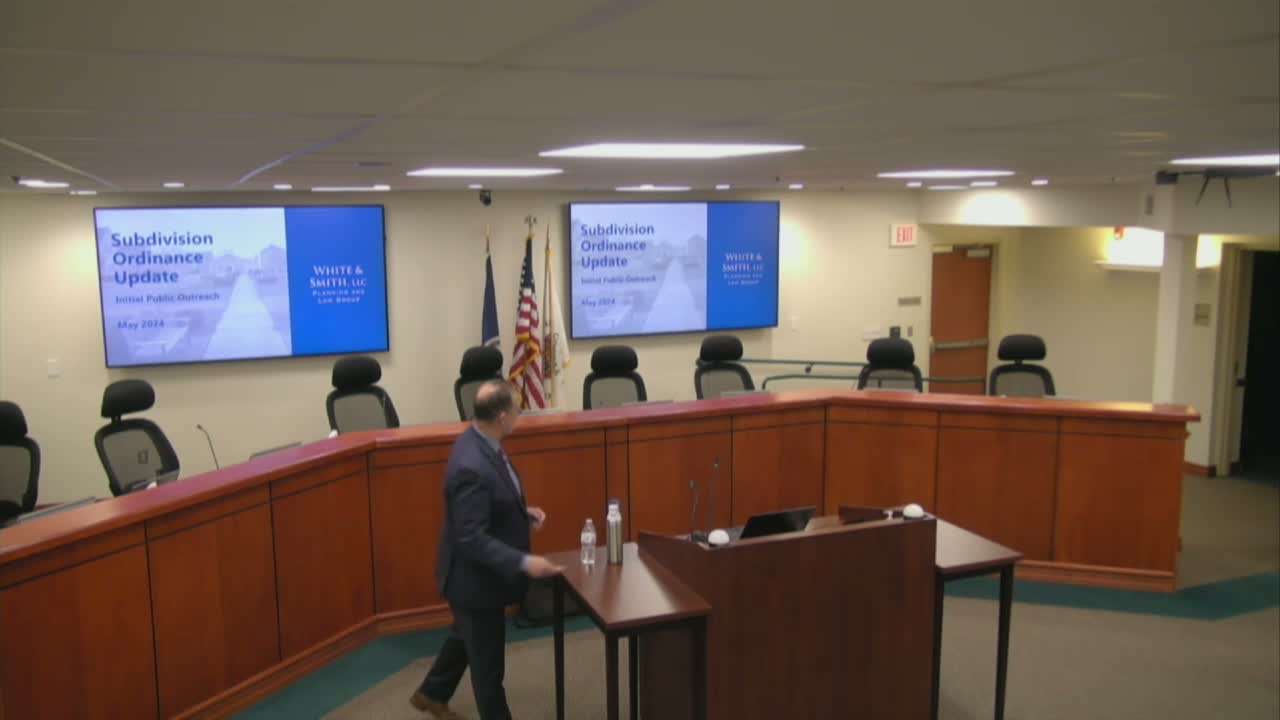
At a public meeting this month in Goochland County, consultant Mark White and county staff outlined a comprehensive rewrite of the county's subdivision ordinance and invited public comment on proposed priorities and the schedule for drafting and adoption.
White, who said his firm White and Smith LLC was hired for the project, told attendees the county's subdivision ordinance has not been comprehensively updated since 1979 and needs three broad fixes: bring statutory references into conformity with the Code of Virginia (Title 15.2), align subdivision rules with the county's 2015 comprehensive plan and recent zoning updates, and make the text easier for non‑lawyers and applicants to use. "A lot of them make references to statutes that start with 15.1, title 15.1, which doesn't exist anymore in the Virginia code," White said, and the rewrite will update those references and add clearer cross‑references.
Why it matters: subdivision regulations govern how land is divided, how plats are recorded and what infrastructure must be provided before lots are sold. Changes could affect how private streets, public road dedications and family‑transfer exceptions operate countywide and will guide review of single‑family and commercial lot splits.
Key points from the presentation
• Project phases and schedule: White described the current diagnostic and public‑outreach phase, an annotated outline and analysis to follow, successive drafts during the drafting phase, and adoption through public hearings before the planning commission and the Board of Supervisors next year. He said the county will post draft documents, slides and the livestream on the project webpage and welcome written comments.
• Legal and technical alignment: The consultant emphasized compliance with Virginia law and with technical standards used by other county codes. He said some references in the current ordinance are obsolete and that the rewrite will cross‑reference the county's zoning chapter and the Statewide Fire Prevention Code (IFC Appendix D) where appropriate.
• Process and thresholds: White described how the county distinguishes minor and major subdivisions and walks applicants through plat review, staff review and planning commission action. He noted county practice and state code allow requiring preliminary or tentative plats in larger developments (White said 50 or more lots is the state threshold commonly cited), and that road and access standards (including VDOT requirements) are tied to lot counts and development intensity.
Public concerns raised
Residents pressed for clarity and relief on two recurring topics: by‑right or "buy‑right" splits and family subdivisions, and the cost of road improvements tied to recording new lots.
• Buy‑right splits and family transfers: Several attendees said the current ordinance buries the by‑right split and parent‑tract provisions in definitions and scattered sections, making it hard for property owners to determine how many splits are available or what the process requires. White agreed the rules can be confusing and said the consultants plan a dedicated section that explains the family/by‑right split processes, the state definitions that apply and how the county intends those provisions to function.
• Road and infrastructure costs for heirs: One resident said his family inherited a 50‑acre tract divided among heirs and faces a requirement to build roads where only a paper right‑of‑way exists. "We've gotta spend a $100,000 to $200,000 to put a road in," the resident said, urging the team to preserve the practical intent of family subdivisions so heirs can retain farmland without immediately incurring costly infrastructure burdens. White acknowledged the concern and said the team will evaluate whether procedures or thresholds should be adjusted to reflect intent and fairness.
Other comments and context
Attendees also raised housing affordability and growth pressures: several residents noted rising house prices in the Richmond region and asked whether the subdivision rewrite could help produce more varied, affordable housing choices. White said subdivision rules can influence cost and process but that housing affordability is a broader issue that involves zoning, comprehensive planning and other policy tools.
Next steps
White and county staff said they will publish the presentation slides and the livestream on the county's subdivision‑rewrite webpage, post initial diagnostic materials in June, and circulate successive drafts for public comment before formal consideration at open planning commission and Board of Supervisors meetings next year.
The meeting included questions about specific technical standards (VDOT street requirements, the IFC Appendix D adoption) and many requests to make the ordinance easier to navigate with tables, flowcharts and hyperlinks to code sections. County staff and the consultant said they will consider those drafting improvements and return with clearer language and a public comment process.
White, who said his firm White and Smith LLC was hired for the project, told attendees the county's subdivision ordinance has not been comprehensively updated since 1979 and needs three broad fixes: bring statutory references into conformity with the Code of Virginia (Title 15.2), align subdivision rules with the county's 2015 comprehensive plan and recent zoning updates, and make the text easier for non‑lawyers and applicants to use. "A lot of them make references to statutes that start with 15.1, title 15.1, which doesn't exist anymore in the Virginia code," White said, and the rewrite will update those references and add clearer cross‑references.
Why it matters: subdivision regulations govern how land is divided, how plats are recorded and what infrastructure must be provided before lots are sold. Changes could affect how private streets, public road dedications and family‑transfer exceptions operate countywide and will guide review of single‑family and commercial lot splits.
Key points from the presentation
• Project phases and schedule: White described the current diagnostic and public‑outreach phase, an annotated outline and analysis to follow, successive drafts during the drafting phase, and adoption through public hearings before the planning commission and the Board of Supervisors next year. He said the county will post draft documents, slides and the livestream on the project webpage and welcome written comments.
• Legal and technical alignment: The consultant emphasized compliance with Virginia law and with technical standards used by other county codes. He said some references in the current ordinance are obsolete and that the rewrite will cross‑reference the county's zoning chapter and the Statewide Fire Prevention Code (IFC Appendix D) where appropriate.
• Process and thresholds: White described how the county distinguishes minor and major subdivisions and walks applicants through plat review, staff review and planning commission action. He noted county practice and state code allow requiring preliminary or tentative plats in larger developments (White said 50 or more lots is the state threshold commonly cited), and that road and access standards (including VDOT requirements) are tied to lot counts and development intensity.
Public concerns raised
Residents pressed for clarity and relief on two recurring topics: by‑right or "buy‑right" splits and family subdivisions, and the cost of road improvements tied to recording new lots.
• Buy‑right splits and family transfers: Several attendees said the current ordinance buries the by‑right split and parent‑tract provisions in definitions and scattered sections, making it hard for property owners to determine how many splits are available or what the process requires. White agreed the rules can be confusing and said the consultants plan a dedicated section that explains the family/by‑right split processes, the state definitions that apply and how the county intends those provisions to function.
• Road and infrastructure costs for heirs: One resident said his family inherited a 50‑acre tract divided among heirs and faces a requirement to build roads where only a paper right‑of‑way exists. "We've gotta spend a $100,000 to $200,000 to put a road in," the resident said, urging the team to preserve the practical intent of family subdivisions so heirs can retain farmland without immediately incurring costly infrastructure burdens. White acknowledged the concern and said the team will evaluate whether procedures or thresholds should be adjusted to reflect intent and fairness.
Other comments and context
Attendees also raised housing affordability and growth pressures: several residents noted rising house prices in the Richmond region and asked whether the subdivision rewrite could help produce more varied, affordable housing choices. White said subdivision rules can influence cost and process but that housing affordability is a broader issue that involves zoning, comprehensive planning and other policy tools.
Next steps
White and county staff said they will publish the presentation slides and the livestream on the county's subdivision‑rewrite webpage, post initial diagnostic materials in June, and circulate successive drafts for public comment before formal consideration at open planning commission and Board of Supervisors meetings next year.
The meeting included questions about specific technical standards (VDOT street requirements, the IFC Appendix D adoption) and many requests to make the ordinance easier to navigate with tables, flowcharts and hyperlinks to code sections. County staff and the consultant said they will consider those drafting improvements and return with clearer language and a public comment process.
View the Full Meeting & All Its Details
This article offers just a summary. Unlock complete video, transcripts, and insights as a Founder Member.
✓
Watch full, unedited meeting videos
✓
Search every word spoken in unlimited transcripts
✓
AI summaries & real-time alerts (all government levels)
✓
Permanent access to expanding government content
30-day money-back guarantee
