DeSoto County Schools highlights mental-health work, shares student and parent testimonials
May 08, 2026 | DESOTO CO SCHOOL DIST, School Districts, Mississippi
This article was created by AI summarizing key points discussed. AI makes mistakes, so for full details and context, please refer to the video of the full meeting. Please report any errors so we can fix them. Report an error »
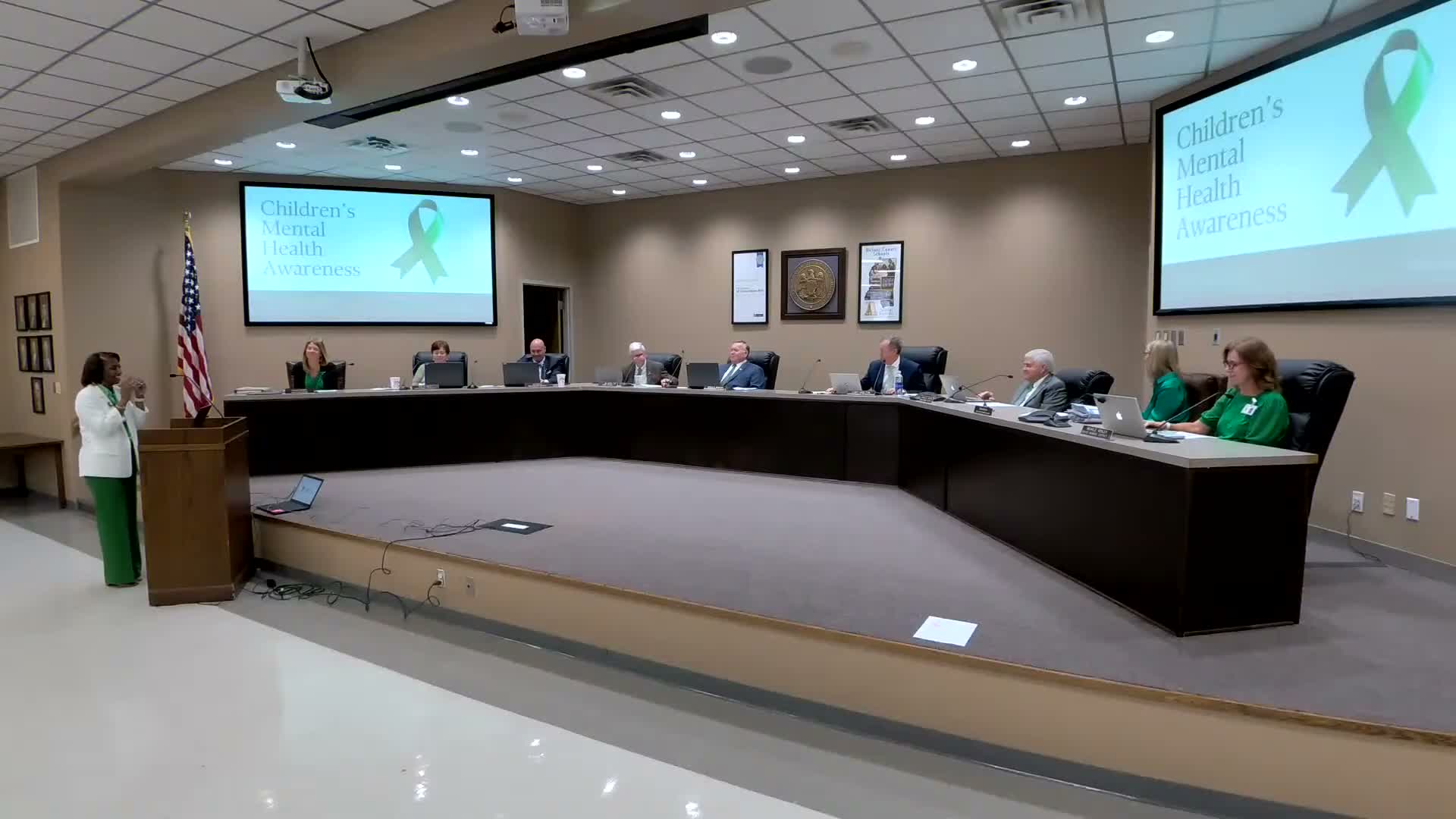
Wanda Williams, a representative of DeSoto County Schools’ mental-health team, told the school board that the district has prioritized student mental health and cited statewide and local figures showing elevated need.
Williams said approximately 28,000 children in Mississippi experience major depression and that 16,000 of those youth receive no treatment; she added that nearly 19% of Mississippi teens have seriously considered suicide and about 9% have attempted it. She then described the district’s own workload: 3,740 elementary referrals, 4,244 middle-school referrals and 2,378 high-school referrals to school counselors this past year — a total she said equals 10,362 referrals. Williams said school-based mental-health therapists served about 1,300 students from August through March.
The superintendent noted the district has a seven-component wellness assessment covering nutrition, physical education, health services, counseling/psychological/social services, family engagement and implementation. Williams read the district’s component scores, saying counseling, psychological and social services scored 100%, health services 97%, physical education 96% and nutrition/environment 89%.
Students and parents addressed the board. Middle-school student Dawson McKnight said the skills he learned from his therapist “have greatly improved my time management skills and stopped pencil snowballs from falling,” and thanked staff by name. A parent told the board the school mental-health team had produced visible changes in her child’s interactions at school and at home.
Williams described partnerships the district has formed — including with the University of Mississippi and local community organizations such as the YMCA — and said the district offers programs that include vaping education; she reported 20 students had completed a vaping program offered in partnership with the university.
Why it matters: The board emphasized that district-level attention to mental health aims to provide early supports and reduce barriers to treatment. Williams said the district’s wellness work is intended to be a model for the state and thanked the board for its leadership and support.
What’s next: Williams closed by asking the board to continue supporting school-based mental-health services. The superintendent thanked Williams and the mental-health team for the presentation.
Williams said approximately 28,000 children in Mississippi experience major depression and that 16,000 of those youth receive no treatment; she added that nearly 19% of Mississippi teens have seriously considered suicide and about 9% have attempted it. She then described the district’s own workload: 3,740 elementary referrals, 4,244 middle-school referrals and 2,378 high-school referrals to school counselors this past year — a total she said equals 10,362 referrals. Williams said school-based mental-health therapists served about 1,300 students from August through March.
The superintendent noted the district has a seven-component wellness assessment covering nutrition, physical education, health services, counseling/psychological/social services, family engagement and implementation. Williams read the district’s component scores, saying counseling, psychological and social services scored 100%, health services 97%, physical education 96% and nutrition/environment 89%.
Students and parents addressed the board. Middle-school student Dawson McKnight said the skills he learned from his therapist “have greatly improved my time management skills and stopped pencil snowballs from falling,” and thanked staff by name. A parent told the board the school mental-health team had produced visible changes in her child’s interactions at school and at home.
Williams described partnerships the district has formed — including with the University of Mississippi and local community organizations such as the YMCA — and said the district offers programs that include vaping education; she reported 20 students had completed a vaping program offered in partnership with the university.
Why it matters: The board emphasized that district-level attention to mental health aims to provide early supports and reduce barriers to treatment. Williams said the district’s wellness work is intended to be a model for the state and thanked the board for its leadership and support.
What’s next: Williams closed by asking the board to continue supporting school-based mental-health services. The superintendent thanked Williams and the mental-health team for the presentation.
View the Full Meeting & All Its Details
This article offers just a summary. Unlock complete video, transcripts, and insights as a Founder Member.
✓
Watch full, unedited meeting videos
✓
Search every word spoken in unlimited transcripts
✓
AI summaries & real-time alerts (all government levels)
✓
Permanent access to expanding government content
30-day money-back guarantee
