Berkeley council approves two-year pilot of automated license-plate readers after heated debate
May 08, 2026 | Berkeley , Alameda County, California
This article was created by AI summarizing key points discussed. AI makes mistakes, so for full details and context, please refer to the video of the full meeting. Please report any errors so we can fix them. Report an error »
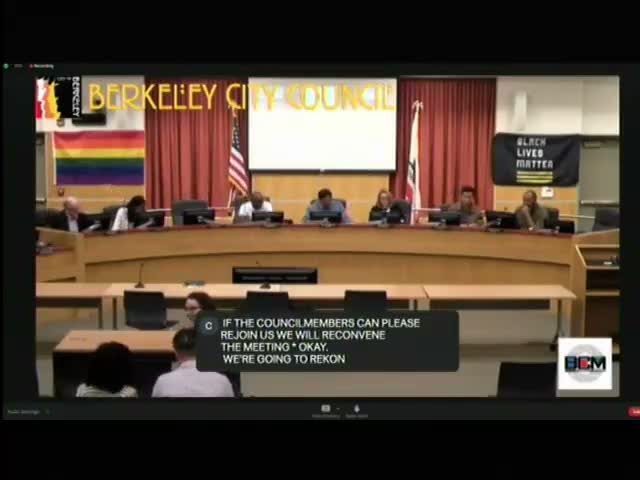
The Berkeley City Council on July 25 approved a two‑year pilot program to install fixed automated license‑plate readers (ALPRs) across the city, saying the technology could help officers find stolen and wanted vehicles while the council requires data-driven review before committing to broader use.
The pilot authorizes up to 52 fixed ALPR cameras, with an initial procurement cost not to exceed $250,000 and an expected subscription cost of about $175,000 in the second year. Council Member Ben Taplin moved the measure; Council Member Humbert seconded. The motion passed in roll call as recorded by the clerk: six yes, one no, one abstention and one absence.
Supporters, including parents, merchants and some residents, urged the council to give the police department an additional investigative tool amid a surge in vehicle thefts and violent robberies. “This will give officers an immediate alert when a wanted or stolen vehicle crosses a camera,” Acting Chief Kevin Scofield told the council during the department presentation, and Sergeant Joe Ladue said the system can feed alphanumeric plate data into national and state databases so officers receive near‑real‑time notifications.
Opponents, including the Police Accountability Board and the ACLU of Northern California, said the empirical evidence that fixed ALPR networks reduce crime is mixed, flagged risks of false positives and cautioned about data sharing and privacy. Chip Moore, chair of the Police Accountability Board, told the council the board’s formal response to whether to adopt the proposed ALPR system was “no,” citing policy drafting gaps and the lack of disclosed camera locations. “The acquisition report does not thoroughly evaluate alternatives or establish meaningful metrics,” Moore said.
The council amended Taplin’s motion to require the city manager to include a set of evaluation metrics in the two‑year review: number of scans and hits, hit quality, number of arrests tied to ALPR leads, stolen‑vehicle recovery rates, average time to locate a matched vehicle and case clearance rates. Council members said those measures would make it possible to judge whether the pilot produces tangible investigative value before any expansion.
Council debate also reflected heightened concern about recent revelations of offensive text messages by members of the downtown bike unit, which several public commenters and council members said eroded trust in the department. “We take allegations about department culture seriously,” Mayor Arreguin said, noting the city had ordered an external investigation and that policy work remains to buttress oversight.
The council placed restrictions in the policy draft before it: retention of ALPR imagery is capped at 30 days unless the data are transferred into the city’s digital evidence repository for a case; investigators must validate alerts before relying on them for enforcement action; and audits and transparency reporting are required under the city’s surveillance-technology rules. The Police Department also said it would seek a vendor with a transparency portal for public access to summary statistics.
The vote follows extensive public comment: dozens of one‑minute speakers with some yielded time urged both caution and rapid action. Civil‑liberties groups focused on risks of mass data collection, location tracking and the potential for out‑of‑state data requests; parents, small‑business owners and victims urged tools to deter and solve vehicle‑based crimes.
With the metrics direction in place, the council directed the city manager to report back at the end of the two‑year pilot with the agreed measures and recommended any additional safeguards before any decision on permanent adoption.
Action and next steps: the procurement and placement plan will return to staff and the Police Department for implementation details and permitting; the council expects a two‑year report on outcomes and metrics. If the pilot is to be expanded or continued, the council will take further action at that time.
The pilot authorizes up to 52 fixed ALPR cameras, with an initial procurement cost not to exceed $250,000 and an expected subscription cost of about $175,000 in the second year. Council Member Ben Taplin moved the measure; Council Member Humbert seconded. The motion passed in roll call as recorded by the clerk: six yes, one no, one abstention and one absence.
Supporters, including parents, merchants and some residents, urged the council to give the police department an additional investigative tool amid a surge in vehicle thefts and violent robberies. “This will give officers an immediate alert when a wanted or stolen vehicle crosses a camera,” Acting Chief Kevin Scofield told the council during the department presentation, and Sergeant Joe Ladue said the system can feed alphanumeric plate data into national and state databases so officers receive near‑real‑time notifications.
Opponents, including the Police Accountability Board and the ACLU of Northern California, said the empirical evidence that fixed ALPR networks reduce crime is mixed, flagged risks of false positives and cautioned about data sharing and privacy. Chip Moore, chair of the Police Accountability Board, told the council the board’s formal response to whether to adopt the proposed ALPR system was “no,” citing policy drafting gaps and the lack of disclosed camera locations. “The acquisition report does not thoroughly evaluate alternatives or establish meaningful metrics,” Moore said.
The council amended Taplin’s motion to require the city manager to include a set of evaluation metrics in the two‑year review: number of scans and hits, hit quality, number of arrests tied to ALPR leads, stolen‑vehicle recovery rates, average time to locate a matched vehicle and case clearance rates. Council members said those measures would make it possible to judge whether the pilot produces tangible investigative value before any expansion.
Council debate also reflected heightened concern about recent revelations of offensive text messages by members of the downtown bike unit, which several public commenters and council members said eroded trust in the department. “We take allegations about department culture seriously,” Mayor Arreguin said, noting the city had ordered an external investigation and that policy work remains to buttress oversight.
The council placed restrictions in the policy draft before it: retention of ALPR imagery is capped at 30 days unless the data are transferred into the city’s digital evidence repository for a case; investigators must validate alerts before relying on them for enforcement action; and audits and transparency reporting are required under the city’s surveillance-technology rules. The Police Department also said it would seek a vendor with a transparency portal for public access to summary statistics.
The vote follows extensive public comment: dozens of one‑minute speakers with some yielded time urged both caution and rapid action. Civil‑liberties groups focused on risks of mass data collection, location tracking and the potential for out‑of‑state data requests; parents, small‑business owners and victims urged tools to deter and solve vehicle‑based crimes.
With the metrics direction in place, the council directed the city manager to report back at the end of the two‑year pilot with the agreed measures and recommended any additional safeguards before any decision on permanent adoption.
Action and next steps: the procurement and placement plan will return to staff and the Police Department for implementation details and permitting; the council expects a two‑year report on outcomes and metrics. If the pilot is to be expanded or continued, the council will take further action at that time.
View the Full Meeting & All Its Details
This article offers just a summary. Unlock complete video, transcripts, and insights as a Founder Member.
✓
Watch full, unedited meeting videos
✓
Search every word spoken in unlimited transcripts
✓
AI summaries & real-time alerts (all government levels)
✓
Permanent access to expanding government content
30-day money-back guarantee
