Vermont program expands developer training to turn local interest into housing
May 08, 2026 | General & Housing, HOUSE OF REPRESENTATIVES, Committees, Legislative , Vermont
This article was created by AI summarizing key points discussed. AI makes mistakes, so for full details and context, please refer to the video of the full meeting. Please report any errors so we can fix them. Report an error »
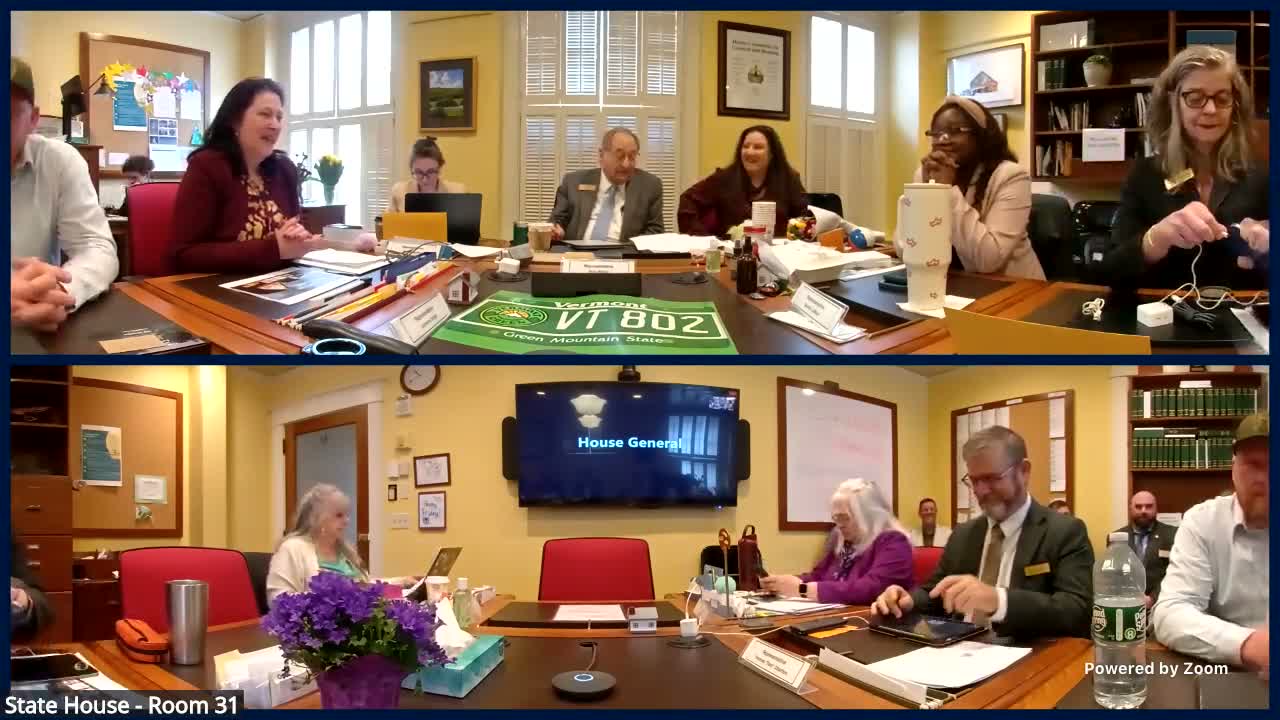
Montpelier — State housing officials on Friday outlined a multi-part program aimed at increasing small-scale housing production across Vermont by training local residents to become developers.
"This is one of those rare times I get to come in without an ask and just tell you about good news and work that we're doing," said Sean Gilpin, director of the Housing Division at the Department of Housing and Community Development, as he introduced the Homes for All initiative to the House Committee on General & Housing.
Homes for All is designed in three linked phases: a toolkit of development materials, a phase-2 training program of one-day workshops and a six-week online developer academy, and a phase-3 catalog of predesigned "802 homes" intended to simplify design and construction. Presenters said phases 2 and 3 are running concurrently.
Ornella, a co-lead with program partners, told the committee that after the program launched publicly in late January, "we have nearly 300 enrollments from all 14 counties," a sign, presenters said, of interest from both urban and rural communities.
Benjamin, a grants management specialist with DHCD who leads the phase-2 training, described the program's layered design: four statewide one-day workshops to introduce core skills and a six-week online developer academy that helps participants turn an idea into a shovel-ready project. Benjamin said the workshops have drawn large crowds — roughly 65 to 75 attendees at the first two events — and that about 13 people had enrolled in the first academy cohort.
The curriculum covers budgeting and pro formas, financing structures, site selection and pitching to lenders, speakers said. "We go through that in a thinking-outside-the-box way," John Dunbar, a Rockingham developer and trainer with the Incremental Development Alliance, told the committee. He said the program stresses community impact over speculative profit: "I love my community. I wanna make it better."
Alongside group instruction, the program offers one-on-one technical assistance provided by Helm Construction Solutions under a VHFA-funded contract. Presenters said the VHFA grant totaled $100,000 and was structured as an hourly contract; program staff described banking roughly 1,000 hours at an average rate of about $150 per hour to spread TA across emerging projects.
Tay Marcheson, small-scale developer program manager with the Land Access and Opportunity Board, described an online community-of-practice that hosts resources, project postings and affinity groups for project types such as rural cluster housing, farmworker housing and accessible housing for people with disabilities. Marcheson said roughly 220 participants had opted into the community-of-practice and one-on-one TA so far.
Presenters and committee members discussed whether the program addresses modular or mobile homes; trainers clarified that off-site modular and HUD-regulated mobile homes follow different construction and energy-code standards, and that the program seeks to account for those differences in training and design guidance.
Committee members also raised regulatory barriers such as zoning and Act 250 permitting that often block small projects. Presenters said the training includes case work intended to surface common permitting and financing obstacles and feed policy recommendations back to state partners.
How to get involved: presenters said prospective participants should complete the single intake form posted on the DHCD website under the Homes for All initiative or email program staff to register for workshops, the academy or TA.
The committee received the presentation but took no formal vote. Staff and presenters said they expect to continue staging workshops statewide and to grow the developer academy cohorts through the fall.
"This is one of those rare times I get to come in without an ask and just tell you about good news and work that we're doing," said Sean Gilpin, director of the Housing Division at the Department of Housing and Community Development, as he introduced the Homes for All initiative to the House Committee on General & Housing.
Homes for All is designed in three linked phases: a toolkit of development materials, a phase-2 training program of one-day workshops and a six-week online developer academy, and a phase-3 catalog of predesigned "802 homes" intended to simplify design and construction. Presenters said phases 2 and 3 are running concurrently.
Ornella, a co-lead with program partners, told the committee that after the program launched publicly in late January, "we have nearly 300 enrollments from all 14 counties," a sign, presenters said, of interest from both urban and rural communities.
Benjamin, a grants management specialist with DHCD who leads the phase-2 training, described the program's layered design: four statewide one-day workshops to introduce core skills and a six-week online developer academy that helps participants turn an idea into a shovel-ready project. Benjamin said the workshops have drawn large crowds — roughly 65 to 75 attendees at the first two events — and that about 13 people had enrolled in the first academy cohort.
The curriculum covers budgeting and pro formas, financing structures, site selection and pitching to lenders, speakers said. "We go through that in a thinking-outside-the-box way," John Dunbar, a Rockingham developer and trainer with the Incremental Development Alliance, told the committee. He said the program stresses community impact over speculative profit: "I love my community. I wanna make it better."
Alongside group instruction, the program offers one-on-one technical assistance provided by Helm Construction Solutions under a VHFA-funded contract. Presenters said the VHFA grant totaled $100,000 and was structured as an hourly contract; program staff described banking roughly 1,000 hours at an average rate of about $150 per hour to spread TA across emerging projects.
Tay Marcheson, small-scale developer program manager with the Land Access and Opportunity Board, described an online community-of-practice that hosts resources, project postings and affinity groups for project types such as rural cluster housing, farmworker housing and accessible housing for people with disabilities. Marcheson said roughly 220 participants had opted into the community-of-practice and one-on-one TA so far.
Presenters and committee members discussed whether the program addresses modular or mobile homes; trainers clarified that off-site modular and HUD-regulated mobile homes follow different construction and energy-code standards, and that the program seeks to account for those differences in training and design guidance.
Committee members also raised regulatory barriers such as zoning and Act 250 permitting that often block small projects. Presenters said the training includes case work intended to surface common permitting and financing obstacles and feed policy recommendations back to state partners.
How to get involved: presenters said prospective participants should complete the single intake form posted on the DHCD website under the Homes for All initiative or email program staff to register for workshops, the academy or TA.
The committee received the presentation but took no formal vote. Staff and presenters said they expect to continue staging workshops statewide and to grow the developer academy cohorts through the fall.
View the Full Meeting & All Its Details
This article offers just a summary. Unlock complete video, transcripts, and insights as a Founder Member.
✓
Watch full, unedited meeting videos
✓
Search every word spoken in unlimited transcripts
✓
AI summaries & real-time alerts (all government levels)
✓
Permanent access to expanding government content
30-day money-back guarantee
