Bedford students present research calling for clearer classroom AI rules and flag scheduling concern in AP Chemistry
May 08, 2026 | Bedford City, School Districts, Ohio
This article was created by AI summarizing key points discussed. AI makes mistakes, so for full details and context, please refer to the video of the full meeting. Please report any errors so we can fix them. Report an error »
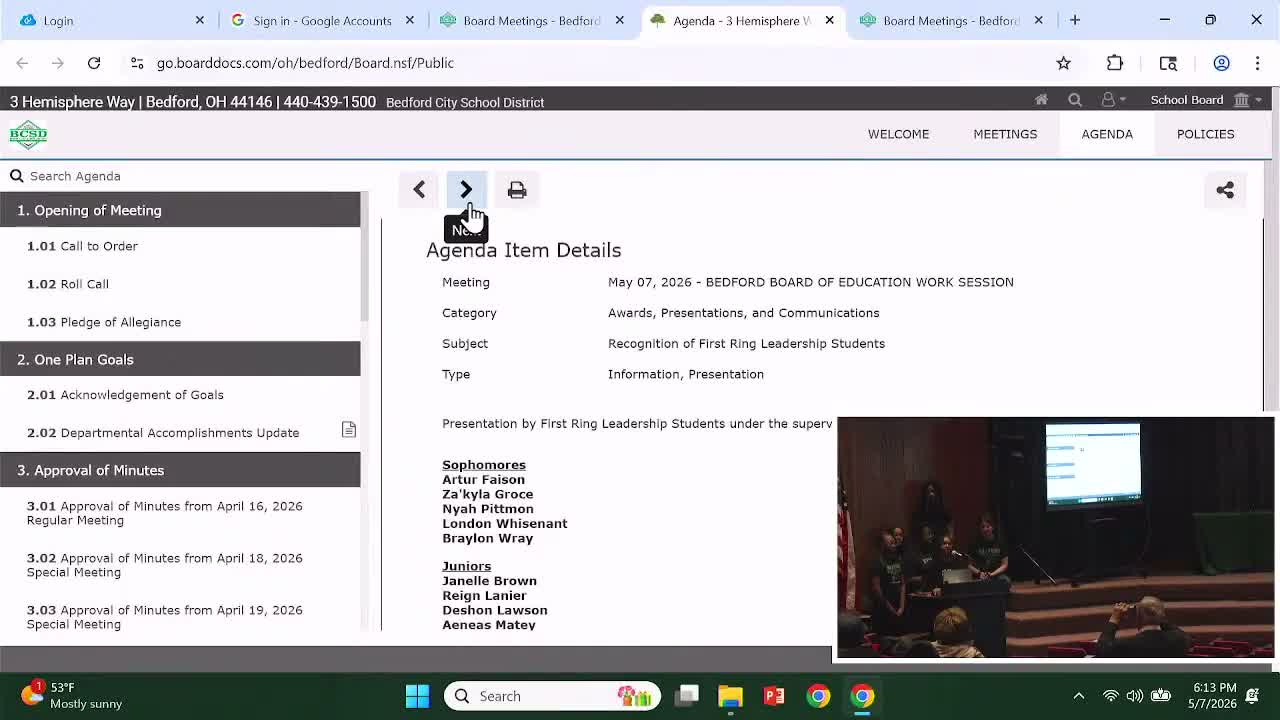
Student research teams presented to the Bedford Board of Education on May 7, 2026, urging clearer school-level AI guidance and showing that time of day and subject most strongly affect classroom engagement.
The presentations, delivered as part of a district research program that can earn participating students College Credit Plus, recommended that teachers include AI expectations in class syllabi because classroom rules varied widely. "Some teachers kind of want you to use AI because they think of it as a creative tool, whereas some teachers think it's cheating," one presenter said, summarizing the student survey results and the recommendation to standardize expectations.
The superintendent noted the program gives students an opportunity to earn CCP credits for year‑long research. Presenters described a two-track set of projects: one examining AI policy and another studying student engagement. A first‑year student reported that their research identified time of day and the specific subject taught as the strongest factors affecting engagement and emphasized that teachers have the greatest influence on engagement.
In a separate student comment, a presenter raised a scheduling concern: "AP Chem was cut down from two periods to one," the student said, adding that squeezing college‑level chemistry into one period made it difficult to complete practice and fully learn each topic. The student said the shortened schedule left them feeling less prepared for the AP exam.
Board members and the superintendent thanked the students for the research, praised the work and the survey effort, and encouraged continued collaboration between schools and the board on curricular and scheduling matters.
The presentations did not include proposals for immediate policy changes; the student teams asked the board and staff to consider their recommendations about syllabus-level AI policies and to examine scheduling for lab‑intensive AP courses going forward.
The presentations, delivered as part of a district research program that can earn participating students College Credit Plus, recommended that teachers include AI expectations in class syllabi because classroom rules varied widely. "Some teachers kind of want you to use AI because they think of it as a creative tool, whereas some teachers think it's cheating," one presenter said, summarizing the student survey results and the recommendation to standardize expectations.
The superintendent noted the program gives students an opportunity to earn CCP credits for year‑long research. Presenters described a two-track set of projects: one examining AI policy and another studying student engagement. A first‑year student reported that their research identified time of day and the specific subject taught as the strongest factors affecting engagement and emphasized that teachers have the greatest influence on engagement.
In a separate student comment, a presenter raised a scheduling concern: "AP Chem was cut down from two periods to one," the student said, adding that squeezing college‑level chemistry into one period made it difficult to complete practice and fully learn each topic. The student said the shortened schedule left them feeling less prepared for the AP exam.
Board members and the superintendent thanked the students for the research, praised the work and the survey effort, and encouraged continued collaboration between schools and the board on curricular and scheduling matters.
The presentations did not include proposals for immediate policy changes; the student teams asked the board and staff to consider their recommendations about syllabus-level AI policies and to examine scheduling for lab‑intensive AP courses going forward.
View the Full Meeting & All Its Details
This article offers just a summary. Unlock complete video, transcripts, and insights as a Founder Member.
✓
Watch full, unedited meeting videos
✓
Search every word spoken in unlimited transcripts
✓
AI summaries & real-time alerts (all government levels)
✓
Permanent access to expanding government content
30-day money-back guarantee
