Agency official outlines county waiver programs and $125 million in funding; 48 on wait list
May 08, 2026 | Northampton County, Pennsylvania
This article was created by AI summarizing key points discussed. AI makes mistakes, so for full details and context, please refer to the video of the full meeting. Please report any errors so we can fix them. Report an error »
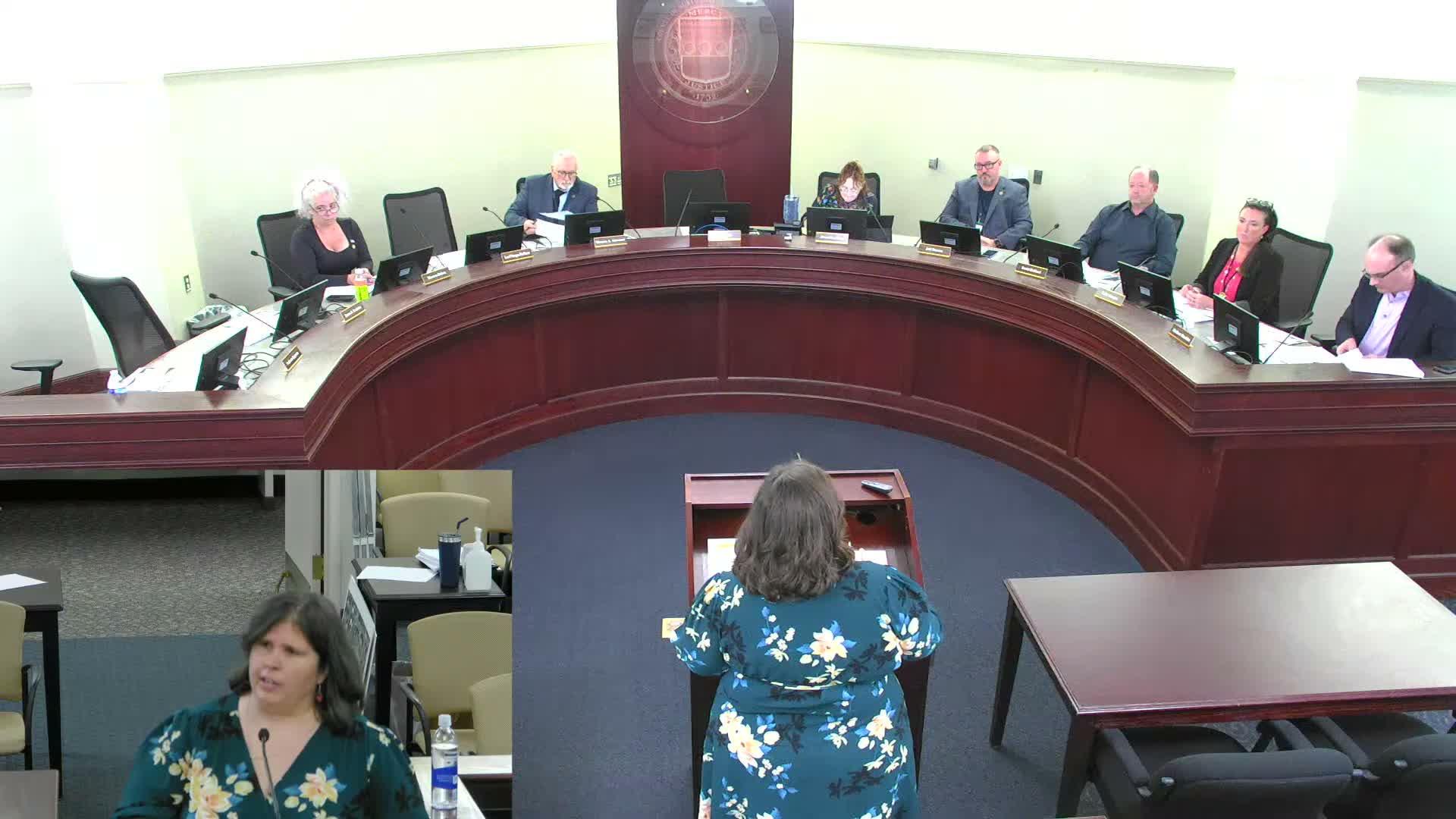
An agency official told the Human Services Committee that the county administers three home-and-community-based waivers and supports hundreds of residents through a mix of uncapped and capped funding.
The official said the county oversees the consolidated waiver (uncapped), the community living waiver (capped at $97,000 per year) and the Person/Family Directed Support (PFDS) waiver (capped at $47,000 per year). "It is uncapped funding," the agency official said of the consolidated waiver, and cited current caseloads of 429 people on the consolidated waiver, 183 on the community living waiver, 263 on PFDS and roughly 334 people on base or support-coordination-only funding. The official added that 143 people receive Family Driven Family Support Services (FDFS), typically up to about $2,000 a year for supports such as camp or respite.
The presenter said the county was approved to take direct oversight of waiver funding on 07/01/2025 as part of a multi-year program growth strategy intended to address the statewait list. Since that change, the county now manages about $125,000,000 in waiver funding plus about $1,000,000 in base funds. The speaker said the county can apply for quarterly increases and noted that, after the budget impasse last year, the county did not request an increase until February; when it did, the state awarded five additional community-living waivers and seven additional consolidated waivers. The next quarterly increase application is due May 22, the official said.
On wait-list numbers, the official said the county currently has 48 people on the wait list, with 17 in process of getting a waiver and about 31 not yet in process. The official observed that when they started the role the wait list exceeded 100 and that the county has reduced it substantially, while acknowledging there will always be ongoing need.
The official also described the provider authorization process (orientation, testing and documentation review), saying that in 2025 fourteen prospective providers entered orientation, six passed the test and one was approved; in 2026 two providers passed the test, one remained under review and one was approved — notably an equine therapy provider that did not previously exist in the area.
Other programs noted included Family Driven Family Support Services and a new Connect for Wellness RFP (base-funded) intended to create six-week, twice-weekly small groups focused on relationship-building and life skills.
The committee thanked the presenter and moved on to the Northampton County Mental Health division presentation.
The official said the county oversees the consolidated waiver (uncapped), the community living waiver (capped at $97,000 per year) and the Person/Family Directed Support (PFDS) waiver (capped at $47,000 per year). "It is uncapped funding," the agency official said of the consolidated waiver, and cited current caseloads of 429 people on the consolidated waiver, 183 on the community living waiver, 263 on PFDS and roughly 334 people on base or support-coordination-only funding. The official added that 143 people receive Family Driven Family Support Services (FDFS), typically up to about $2,000 a year for supports such as camp or respite.
The presenter said the county was approved to take direct oversight of waiver funding on 07/01/2025 as part of a multi-year program growth strategy intended to address the statewait list. Since that change, the county now manages about $125,000,000 in waiver funding plus about $1,000,000 in base funds. The speaker said the county can apply for quarterly increases and noted that, after the budget impasse last year, the county did not request an increase until February; when it did, the state awarded five additional community-living waivers and seven additional consolidated waivers. The next quarterly increase application is due May 22, the official said.
On wait-list numbers, the official said the county currently has 48 people on the wait list, with 17 in process of getting a waiver and about 31 not yet in process. The official observed that when they started the role the wait list exceeded 100 and that the county has reduced it substantially, while acknowledging there will always be ongoing need.
The official also described the provider authorization process (orientation, testing and documentation review), saying that in 2025 fourteen prospective providers entered orientation, six passed the test and one was approved; in 2026 two providers passed the test, one remained under review and one was approved — notably an equine therapy provider that did not previously exist in the area.
Other programs noted included Family Driven Family Support Services and a new Connect for Wellness RFP (base-funded) intended to create six-week, twice-weekly small groups focused on relationship-building and life skills.
The committee thanked the presenter and moved on to the Northampton County Mental Health division presentation.
View the Full Meeting & All Its Details
This article offers just a summary. Unlock complete video, transcripts, and insights as a Founder Member.
✓
Watch full, unedited meeting videos
✓
Search every word spoken in unlimited transcripts
✓
AI summaries & real-time alerts (all government levels)
✓
Permanent access to expanding government content
30-day money-back guarantee
