Saint Clair County committee forwards animal-control ordinance after heated public comment
May 08, 2026 | St. Clair County, Michigan
This article was created by AI summarizing key points discussed. AI makes mistakes, so for full details and context, please refer to the video of the full meeting. Please report any errors so we can fix them. Report an error »
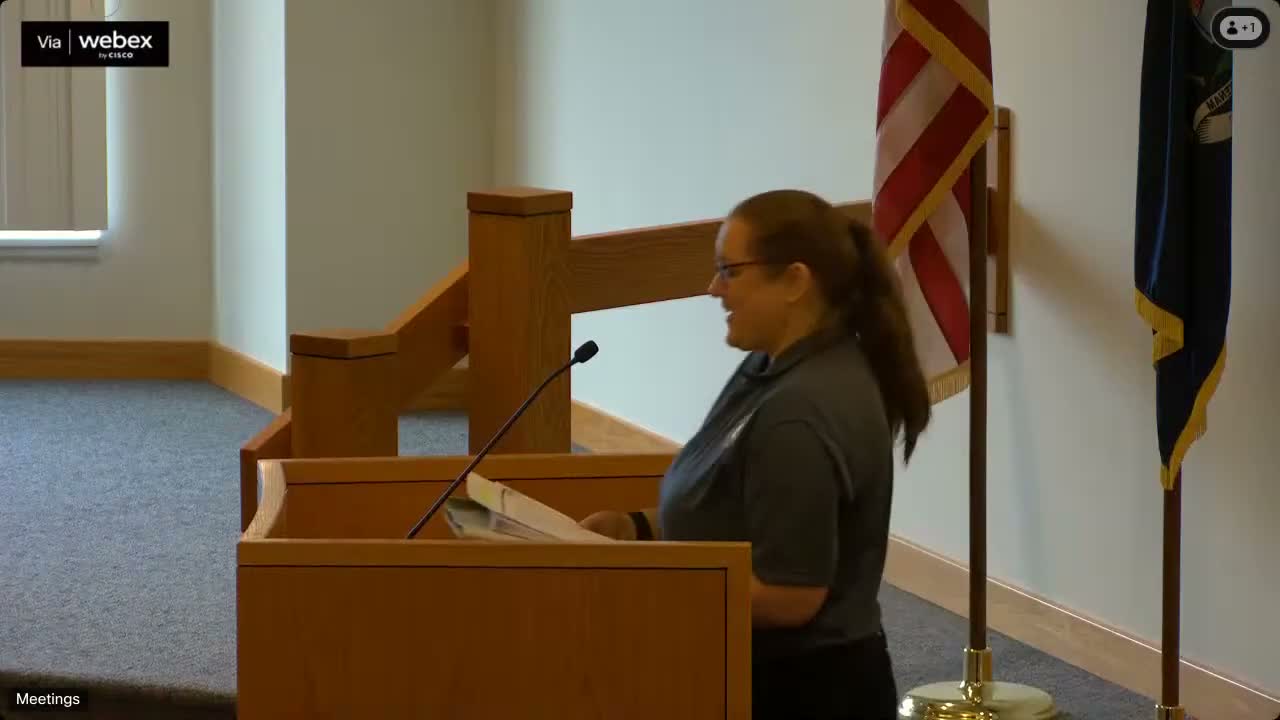
The Saint Clair County judiciary/public safety committee voted Thursday to send Resolution 26-13 — an ordinance that narrows animal-control investigatory authority and assigns criminal investigations to law enforcement — to the full Board of Commissioners.
The motion to forward the ordinance followed more than two hours of public comment and a sequence of statements from the sheriff's office, the county prosecutor and the county attorney explaining how the proposal would change operations. The sheriff told the committee: "The Saint Clair County sheriff's department is not taking over animal control. We have no interest in taking over animal control," and said deputies would handle criminal investigations while animal control would continue to assist on-scene and care for animals.
County Prosecutor Mike Wendling said charging and prosecution decisions "are my decision."
He told the committee that criminal complaints and the decision to prosecute rest with his office and stressed that deputies must handle search warrants and related law-enforcement procedures, noting that "No one in animal control holds an MCOLS license, so they need the sheriff's department to do that for them." Wendling said his office will continue to work with animal control and undertake the legal steps necessary when criminal conduct is suspected.
Melissa Miller, who identified herself as the animal-control director, disputed what she described as inaccuracies in the county counsel memorandum and warned that the proposed ordinance could "increase the law enforcement powers of animal control" and expose the county to liability. "I do not understand the proposed ordinance if its role is to increase the law enforcement powers of animal control," Miller said, and she urged officials to avoid expanding powers beyond what state law allows.
Members of the public offered sharply divided views. Supporters of the ordinance and of clearer role definitions, including livestock farmers who said MDARD (Michigan Department of Agriculture and Rural Development) already has primary authority for farm animals, argued the measure would better align local practice with state law. Opponents — including residents, nurses and rescue volunteers — said animal-control officers have the training and community relationships to perform welfare checks and that stripping investigatory responsibilities or shifting them to deputies would harm animals and community trust.
The county's corporation counsel summarized the legal rationale, citing limits in the 1919 Michigan dog law and shelter statutes and describing the ordinance as an effort to "bring the operation into compliance with the law," including language that criminal investigations "shall be investigated by a law enforcement officer with an appropriate law enforcement agency." The attorney said the ordinance preserves welfare checks by animal-control staff while ensuring law enforcement leads criminal investigations.
The committee approved forwarding Resolution 26-13 to the full board by voice vote, with one recorded opposition noted in the meeting record. The full Board of Commissioners will consider the ordinance at a later meeting; the committee did not adopt the measure as final policy but moved it for broader board consideration.
The county also heard multiple requests during public comment for an independent review of several high-profile animal-seizure cases and calls for clearer procedures and funding to support animal-control training and staffing. The prosecutor and the sheriff said they would continue to coordinate with animal control on investigations and prosecutions, and asked the public to use established legal channels for criminal matters.
Next steps: Resolution 26-13 will appear on the full board agenda; interested residents and stakeholders can watch that session for a final vote or further amendments.
The motion to forward the ordinance followed more than two hours of public comment and a sequence of statements from the sheriff's office, the county prosecutor and the county attorney explaining how the proposal would change operations. The sheriff told the committee: "The Saint Clair County sheriff's department is not taking over animal control. We have no interest in taking over animal control," and said deputies would handle criminal investigations while animal control would continue to assist on-scene and care for animals.
County Prosecutor Mike Wendling said charging and prosecution decisions "are my decision."
He told the committee that criminal complaints and the decision to prosecute rest with his office and stressed that deputies must handle search warrants and related law-enforcement procedures, noting that "No one in animal control holds an MCOLS license, so they need the sheriff's department to do that for them." Wendling said his office will continue to work with animal control and undertake the legal steps necessary when criminal conduct is suspected.
Melissa Miller, who identified herself as the animal-control director, disputed what she described as inaccuracies in the county counsel memorandum and warned that the proposed ordinance could "increase the law enforcement powers of animal control" and expose the county to liability. "I do not understand the proposed ordinance if its role is to increase the law enforcement powers of animal control," Miller said, and she urged officials to avoid expanding powers beyond what state law allows.
Members of the public offered sharply divided views. Supporters of the ordinance and of clearer role definitions, including livestock farmers who said MDARD (Michigan Department of Agriculture and Rural Development) already has primary authority for farm animals, argued the measure would better align local practice with state law. Opponents — including residents, nurses and rescue volunteers — said animal-control officers have the training and community relationships to perform welfare checks and that stripping investigatory responsibilities or shifting them to deputies would harm animals and community trust.
The county's corporation counsel summarized the legal rationale, citing limits in the 1919 Michigan dog law and shelter statutes and describing the ordinance as an effort to "bring the operation into compliance with the law," including language that criminal investigations "shall be investigated by a law enforcement officer with an appropriate law enforcement agency." The attorney said the ordinance preserves welfare checks by animal-control staff while ensuring law enforcement leads criminal investigations.
The committee approved forwarding Resolution 26-13 to the full board by voice vote, with one recorded opposition noted in the meeting record. The full Board of Commissioners will consider the ordinance at a later meeting; the committee did not adopt the measure as final policy but moved it for broader board consideration.
The county also heard multiple requests during public comment for an independent review of several high-profile animal-seizure cases and calls for clearer procedures and funding to support animal-control training and staffing. The prosecutor and the sheriff said they would continue to coordinate with animal control on investigations and prosecutions, and asked the public to use established legal channels for criminal matters.
Next steps: Resolution 26-13 will appear on the full board agenda; interested residents and stakeholders can watch that session for a final vote or further amendments.
Don't Miss a Word: See the Full Meeting!
Go beyond summaries. Unlock every video, transcript, and key insight with a Founder Membership.
✓
Get instant access to full meeting videos
✓
Search and clip any phrase from complete transcripts
✓
Receive AI-powered summaries & custom alerts
✓
Enjoy lifetime, unrestricted access to government data
30-day money-back guarantee
