Agency official urges revisions to BUILD Act to protect Orland Park infrastructure
May 07, 2026 | Orland Park, Cook County, Illinois
This article was created by AI summarizing key points discussed. AI makes mistakes, so for full details and context, please refer to the video of the full meeting. Please report any errors so we can fix them. Report an error »
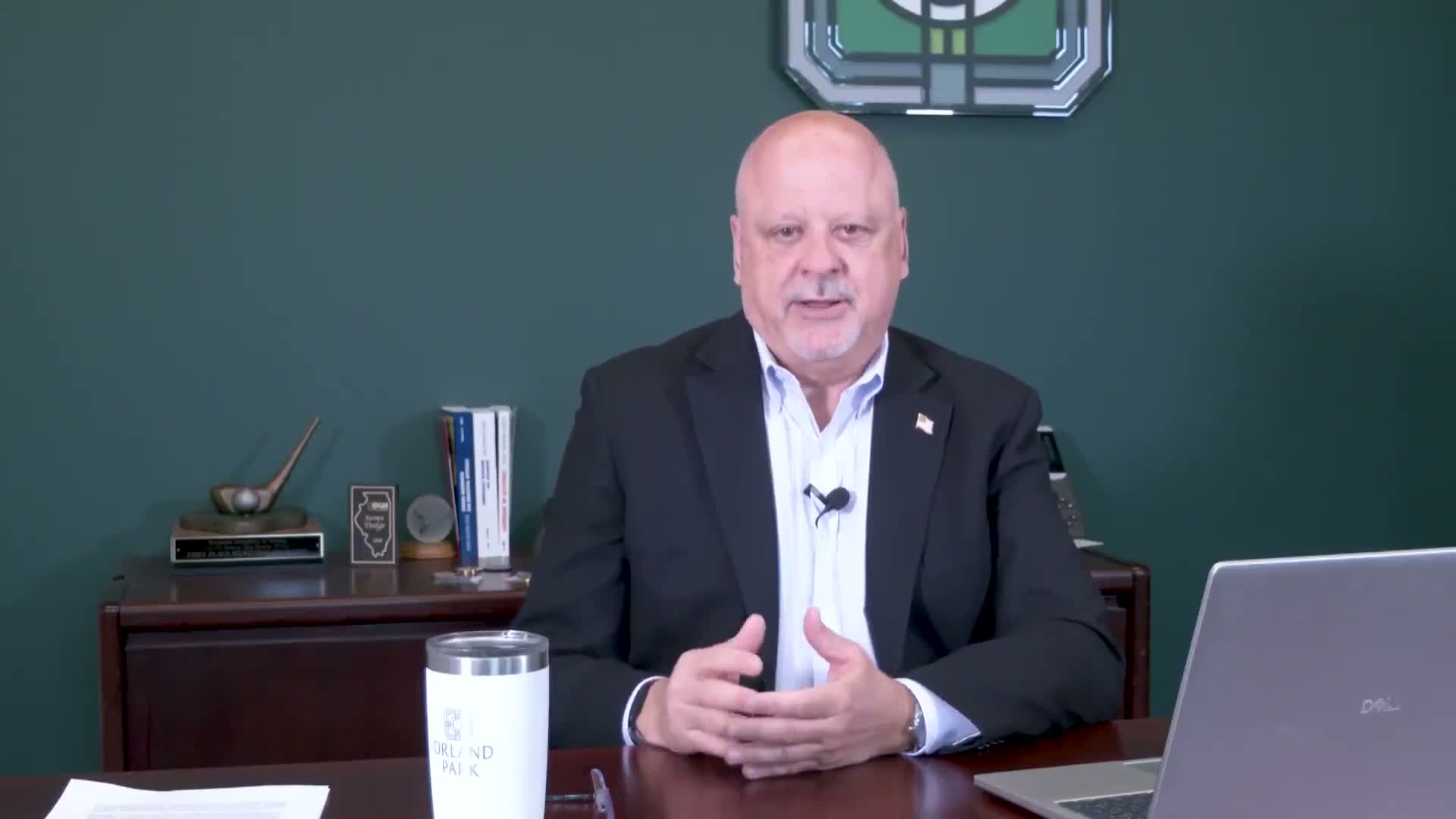
An agency official addressing Orland Park residents on an ongoing state housing bill said the BUILD Act should include explicit safeguards for local infrastructure, schools and residents' tax burdens.
"There is legislation currently moving through Springfield called the BUILD Act," the agency official said, and while the bill aims "to address housing affordability and increase supply," it must not omit protections that local communities need. The speaker warned that "adding density without upgrading the infrastructure that manages that water isn't just an inconvenience. It's a burden that lands directly on homeowners."
The official framed the concern around three practical effects: strain on stormwater and drainage systems after heavy rain; increased demand for classroom space and corresponding school expansion costs; and the potential for fiscal impacts to surface on local property tax bills if the legislation does not plan for those costs. "More homes and more density mean more family, more students, and a growing demand for classroom space," the speaker said, and cautioned that if school costs are not planned "it will eventually show up on your tax bill."
To press those points, the official said they had "personally traveled to Springfield," met with the governor's office and "met with all nine of our state legislators" and alerted local lobbyists to monitor the bill. The official said organizations such as the Illinois Municipal League have proposed amendments that the speaker believes would better address infrastructure and fiscal impacts.
"Words without action won't fix a flooded basement," the agency official said, adding that the town will "keep showing up in Springfield, and we will not stop when the concerns of Orland Park residents are heard by the governor and our legislators." The address closed with a promise of continued engagement while the BUILD Act moves through the legislative process.
"There is legislation currently moving through Springfield called the BUILD Act," the agency official said, and while the bill aims "to address housing affordability and increase supply," it must not omit protections that local communities need. The speaker warned that "adding density without upgrading the infrastructure that manages that water isn't just an inconvenience. It's a burden that lands directly on homeowners."
The official framed the concern around three practical effects: strain on stormwater and drainage systems after heavy rain; increased demand for classroom space and corresponding school expansion costs; and the potential for fiscal impacts to surface on local property tax bills if the legislation does not plan for those costs. "More homes and more density mean more family, more students, and a growing demand for classroom space," the speaker said, and cautioned that if school costs are not planned "it will eventually show up on your tax bill."
To press those points, the official said they had "personally traveled to Springfield," met with the governor's office and "met with all nine of our state legislators" and alerted local lobbyists to monitor the bill. The official said organizations such as the Illinois Municipal League have proposed amendments that the speaker believes would better address infrastructure and fiscal impacts.
"Words without action won't fix a flooded basement," the agency official said, adding that the town will "keep showing up in Springfield, and we will not stop when the concerns of Orland Park residents are heard by the governor and our legislators." The address closed with a promise of continued engagement while the BUILD Act moves through the legislative process.
View the Full Meeting & All Its Details
This article offers just a summary. Unlock complete video, transcripts, and insights as a Founder Member.
✓
Watch full, unedited meeting videos
✓
Search every word spoken in unlimited transcripts
✓
AI summaries & real-time alerts (all government levels)
✓
Permanent access to expanding government content
30-day money-back guarantee
