City council approves $29,907 for on‑premises disaster‑recovery servers after cloud cost debate
May 07, 2026 | Easthampton, School Boards, Massachusetts
This article was created by AI summarizing key points discussed. AI makes mistakes, so for full details and context, please refer to the video of the full meeting. Please report any errors so we can fix them. Report an error »
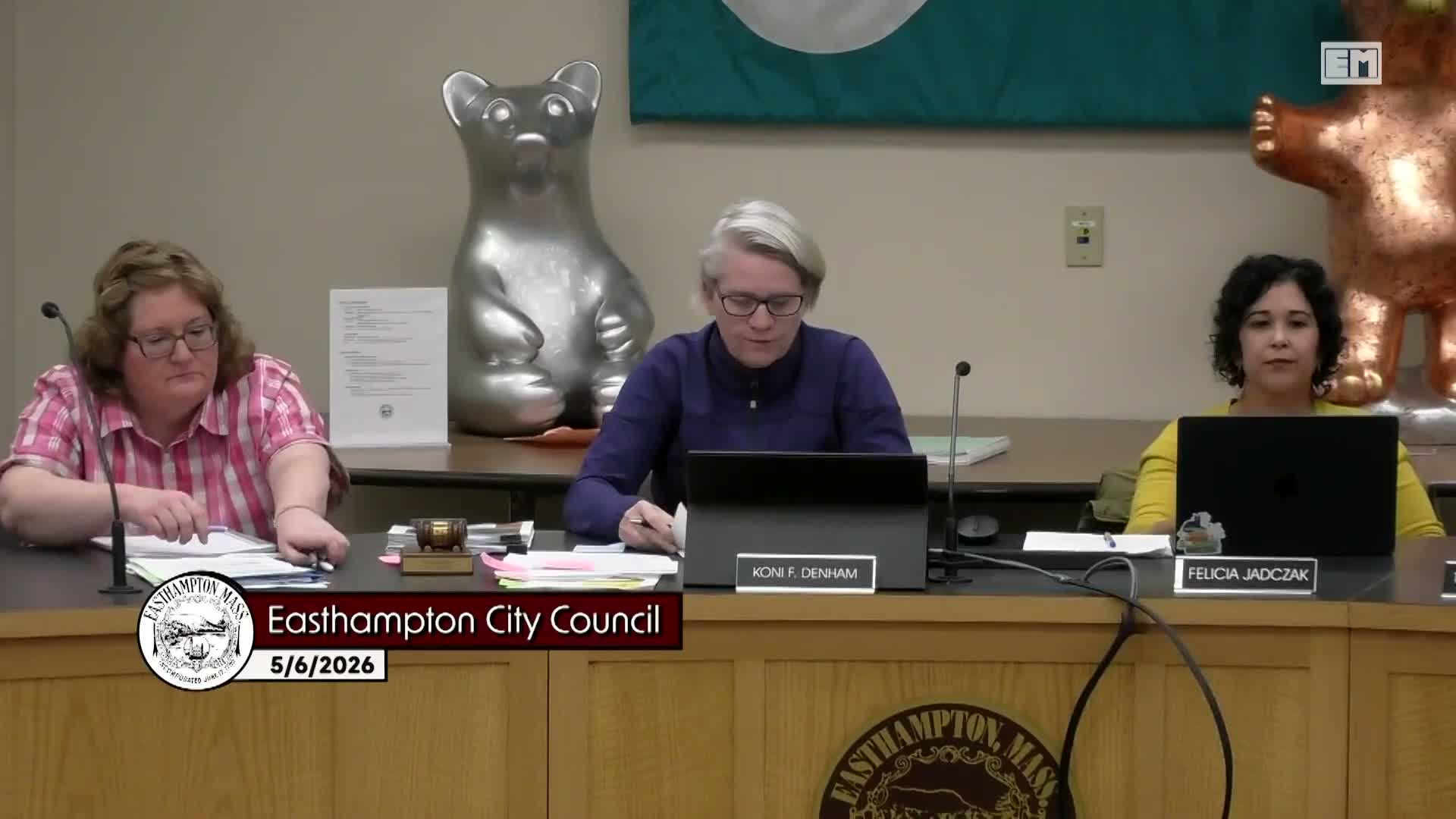
The East Hampton City Council voted to transfer $29,907.49 from free cash to buy servers and storage that officials say are needed to support a secondary, on‑premises data center for disaster recovery.
City IT staff presented the proposal during a May 6 public hearing, saying a local secondary data center would let the city switch operations immediately if the main data center was offline because of fire, a cyberattack or other catastrophe. The supplemental appropriation will pay part of the roughly $59,446.90 total project cost; the remainder will be funded from ARPA and other city resources, officials said.
The IT director told the council the city could instead replicate systems to a cloud provider as an interim option. "The cost would be almost minimal — around $600 a month to have the setup ready to go," the IT director said, adding that in active disaster operations "it will be around $8,000 a month," depending on compute needs. The director said the on‑premises option is less exposed to internet‑facing risk and would also let staff test updates and age equipment more gradually.
Councilors pressed staff on alternatives and total lifecycle costs. One member noted that $600 monthly over five years exceeds the upfront price of the hardware; another said the city might be able to spread costs predictably through the operating budget if it opted for a cloud subscription. The IT director said most hardware is purchased with five years of support and that the proposed equipment includes service agreements.
Members of the public, including local residents with IT and disaster‑recovery experience, urged the council to buy the on‑site hardware, citing concerns about cloud outages and the value of keeping critical municipal systems under local control.
A motion to transfer the funds from free cash to "service" carried in a voice vote. The appropriation request as approved will fund a portion of two PowerEdge servers and one PowerVault storage system intended to speed recovery of on‑premises municipal systems in the event of hardware failure, extended outage, or cyber incident.
Next steps: the funding will be added to the capital procurement process so the city can order and install the equipment; staff also said they will continue to pursue grants and examine longer‑term regional sharing or school collaborations.
City IT staff presented the proposal during a May 6 public hearing, saying a local secondary data center would let the city switch operations immediately if the main data center was offline because of fire, a cyberattack or other catastrophe. The supplemental appropriation will pay part of the roughly $59,446.90 total project cost; the remainder will be funded from ARPA and other city resources, officials said.
The IT director told the council the city could instead replicate systems to a cloud provider as an interim option. "The cost would be almost minimal — around $600 a month to have the setup ready to go," the IT director said, adding that in active disaster operations "it will be around $8,000 a month," depending on compute needs. The director said the on‑premises option is less exposed to internet‑facing risk and would also let staff test updates and age equipment more gradually.
Councilors pressed staff on alternatives and total lifecycle costs. One member noted that $600 monthly over five years exceeds the upfront price of the hardware; another said the city might be able to spread costs predictably through the operating budget if it opted for a cloud subscription. The IT director said most hardware is purchased with five years of support and that the proposed equipment includes service agreements.
Members of the public, including local residents with IT and disaster‑recovery experience, urged the council to buy the on‑site hardware, citing concerns about cloud outages and the value of keeping critical municipal systems under local control.
A motion to transfer the funds from free cash to "service" carried in a voice vote. The appropriation request as approved will fund a portion of two PowerEdge servers and one PowerVault storage system intended to speed recovery of on‑premises municipal systems in the event of hardware failure, extended outage, or cyber incident.
Next steps: the funding will be added to the capital procurement process so the city can order and install the equipment; staff also said they will continue to pursue grants and examine longer‑term regional sharing or school collaborations.
Don't Miss a Word: See the Full Meeting!
Go beyond summaries. Unlock every video, transcript, and key insight with a Founder Membership.
✓
Get instant access to full meeting videos
✓
Search and clip any phrase from complete transcripts
✓
Receive AI-powered summaries & custom alerts
✓
Enjoy lifetime, unrestricted access to government data
30-day money-back guarantee
