Mary Anne Gonzales pleads no contest; judge imposes probated terms, treatment referrals and community service
May 07, 2026 | Judge Stephanie Boyd 187th District, District Court Judges, Judicial, Texas
This article was created by AI summarizing key points discussed. AI makes mistakes, so for full details and context, please refer to the video of the full meeting. Please report any errors so we can fix them. Report an error »
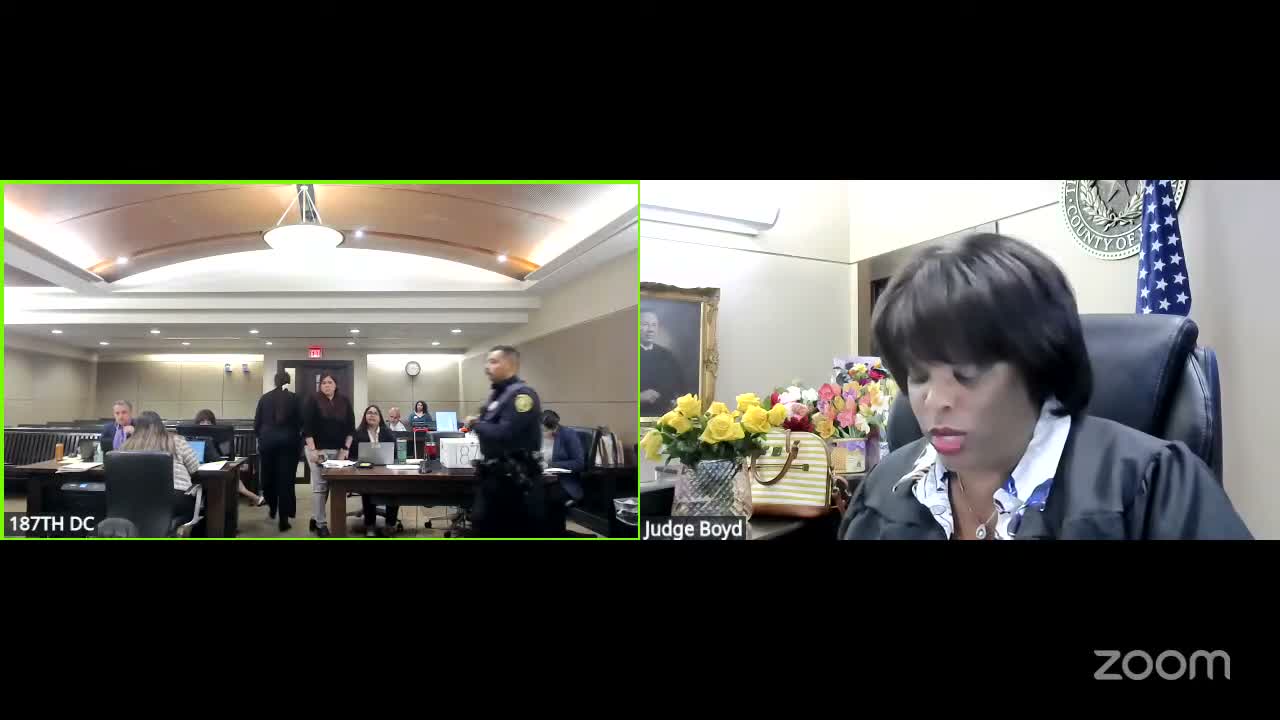
At a docket call, the court accepted no contest pleas from Mary Anne Gonzales on two cause numbers and, after reviewing stipulated evidence and plea admonishments, found sufficient evidence to adjudicate guilt and proceed to sentencing.
The judge ordered two concurrent, probated two‑year terms and a $2,000 fine that will be probated. The court also ordered 200 hours of community service restitution, with 100 hours to be deducted upon completion of a job skills course and additional hourly deductions for each sober‑support meeting attended. The judge ordered regular reporting to probation (by Zoom or in person), random urine analyses, a TAP evaluation with follow‑up on the evaluation's recommendations, and an in‑custody referral to felony drug court. The defendant was ordered to provide proof of employment within 45 days of release and was prohibited from working as a home‑health care provider or in roles involving minors and from residing in a household with minors while on probation.
Defense counsel asked the court to recognize the defendant as indigent and requested relief for fines and fees; the judge heard the request and addressed the defendant directly about sobriety and avoiding relationships or living situations that could jeopardize recovery. The judge emphasized support services and housing assistance available through the drug‑court referral.
"Felony drug court is a very, very good program," the judge said, and signed the referral so the defendant could be seen by the program the following week. The court also signed required paperwork, including the trial court certification of defendant's rights to appeal, and reminded the defendant that, as part of the plea bargain and waiver of appeal, the court's sentence could not be appealed except on narrow procedural grounds.
The judge ordered two concurrent, probated two‑year terms and a $2,000 fine that will be probated. The court also ordered 200 hours of community service restitution, with 100 hours to be deducted upon completion of a job skills course and additional hourly deductions for each sober‑support meeting attended. The judge ordered regular reporting to probation (by Zoom or in person), random urine analyses, a TAP evaluation with follow‑up on the evaluation's recommendations, and an in‑custody referral to felony drug court. The defendant was ordered to provide proof of employment within 45 days of release and was prohibited from working as a home‑health care provider or in roles involving minors and from residing in a household with minors while on probation.
Defense counsel asked the court to recognize the defendant as indigent and requested relief for fines and fees; the judge heard the request and addressed the defendant directly about sobriety and avoiding relationships or living situations that could jeopardize recovery. The judge emphasized support services and housing assistance available through the drug‑court referral.
"Felony drug court is a very, very good program," the judge said, and signed the referral so the defendant could be seen by the program the following week. The court also signed required paperwork, including the trial court certification of defendant's rights to appeal, and reminded the defendant that, as part of the plea bargain and waiver of appeal, the court's sentence could not be appealed except on narrow procedural grounds.
View the Full Meeting & All Its Details
This article offers just a summary. Unlock complete video, transcripts, and insights as a Founder Member.
✓
Watch full, unedited meeting videos
✓
Search every word spoken in unlimited transcripts
✓
AI summaries & real-time alerts (all government levels)
✓
Permanent access to expanding government content
30-day money-back guarantee
