NFP board weighs ASLA 2040 climate-and-biodiversity plan as a resource for its guide
May 07, 2026 | Kalamazoo City, Kalamazoo County, Michigan
This article was created by AI summarizing key points discussed. AI makes mistakes, so for full details and context, please refer to the video of the full meeting. Please report any errors so we can fix them. Report an error »
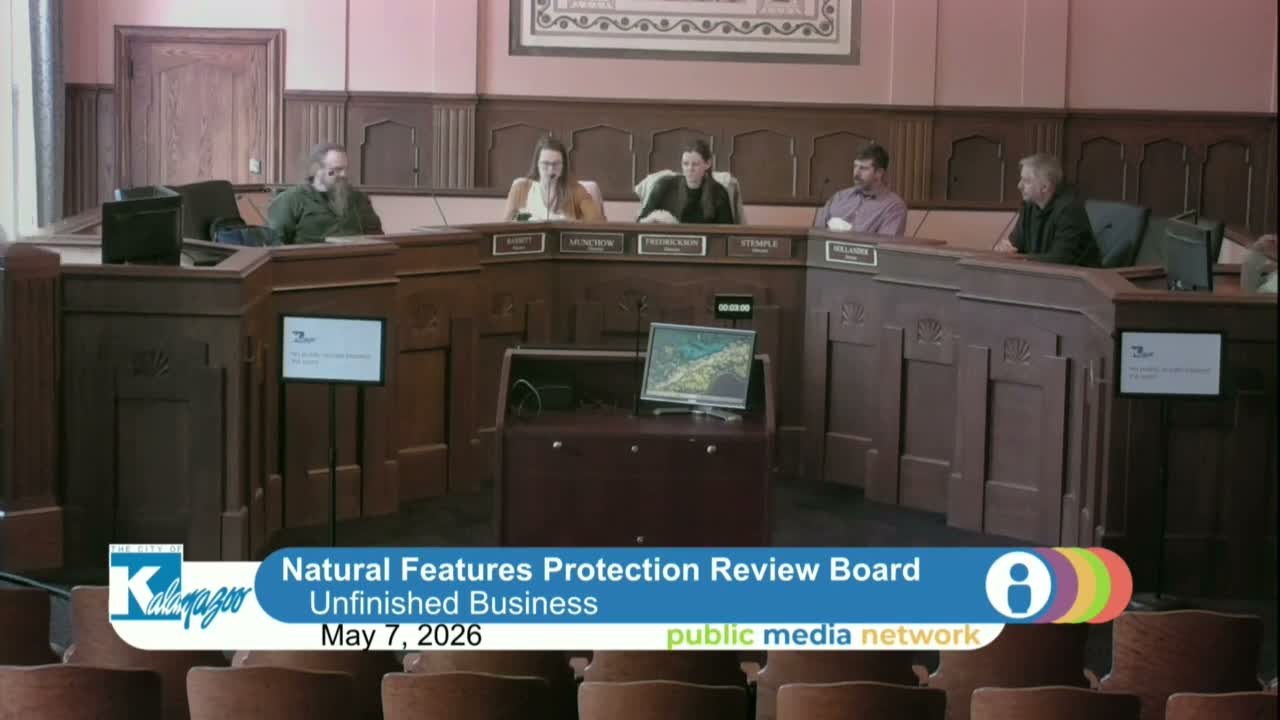
During the NFP work session the board discussed whether to reference the American Society of Landscape Architects (ASLA) 'Landscape Architecture 2040: Climate and Biodiversity Action Plan' in the city’s Natural Features Protection (NFP) Guide. Director Munchow introduced the ASLA document and asked staff to circulate it for board members to read before an upcoming meeting.
Staff emphasized a distinction the group returned to repeatedly: the guide is an informal resource that can host references and educational content, while substantive regulatory changes would require ordinance amendments, legal review and approvals by other bodies. ‘‘The guide is less restrictive… it’s more of an informal resource,’’ Nolan said, and staff proposed sharing the ASLA material and scheduling a deeper work session.
Members discussed trade-offs: one board member representing developers said adding more prescriptive requirements could raise costs and reduce accessibility for smaller applicants, while others noted alignment between ASLA goals and the NFP’s long-range aims such as native plantings, water conservation and nature-based stormwater solutions. Board members asked staff to invite technical speakers (stormwater engineers, the city forester/arborist) and to circulate the ASLA plan prior to the next meeting so the board can determine which recommendations might be practical to reference in the guide without creating new regulatory burdens.
Staff connected the conversation to the city’s upcoming master plan update and said the timing is appropriate to coordinate broader sustainability goals with NFP guidance. No formal changes to the guide or ordinance were adopted; the board agreed to review the ASLA document and continue the discussion at a future work session.
Staff emphasized a distinction the group returned to repeatedly: the guide is an informal resource that can host references and educational content, while substantive regulatory changes would require ordinance amendments, legal review and approvals by other bodies. ‘‘The guide is less restrictive… it’s more of an informal resource,’’ Nolan said, and staff proposed sharing the ASLA material and scheduling a deeper work session.
Members discussed trade-offs: one board member representing developers said adding more prescriptive requirements could raise costs and reduce accessibility for smaller applicants, while others noted alignment between ASLA goals and the NFP’s long-range aims such as native plantings, water conservation and nature-based stormwater solutions. Board members asked staff to invite technical speakers (stormwater engineers, the city forester/arborist) and to circulate the ASLA plan prior to the next meeting so the board can determine which recommendations might be practical to reference in the guide without creating new regulatory burdens.
Staff connected the conversation to the city’s upcoming master plan update and said the timing is appropriate to coordinate broader sustainability goals with NFP guidance. No formal changes to the guide or ordinance were adopted; the board agreed to review the ASLA document and continue the discussion at a future work session.
View the Full Meeting & All Its Details
This article offers just a summary. Unlock complete video, transcripts, and insights as a Founder Member.
✓
Watch full, unedited meeting videos
✓
Search every word spoken in unlimited transcripts
✓
AI summaries & real-time alerts (all government levels)
✓
Permanent access to expanding government content
30-day money-back guarantee
