Public hearing on University Hills amendment draws environment and access concerns; council leaves record open
May 07, 2026 | San Bernardino, San Bernardino County, California
This article was created by AI summarizing key points discussed. AI makes mistakes, so for full details and context, please refer to the video of the full meeting. Please report any errors so we can fix them. Report an error »
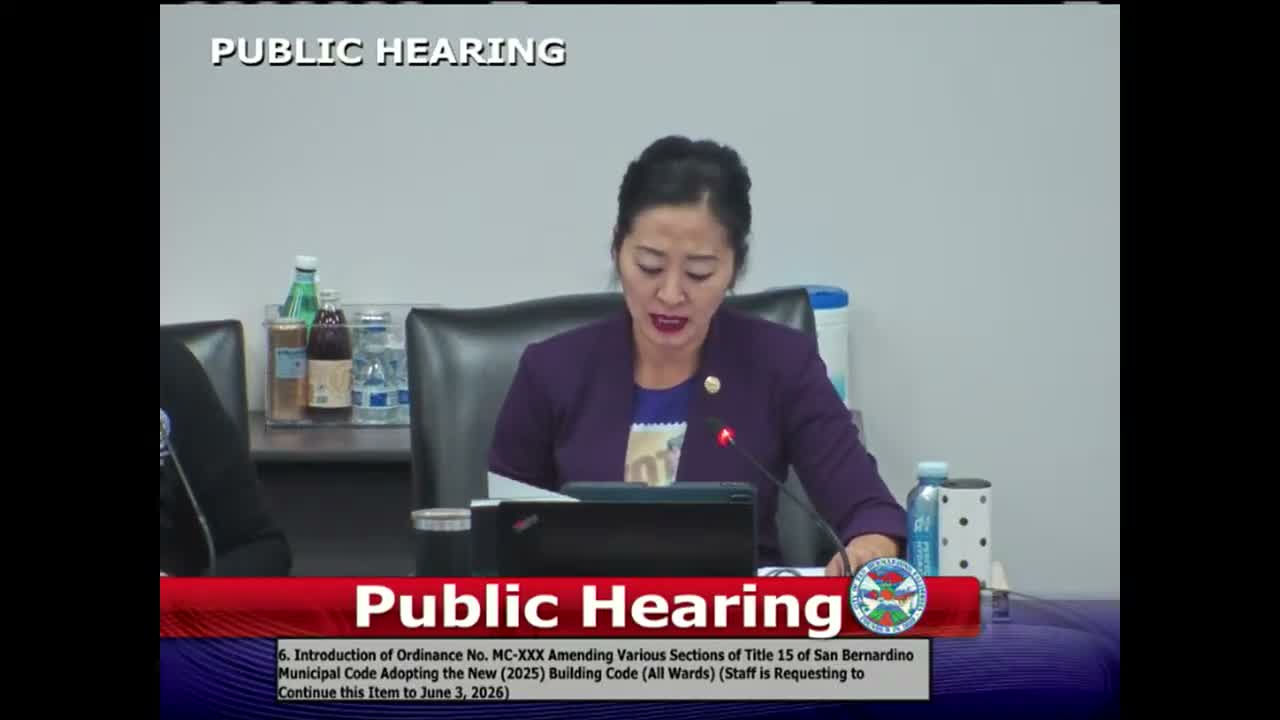
City staff opened a public hearing on an amendment to the University Hills specific plan and a proposed mitigation and monitoring program. The project covers approximately 404 acres north of the university and would reduce previously approved intensity — from earlier approvals near 980 units to a revised plan of about 327 single‑family lots with increased open space and circulation adjustments.
Presenters described site improvements, underground utilities, fire‑resilience landscaping and required servitudes and access points. Staff recommended adoption of a resolution approving the CEQA addendum (and related monitoring) and scheduling subsequent ordinance readings as required.
Public commenters raised environmental and procedural concerns. Chase Presiano, a local resident and representative of a conservation group, asked the council to call for further environmental review, arguing that the addendum omitted updated analyses of wildlife diversity and air‑quality impacts and recommending bird‑safe glazing and other mitigation. "La ecología... encontró que el análisis del addendum no contó por la diversidad del sitio," the speaker said. Ronald (last name given in the record) urged transparency and community notification, and asked how residents would find material referenced in the staff packet.
City consultants and the project applicant responded that prior geotechnical and biological studies were prepared (including work in 2005–2007 and earlier), that supplemental studies and mitigation measures were added to the current addendum and that several implementation steps (memordandum of understanding, county servitude and coordination) remain to secure approvals. Kevin Thomas, who described work with city staff and consultants, said additional biological mitigation had been prepared and that the addendum did not trigger a full subsequent EIR per staff review.
Council action and next steps: after public comment and technical responses, the council left the public hearing open to allow further public input and directed staff to continue coordination with the university, county agencies and project applicants. No final adoption occurred at this meeting; staff and the applicant will continue outreach and return with the appropriate next steps, including future readings of the ordinance and potential refinements to mitigation and access agreements.
Why it matters: the proposed amendment reduces overall density and increases open space but raises questions about environmental protections, access near the San Andreas fault zone and community notification; the project still requires coordination with county flood-control and other agencies before final approvals.
Presenters described site improvements, underground utilities, fire‑resilience landscaping and required servitudes and access points. Staff recommended adoption of a resolution approving the CEQA addendum (and related monitoring) and scheduling subsequent ordinance readings as required.
Public commenters raised environmental and procedural concerns. Chase Presiano, a local resident and representative of a conservation group, asked the council to call for further environmental review, arguing that the addendum omitted updated analyses of wildlife diversity and air‑quality impacts and recommending bird‑safe glazing and other mitigation. "La ecología... encontró que el análisis del addendum no contó por la diversidad del sitio," the speaker said. Ronald (last name given in the record) urged transparency and community notification, and asked how residents would find material referenced in the staff packet.
City consultants and the project applicant responded that prior geotechnical and biological studies were prepared (including work in 2005–2007 and earlier), that supplemental studies and mitigation measures were added to the current addendum and that several implementation steps (memordandum of understanding, county servitude and coordination) remain to secure approvals. Kevin Thomas, who described work with city staff and consultants, said additional biological mitigation had been prepared and that the addendum did not trigger a full subsequent EIR per staff review.
Council action and next steps: after public comment and technical responses, the council left the public hearing open to allow further public input and directed staff to continue coordination with the university, county agencies and project applicants. No final adoption occurred at this meeting; staff and the applicant will continue outreach and return with the appropriate next steps, including future readings of the ordinance and potential refinements to mitigation and access agreements.
Why it matters: the proposed amendment reduces overall density and increases open space but raises questions about environmental protections, access near the San Andreas fault zone and community notification; the project still requires coordination with county flood-control and other agencies before final approvals.
Don't Miss a Word: See the Full Meeting!
Go beyond summaries. Unlock every video, transcript, and key insight with a Founder Membership.
✓
Get instant access to full meeting videos
✓
Search and clip any phrase from complete transcripts
✓
Receive AI-powered summaries & custom alerts
✓
Enjoy lifetime, unrestricted access to government data
30-day money-back guarantee
