Niagara‑Wheatfield previews $96.48 million budget, cites about $7 million gap to be covered with reserves
May 07, 2026 | NIAGARA-WHEATFIELD CENTRAL SCHOOL DISTRICT, School Districts, New York
This article was created by AI summarizing key points discussed. AI makes mistakes, so for full details and context, please refer to the video of the full meeting. Please report any errors so we can fix them. Report an error »
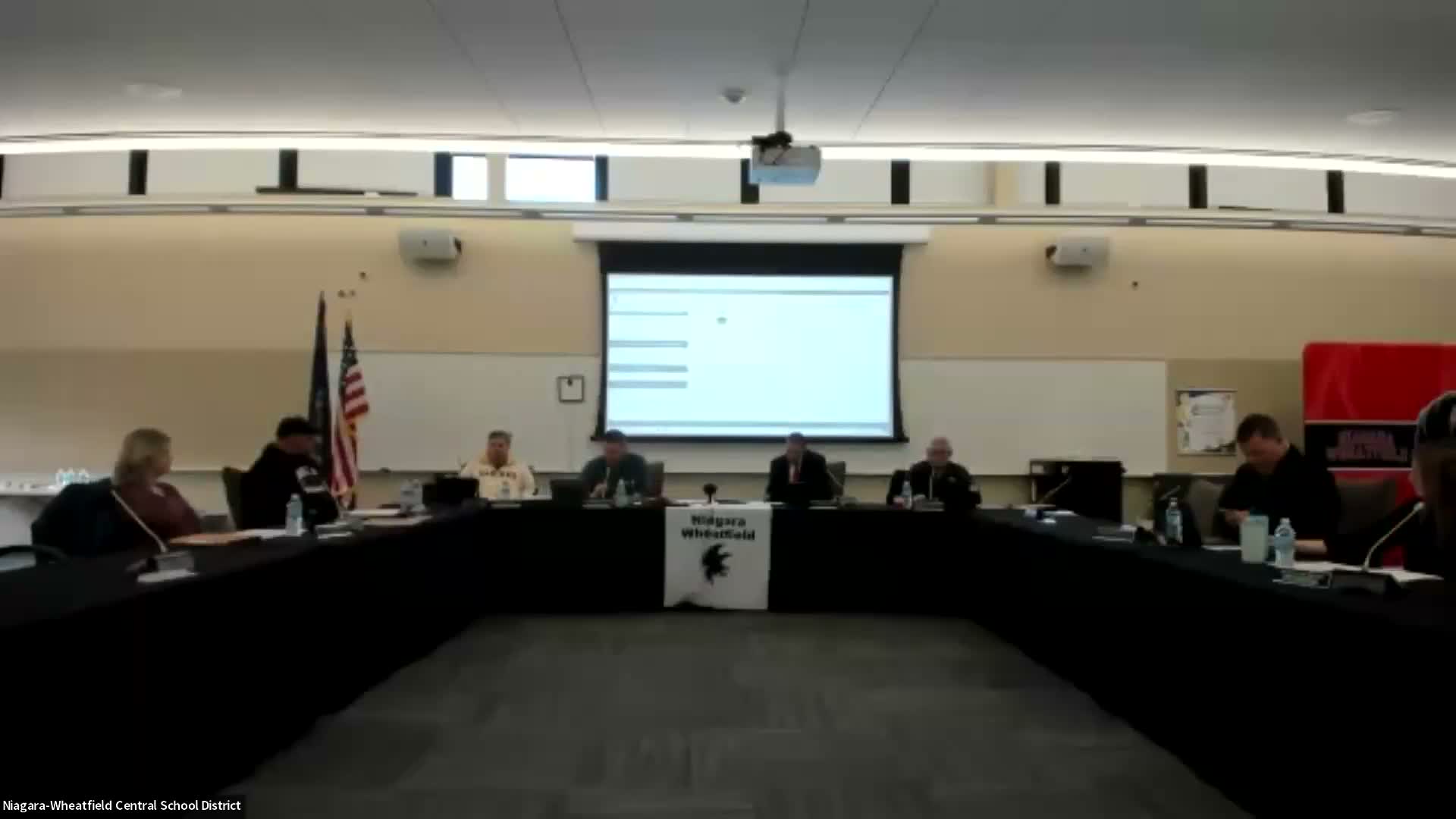
The Niagara‑Wheatfield Board of Education held its required budget hearing, where district staff presented a proposed $96,480,000 expenditure budget and projected revenues of about $89,000,261, leaving an estimated $7 million shortfall that the district plans to cover with a mix of reserves and transfers.
At the hearing a staff member who led the finance presentation said the district is working from the governor’s proposed budget, which includes a 1% increase in foundation aid; the presenter noted the state legislature had proposed 2% in separate measures and the final state budget was not yet adopted. “We still don’t have a state budget adopted yet,” the staff member said. “We’re going with what the governor proposed in her proposal.”
Officials explained the district’s revenue mix and reserve strategy: real property taxes account for roughly 40% of revenues and state aid about 46%, according to the presentation. The budget documents shown at the hearing list planned uses of restricted reserves, including a $944,000 transportation reserve expenditure to buy buses, an $800,000 interfund transfer tied to an earlier greenway bond, and drawdowns from retirement-related reserves to offset retirement liabilities.
Superintendent (identified in the meeting) and finance staff outlined how the remaining gap would be closed: roughly $500,000 from the workers’ compensation reserve and about $750,000 from retirement-related reserves, with limited use of the unappropriated fund balance. The superintendent noted the district aims to avoid overusing that balance because New York school districts are limited to keeping roughly 4% in unappropriated fund balance (the presentation cited a district threshold just under $4 million).
The presenters reiterated the district’s recent fiscal history and why reserves are necessary: they described a period in 2013–14 when depleted reserves forced the district to borrow for payroll, and said maintaining reserves helps lower fiscal stress and borrowing costs. The presentation also noted the district expects about 29 teacher retirements this year, which factors into reserve planning for accrued liabilities.
Board members were reminded that the budget vote and board elections will take place May 19 in the same room, with polling hours from 8 a.m. to 9 p.m.; presenters encouraged community turnout. No formal vote on the budget occurred at the hearing — the meeting was the required public review before the ballot.
What’s next: The budget will be decided by voters May 19; district officials said they will refine reserve uses if the final state aid numbers change after the state budget is adopted.
At the hearing a staff member who led the finance presentation said the district is working from the governor’s proposed budget, which includes a 1% increase in foundation aid; the presenter noted the state legislature had proposed 2% in separate measures and the final state budget was not yet adopted. “We still don’t have a state budget adopted yet,” the staff member said. “We’re going with what the governor proposed in her proposal.”
Officials explained the district’s revenue mix and reserve strategy: real property taxes account for roughly 40% of revenues and state aid about 46%, according to the presentation. The budget documents shown at the hearing list planned uses of restricted reserves, including a $944,000 transportation reserve expenditure to buy buses, an $800,000 interfund transfer tied to an earlier greenway bond, and drawdowns from retirement-related reserves to offset retirement liabilities.
Superintendent (identified in the meeting) and finance staff outlined how the remaining gap would be closed: roughly $500,000 from the workers’ compensation reserve and about $750,000 from retirement-related reserves, with limited use of the unappropriated fund balance. The superintendent noted the district aims to avoid overusing that balance because New York school districts are limited to keeping roughly 4% in unappropriated fund balance (the presentation cited a district threshold just under $4 million).
The presenters reiterated the district’s recent fiscal history and why reserves are necessary: they described a period in 2013–14 when depleted reserves forced the district to borrow for payroll, and said maintaining reserves helps lower fiscal stress and borrowing costs. The presentation also noted the district expects about 29 teacher retirements this year, which factors into reserve planning for accrued liabilities.
Board members were reminded that the budget vote and board elections will take place May 19 in the same room, with polling hours from 8 a.m. to 9 p.m.; presenters encouraged community turnout. No formal vote on the budget occurred at the hearing — the meeting was the required public review before the ballot.
What’s next: The budget will be decided by voters May 19; district officials said they will refine reserve uses if the final state aid numbers change after the state budget is adopted.
Don't Miss a Word: See the Full Meeting!
Go beyond summaries. Unlock every video, transcript, and key insight with a Founder Membership.
✓
Get instant access to full meeting videos
✓
Search and clip any phrase from complete transcripts
✓
Receive AI-powered summaries & custom alerts
✓
Enjoy lifetime, unrestricted access to government data
30-day money-back guarantee
