Judiciary hears outline for S.193 forensic-facility feasibility plan, debates who it should serve and who would run it
May 07, 2026 | Judiciary, HOUSE OF REPRESENTATIVES, Committees, Legislative , Vermont
This article was created by AI summarizing key points discussed. AI makes mistakes, so for full details and context, please refer to the video of the full meeting. Please report any errors so we can fix them. Report an error »
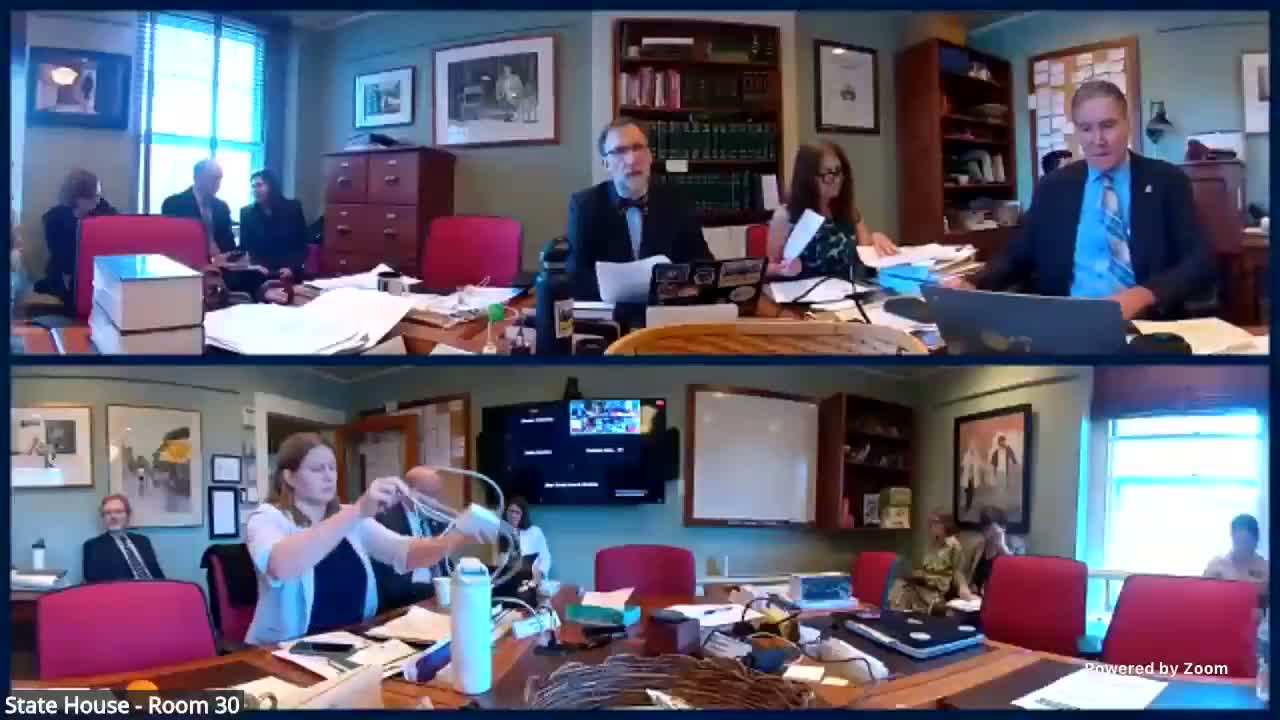
The Judiciary Committee on May 7 reviewed a consolidated draft of S.193 that would require the secretary to deliver a feasibility plan for creating a standalone forensic facility, and members spent the meeting disputing how narrowly the facility's population should be defined and which state agencies should operate or provide security for it.
Katie McLean of the Office of Legislative Counsel told the committee the integrated draft combines changes from Corrections and Institutions, Human Services and Health Care and adds a new legislative-intent section. "It is the intent that DOC shall not operate, or staff a forensic facility, with the exception that employees of DOC may provide security to the outside perimeter of a forensic facility if it's co-located on the grounds of a correctional facility," McLean said while summarizing the draft.
The draft defines a forensic facility to provide a continuum of services including competency restoration, evaluation, stabilization, treatment and care. It also lists required elements for the feasibility plan the secretary must deliver: a proposed location (independent of a correctional facility, or sight-and-sound separated if on the same grounds), proposed design that can separate residents by gender and clinical need, bed counts, the entity or entities responsible for operation (the draft currently says DOC shall not be the operator), construction and operating cost estimates, staffing levels and qualifications, a physical and perimeter security plan, resident discharge and community monitoring plans, and whether out-of-state placement is needed while Vermont develops capacity.
Committee members focused on two central controversies. First, several witnesses and members objected to language that would limit the population to people described as having a "mental health condition," arguing that the bill should instead use the broader phrase "qualifying condition" to include people with intellectual or developmental disabilities, traumatic brain injury and other cognitive impairments who may be involved with the criminal-justice system. "That would eliminate the population that would fall under Act 2 48," Kim McManus of the Department of State's Attorneys and Sheriffs warned, arguing that the narrower language would inappropriately exclude people who might benefit from competency restoration or other services.
Second, the committee debated whether licensing the facility as a therapeutic community residence (TCR) is appropriate. Pam Coda, director of the survey and certification unit at DAIL, said existing TCR regulations include a secure residential recovery section created after Act 79 of 2012 and that "a lot of the things that you've been discussing would be taken care of during the promulgation of rules." She also said TCR licensure generally requires residents to be 18 or older and that a facility inside a correctional setting could not be licensed as a TCR under current rules. Coda added that the feasibility study should analyze what waivers or new rule sections would be required.
Officials described real-world custody complexities that the committee must account for. A senior state official said the system sometimes has people who remain in custody for months or longer while courts and programs are sorted: "There are 2 people right now, 1 who's there for 30 days and 1 who's there for a year," the official said, noting lengthy stays are often tied to developing appropriate programs and placements.
Witnesses emphasized that the feasibility plan should include concrete transition planning to avoid returning people to unsafe or unsupported community situations after release. Committee members suggested requiring community transition plans and coordination with families, community agencies and victim services. Several members also urged the plan to spell out interim oversight: McLean said the draft calls for interim updates to the joint legislative justice oversight committee in August and November 2026 and for a full plan to come back on Jan. 15 (date as drafted in the bill).
Multiple members urged the committee to avoid locking the state into a licensing approach that would slow or limit implementation. "If this definition stays in, that very much limits the possibility of this facility," one prosecutor cautioned, referencing a draft sentence tying the facility's definition to existing TCR licensure. Pam Coda and others recommended using the feasibility study to weigh options, including whether facility oversight and security would best be provided through corrections'built perimeter security in a correctional setting or through licensure and rulemaking outside a corrections environment.
Department of Mental Health Commissioner Emily Haas urged the committee to retain "qualifying condition" language and to consider reentering a supervisory role for DOC in post-discharge supervision in collaboration with treatment providers, arguing that the bill as amended by other committees risked reading too closely to existing structures and thereby missing the targeted population S.193 intends to serve.
The committee did not take formal votes on the bill during the session. Members agreed to continue work with Corrections & Institutions, Human Services and Health Care, and to invite additional witnesses (including the commissioner and other agency leads) for follow-up testimony. The committee planned to continue discussion after scheduled testimony from other witnesses and interim briefings required by the draft.
What's next: committee staff and agency witnesses will refine definitions ("qualifying condition" vs. narrower mental-health language), clarify how licensing or rulemaking would interact with corrections'provided security, and supply the feasibility-plan details requested by the committee. The committee scheduled more testimony later in the morning and interim check-in dates were included in the draft.
Katie McLean of the Office of Legislative Counsel told the committee the integrated draft combines changes from Corrections and Institutions, Human Services and Health Care and adds a new legislative-intent section. "It is the intent that DOC shall not operate, or staff a forensic facility, with the exception that employees of DOC may provide security to the outside perimeter of a forensic facility if it's co-located on the grounds of a correctional facility," McLean said while summarizing the draft.
The draft defines a forensic facility to provide a continuum of services including competency restoration, evaluation, stabilization, treatment and care. It also lists required elements for the feasibility plan the secretary must deliver: a proposed location (independent of a correctional facility, or sight-and-sound separated if on the same grounds), proposed design that can separate residents by gender and clinical need, bed counts, the entity or entities responsible for operation (the draft currently says DOC shall not be the operator), construction and operating cost estimates, staffing levels and qualifications, a physical and perimeter security plan, resident discharge and community monitoring plans, and whether out-of-state placement is needed while Vermont develops capacity.
Committee members focused on two central controversies. First, several witnesses and members objected to language that would limit the population to people described as having a "mental health condition," arguing that the bill should instead use the broader phrase "qualifying condition" to include people with intellectual or developmental disabilities, traumatic brain injury and other cognitive impairments who may be involved with the criminal-justice system. "That would eliminate the population that would fall under Act 2 48," Kim McManus of the Department of State's Attorneys and Sheriffs warned, arguing that the narrower language would inappropriately exclude people who might benefit from competency restoration or other services.
Second, the committee debated whether licensing the facility as a therapeutic community residence (TCR) is appropriate. Pam Coda, director of the survey and certification unit at DAIL, said existing TCR regulations include a secure residential recovery section created after Act 79 of 2012 and that "a lot of the things that you've been discussing would be taken care of during the promulgation of rules." She also said TCR licensure generally requires residents to be 18 or older and that a facility inside a correctional setting could not be licensed as a TCR under current rules. Coda added that the feasibility study should analyze what waivers or new rule sections would be required.
Officials described real-world custody complexities that the committee must account for. A senior state official said the system sometimes has people who remain in custody for months or longer while courts and programs are sorted: "There are 2 people right now, 1 who's there for 30 days and 1 who's there for a year," the official said, noting lengthy stays are often tied to developing appropriate programs and placements.
Witnesses emphasized that the feasibility plan should include concrete transition planning to avoid returning people to unsafe or unsupported community situations after release. Committee members suggested requiring community transition plans and coordination with families, community agencies and victim services. Several members also urged the plan to spell out interim oversight: McLean said the draft calls for interim updates to the joint legislative justice oversight committee in August and November 2026 and for a full plan to come back on Jan. 15 (date as drafted in the bill).
Multiple members urged the committee to avoid locking the state into a licensing approach that would slow or limit implementation. "If this definition stays in, that very much limits the possibility of this facility," one prosecutor cautioned, referencing a draft sentence tying the facility's definition to existing TCR licensure. Pam Coda and others recommended using the feasibility study to weigh options, including whether facility oversight and security would best be provided through corrections'built perimeter security in a correctional setting or through licensure and rulemaking outside a corrections environment.
Department of Mental Health Commissioner Emily Haas urged the committee to retain "qualifying condition" language and to consider reentering a supervisory role for DOC in post-discharge supervision in collaboration with treatment providers, arguing that the bill as amended by other committees risked reading too closely to existing structures and thereby missing the targeted population S.193 intends to serve.
The committee did not take formal votes on the bill during the session. Members agreed to continue work with Corrections & Institutions, Human Services and Health Care, and to invite additional witnesses (including the commissioner and other agency leads) for follow-up testimony. The committee planned to continue discussion after scheduled testimony from other witnesses and interim briefings required by the draft.
What's next: committee staff and agency witnesses will refine definitions ("qualifying condition" vs. narrower mental-health language), clarify how licensing or rulemaking would interact with corrections'provided security, and supply the feasibility-plan details requested by the committee. The committee scheduled more testimony later in the morning and interim check-in dates were included in the draft.
View the Full Meeting & All Its Details
This article offers just a summary. Unlock complete video, transcripts, and insights as a Founder Member.
✓
Watch full, unedited meeting videos
✓
Search every word spoken in unlimited transcripts
✓
AI summaries & real-time alerts (all government levels)
✓
Permanent access to expanding government content
30-day money-back guarantee
