After heated debate, proposal to require super‑majority for county tax increases advances to drafting committee 8–7
May 07, 2026 | Clark County, Washington
This article was created by AI summarizing key points discussed. AI makes mistakes, so for full details and context, please refer to the video of the full meeting. Please report any errors so we can fix them. Report an error »
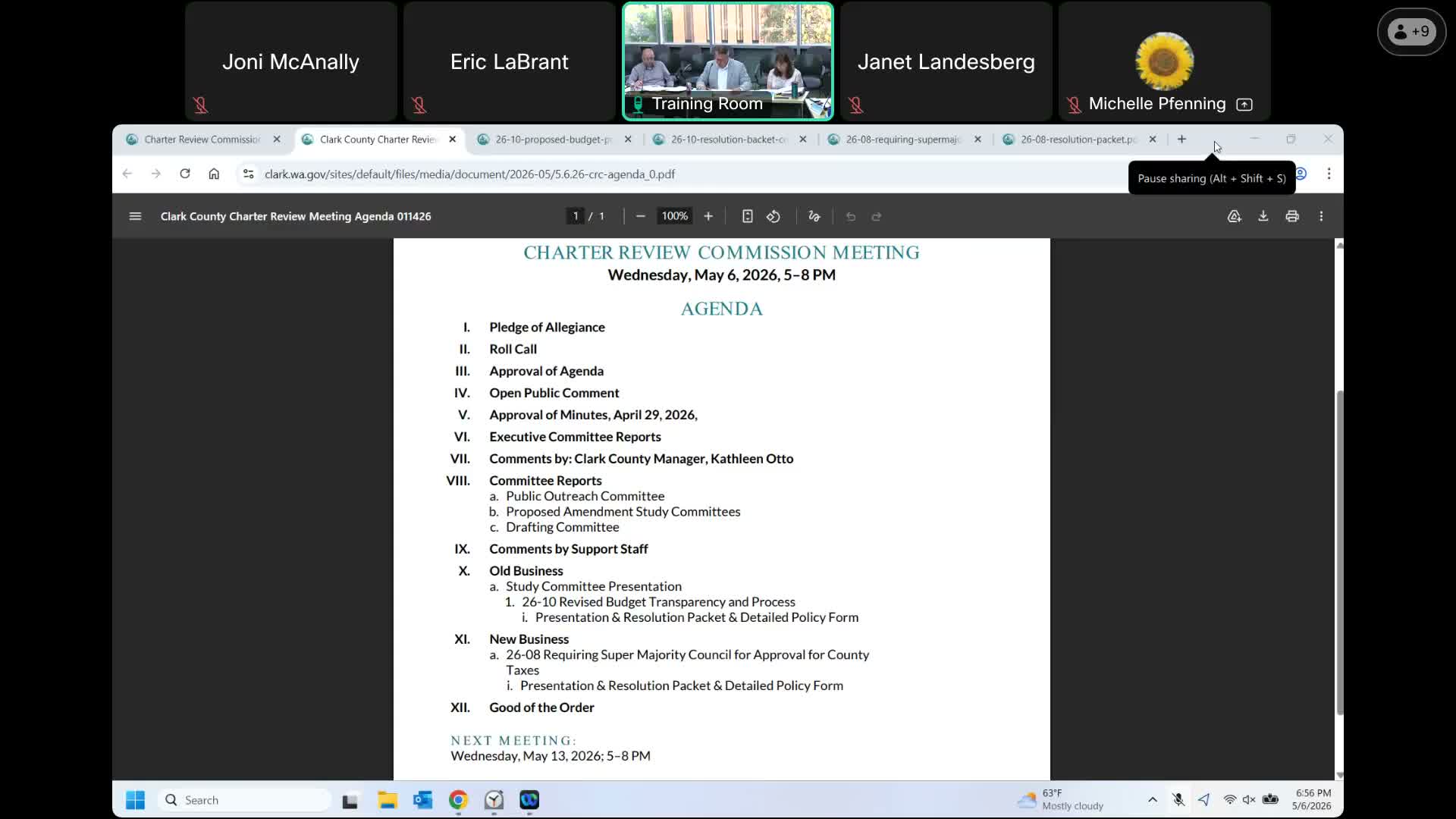
Commissioner Jay presented member proposal 26‑08 May 6, a charter amendment that would require a minimum two‑thirds affirmative council vote to assess, levy or increase any new councilmanic tax after Jan. 1, 2027. Jay said the measure is modeled on provisions used in other Washington jurisdictions and aims to force broader consensus before new taxes are enacted.
Public comment earlier in the meeting reflected the split public view: Michael Kula, Rob Anderson and Darlene Kula urged the commission to place a super‑majority requirement on the ballot so voters could decide; Julie Katt and other commenters opposed the change, arguing a simple majority better reflects representative governance.
During the commission debate, supporters said a super‑majority would curb routine tax increases, encourage transparent budgeting and require broader agreement for revenue decisions. Opponents said a super‑majority could empower a minority, create gridlock, and complicate funding for public safety and other mandated services. Commissioner Chrisley framed the issue as one of representative government and urged caution; Commissioner Donnelly said deliberation and scrutiny are compatible with funding priorities.
Commissioner Klein moved to advance 26‑08 to the drafting committee; the motion was seconded and carried on a roll call vote of 8 ayes to 7 nays. The close margin reflects the commission’s division on embedding a super‑majority rule in the charter rather than leaving tax‑setting to the elected council or to voters via other measures.
The proposal will be drafted into ballot language for later consideration; whether it appears on a future general election ballot will depend on drafting, legal review, and the commission’s further decisions.
Public comment earlier in the meeting reflected the split public view: Michael Kula, Rob Anderson and Darlene Kula urged the commission to place a super‑majority requirement on the ballot so voters could decide; Julie Katt and other commenters opposed the change, arguing a simple majority better reflects representative governance.
During the commission debate, supporters said a super‑majority would curb routine tax increases, encourage transparent budgeting and require broader agreement for revenue decisions. Opponents said a super‑majority could empower a minority, create gridlock, and complicate funding for public safety and other mandated services. Commissioner Chrisley framed the issue as one of representative government and urged caution; Commissioner Donnelly said deliberation and scrutiny are compatible with funding priorities.
Commissioner Klein moved to advance 26‑08 to the drafting committee; the motion was seconded and carried on a roll call vote of 8 ayes to 7 nays. The close margin reflects the commission’s division on embedding a super‑majority rule in the charter rather than leaving tax‑setting to the elected council or to voters via other measures.
The proposal will be drafted into ballot language for later consideration; whether it appears on a future general election ballot will depend on drafting, legal review, and the commission’s further decisions.
View the Full Meeting & All Its Details
This article offers just a summary. Unlock complete video, transcripts, and insights as a Founder Member.
✓
Watch full, unedited meeting videos
✓
Search every word spoken in unlimited transcripts
✓
AI summaries & real-time alerts (all government levels)
✓
Permanent access to expanding government content
30-day money-back guarantee
