Senate committee advances H611 to codify Medicaid coverage rules, protect 340B entities and adjust prepaid‑burial limits
May 07, 2026 | Appropriations, SENATE, Committees, Legislative , Vermont
This article was created by AI summarizing key points discussed. AI makes mistakes, so for full details and context, please refer to the video of the full meeting. Please report any errors so we can fix them. Report an error »
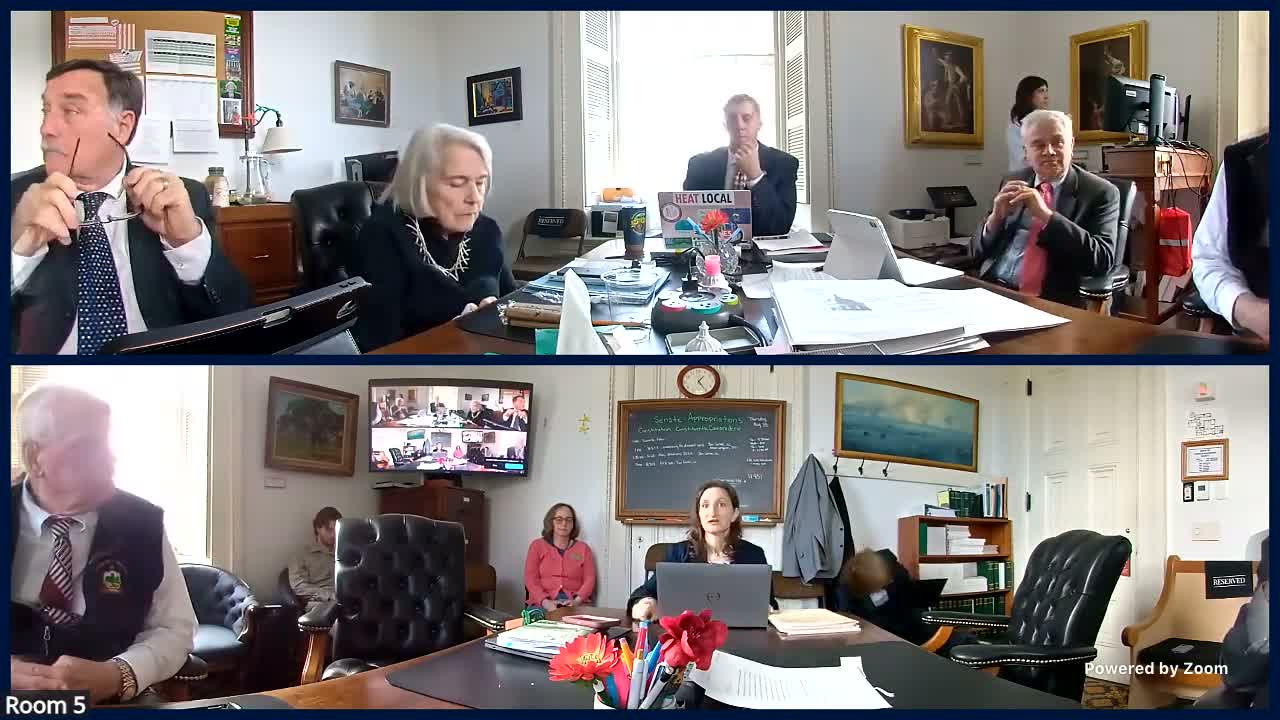
Legislative counsel Joan Carvey told a Senate committee on May 7 that H611 is a miscellaneous bill affecting the Department of Vermont Health Access and related statutes, and the panel voted to report the bill favorably after reviewing section‑level changes and amendments.
Carvey said section 1 removes certain Medicaid drug‑price reporting provisions because Medicaid pricing differs from other parts of the health‑care system. Section 2 restores language to protect 340B‑covered entities and their contract pharmacies from being required to submit specific data as a condition of acquiring drugs — a change grounded in ongoing litigation and federal guidance.
Other changes address advisory‑committee membership and board composition: the Medicaid and Exchange Advisory Committee would be adjusted to include members who also serve on federally required beneficiary advisory committees; the clinical utilization review board would be changed to require a minimum of 10 members rather than exactly 10 to give the department flexibility in recruiting expertise.
Carvey described section 7 as an adjustment to prepaid burial rules for Medicaid eligibility, saying the bill would "allow somebody to have up to $5,000 more in their irrevocable prepaid funeral arrangement," and that Medicaid can recoup any remaining amounts up to the total Medicaid costs paid after expenses. Carvey also emphasized that some of these changes — for example, the Medicaid doula coverage timing — are contingent on federal approvals and the drafting of state plan amendments; the bill shifts certain effective dates from 2026 to 2027 to allow more runway for those federal processes.
A new section discussed by counsel would codify existing practice that health insurance and Medicaid provide coverage for at least one FDA‑approved HIV pre‑exposure prophylaxis (PrEP) and post‑exposure prophylaxis (PEP) drug recommended by the U.S. Preventive Services Task Force as of 2023, without cost sharing, prior authorization or restrictions on the prescriber type. Carvey framed this as a protective statute so coverage would persist if relevant federal rules change.
Committee members asked several procedural and fiscal questions, including why some statutory boards have minimums but no maxima and whether per diem payments apply. Legislative counsel and Tim Dutchall (legislative counsel present later in the hearing) said the bill contains largely technical and housekeeping changes and that it does not include direct appropriations, though some fee changes in the bill could yield modest revenue (the fiscal discussion noted a potential revenue range of roughly $15,000 up to $40,000 by 2029 tied to licensing/fee changes).
A motion to move H611 favorably was made and the clerk recorded roll‑call votes; the committee reported the bill out to the next stage.
Next steps: The committee reported H611 favorably; several provisions (notably doula coverage and Medicaid state plan amendments) remain contingent on federal approvals and follow‑up rulemaking by the Department of Vermont Health Access and the Office of Professional Regulation.
Carvey said section 1 removes certain Medicaid drug‑price reporting provisions because Medicaid pricing differs from other parts of the health‑care system. Section 2 restores language to protect 340B‑covered entities and their contract pharmacies from being required to submit specific data as a condition of acquiring drugs — a change grounded in ongoing litigation and federal guidance.
Other changes address advisory‑committee membership and board composition: the Medicaid and Exchange Advisory Committee would be adjusted to include members who also serve on federally required beneficiary advisory committees; the clinical utilization review board would be changed to require a minimum of 10 members rather than exactly 10 to give the department flexibility in recruiting expertise.
Carvey described section 7 as an adjustment to prepaid burial rules for Medicaid eligibility, saying the bill would "allow somebody to have up to $5,000 more in their irrevocable prepaid funeral arrangement," and that Medicaid can recoup any remaining amounts up to the total Medicaid costs paid after expenses. Carvey also emphasized that some of these changes — for example, the Medicaid doula coverage timing — are contingent on federal approvals and the drafting of state plan amendments; the bill shifts certain effective dates from 2026 to 2027 to allow more runway for those federal processes.
A new section discussed by counsel would codify existing practice that health insurance and Medicaid provide coverage for at least one FDA‑approved HIV pre‑exposure prophylaxis (PrEP) and post‑exposure prophylaxis (PEP) drug recommended by the U.S. Preventive Services Task Force as of 2023, without cost sharing, prior authorization or restrictions on the prescriber type. Carvey framed this as a protective statute so coverage would persist if relevant federal rules change.
Committee members asked several procedural and fiscal questions, including why some statutory boards have minimums but no maxima and whether per diem payments apply. Legislative counsel and Tim Dutchall (legislative counsel present later in the hearing) said the bill contains largely technical and housekeeping changes and that it does not include direct appropriations, though some fee changes in the bill could yield modest revenue (the fiscal discussion noted a potential revenue range of roughly $15,000 up to $40,000 by 2029 tied to licensing/fee changes).
A motion to move H611 favorably was made and the clerk recorded roll‑call votes; the committee reported the bill out to the next stage.
Next steps: The committee reported H611 favorably; several provisions (notably doula coverage and Medicaid state plan amendments) remain contingent on federal approvals and follow‑up rulemaking by the Department of Vermont Health Access and the Office of Professional Regulation.
Don't Miss a Word: See the Full Meeting!
Go beyond summaries. Unlock every video, transcript, and key insight with a Founder Membership.
✓
Get instant access to full meeting videos
✓
Search and clip any phrase from complete transcripts
✓
Receive AI-powered summaries & custom alerts
✓
Enjoy lifetime, unrestricted access to government data
30-day money-back guarantee
