Agency of Education: federal rules limit CTE access for some Adult Diploma students
May 07, 2026 | Education, HOUSE OF REPRESENTATIVES, Committees, Legislative , Vermont
This article was created by AI summarizing key points discussed. AI makes mistakes, so for full details and context, please refer to the video of the full meeting. Please report any errors so we can fix them. Report an error »
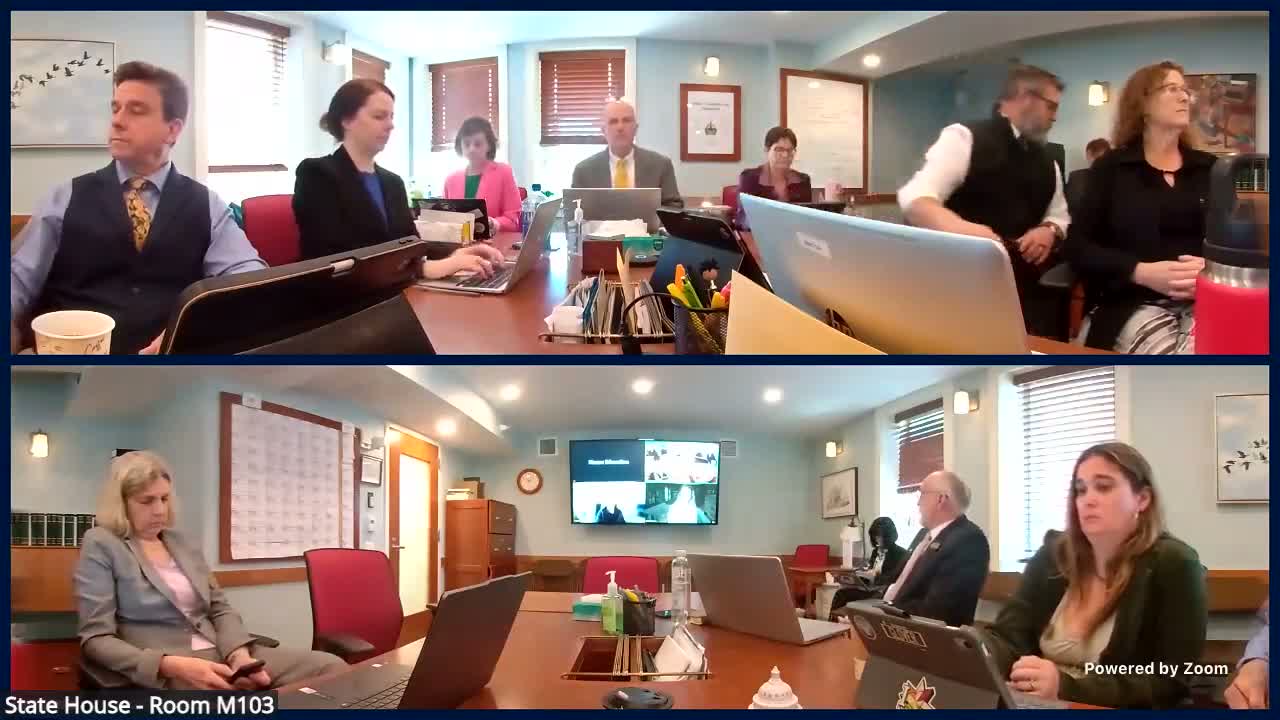
At a May 7 Education Committee hearing, Agency of Education officials told legislators that federal workforce rules could prevent some students in the Adult Diploma Program (ADP) from accessing Career and Technical Education (CTE).
Emily Simmons, general counsel at the Agency of Education, said state law (section 15 51 a) appears to give students without a diploma the right to enroll in CTE with district support, but that the ADP now relies on Workforce Innovation and Opportunity Act (WIOA) funding. "We do have state law...that, appears to entitle a student, in any sense who does not have an diploma to enroll in CTE and have their district support that enrollment with funding," Simmons said. She added that because the program uses federal funds "this federal rule has to take precedence for this use of funds."
Simmons and AOE staff described a practical consequence: WIOA and Perkins definitions limit eligible participants to those not enrolled in postsecondary education, and the Perkins enrollment rule the agency applies counts a student as enrolled in CTE if they are "accessing 2 hours or more CTE courses a day." "So the agency uses that 2 hour rule for enrollment definition across many aspects of CTE," Simmons said, identifying the 2‑hour threshold as a likely place to look for possible adjustment.
Robin Castle, AOE State Director of Adult Education and Literacy, told the committee that the earlier High School Completion Program was a district reimbursement program that permitted co-enrollment in secondary CTE and did not use federal funds. "The difference is that now all of the money that the AEL providers are receiving to provide services is through the federal and state grant funds," Castle said, noting those state grant dollars now serve as the match for federal grants. "I can say that the state receives about 1000000 dollars each year in federal money to, for the AEL program." Castle added that any change would require analysis of when a law change took place and how state match and maintenance-of-effort rules would be affected.
Committee members asked about scale. One member said the population in question was "maybe a half a dozen kids" statewide; Simmons confirmed that AEL providers have identified a small number of young adults who currently fit the case that spurred the inquiry. The committee also clarified eligibility rules: the ADP functions for people who are at least 16, and there is no stated upper age limit to be enrolled in high school CTE.
The committee has proposed an amendment to eliminate a separate task force and "move that into the work of the AOE" so the agency will examine the issue and return recommendations. The chair asked whether the agency could study the question and report back by January; both Simmons and Castle said they supported including language directing AOE to examine the legal issues and provide recommendations to the General Assembly, even if their recommendation was to maintain the current structure. Simmons cautioned the committee to avoid creating incentives that might prompt students to unenroll from high school in order to access ADP services.
There was no formal vote recorded on the matter at the hearing; the next procedural step recorded in the discussion was adding language to the amendment and receiving AOE's recommendations.
Why it matters: The programmatic difference between a district reimbursement model and a grant-funded model changes which rules apply and can affect a small group of secondary-age students who seek CTE while enrolled in the Adult Diploma Program. Because the ADP currently uses WIOA funds and a state match, federal eligibility rules and maintenance-of‑effort provisions constrain program design decisions and could carry financial penalties if handled incorrectly.
What’s next: The committee directed AOE to examine legal and operational options and to return recommendations, and members indicated they would circulate the agency's written testimony and any staff analyses for further consideration.
Emily Simmons, general counsel at the Agency of Education, said state law (section 15 51 a) appears to give students without a diploma the right to enroll in CTE with district support, but that the ADP now relies on Workforce Innovation and Opportunity Act (WIOA) funding. "We do have state law...that, appears to entitle a student, in any sense who does not have an diploma to enroll in CTE and have their district support that enrollment with funding," Simmons said. She added that because the program uses federal funds "this federal rule has to take precedence for this use of funds."
Simmons and AOE staff described a practical consequence: WIOA and Perkins definitions limit eligible participants to those not enrolled in postsecondary education, and the Perkins enrollment rule the agency applies counts a student as enrolled in CTE if they are "accessing 2 hours or more CTE courses a day." "So the agency uses that 2 hour rule for enrollment definition across many aspects of CTE," Simmons said, identifying the 2‑hour threshold as a likely place to look for possible adjustment.
Robin Castle, AOE State Director of Adult Education and Literacy, told the committee that the earlier High School Completion Program was a district reimbursement program that permitted co-enrollment in secondary CTE and did not use federal funds. "The difference is that now all of the money that the AEL providers are receiving to provide services is through the federal and state grant funds," Castle said, noting those state grant dollars now serve as the match for federal grants. "I can say that the state receives about 1000000 dollars each year in federal money to, for the AEL program." Castle added that any change would require analysis of when a law change took place and how state match and maintenance-of-effort rules would be affected.
Committee members asked about scale. One member said the population in question was "maybe a half a dozen kids" statewide; Simmons confirmed that AEL providers have identified a small number of young adults who currently fit the case that spurred the inquiry. The committee also clarified eligibility rules: the ADP functions for people who are at least 16, and there is no stated upper age limit to be enrolled in high school CTE.
The committee has proposed an amendment to eliminate a separate task force and "move that into the work of the AOE" so the agency will examine the issue and return recommendations. The chair asked whether the agency could study the question and report back by January; both Simmons and Castle said they supported including language directing AOE to examine the legal issues and provide recommendations to the General Assembly, even if their recommendation was to maintain the current structure. Simmons cautioned the committee to avoid creating incentives that might prompt students to unenroll from high school in order to access ADP services.
There was no formal vote recorded on the matter at the hearing; the next procedural step recorded in the discussion was adding language to the amendment and receiving AOE's recommendations.
Why it matters: The programmatic difference between a district reimbursement model and a grant-funded model changes which rules apply and can affect a small group of secondary-age students who seek CTE while enrolled in the Adult Diploma Program. Because the ADP currently uses WIOA funds and a state match, federal eligibility rules and maintenance-of‑effort provisions constrain program design decisions and could carry financial penalties if handled incorrectly.
What’s next: The committee directed AOE to examine legal and operational options and to return recommendations, and members indicated they would circulate the agency's written testimony and any staff analyses for further consideration.
View the Full Meeting & All Its Details
This article offers just a summary. Unlock complete video, transcripts, and insights as a Founder Member.
✓
Watch full, unedited meeting videos
✓
Search every word spoken in unlimited transcripts
✓
AI summaries & real-time alerts (all government levels)
✓
Permanent access to expanding government content
30-day money-back guarantee
