Committee members praise community schools model, warn funding instability threatens gains
May 07, 2026 | Education, HOUSE OF REPRESENTATIVES, Committees, Legislative , Vermont
This article was created by AI summarizing key points discussed. AI makes mistakes, so for full details and context, please refer to the video of the full meeting. Please report any errors so we can fix them. Report an error »
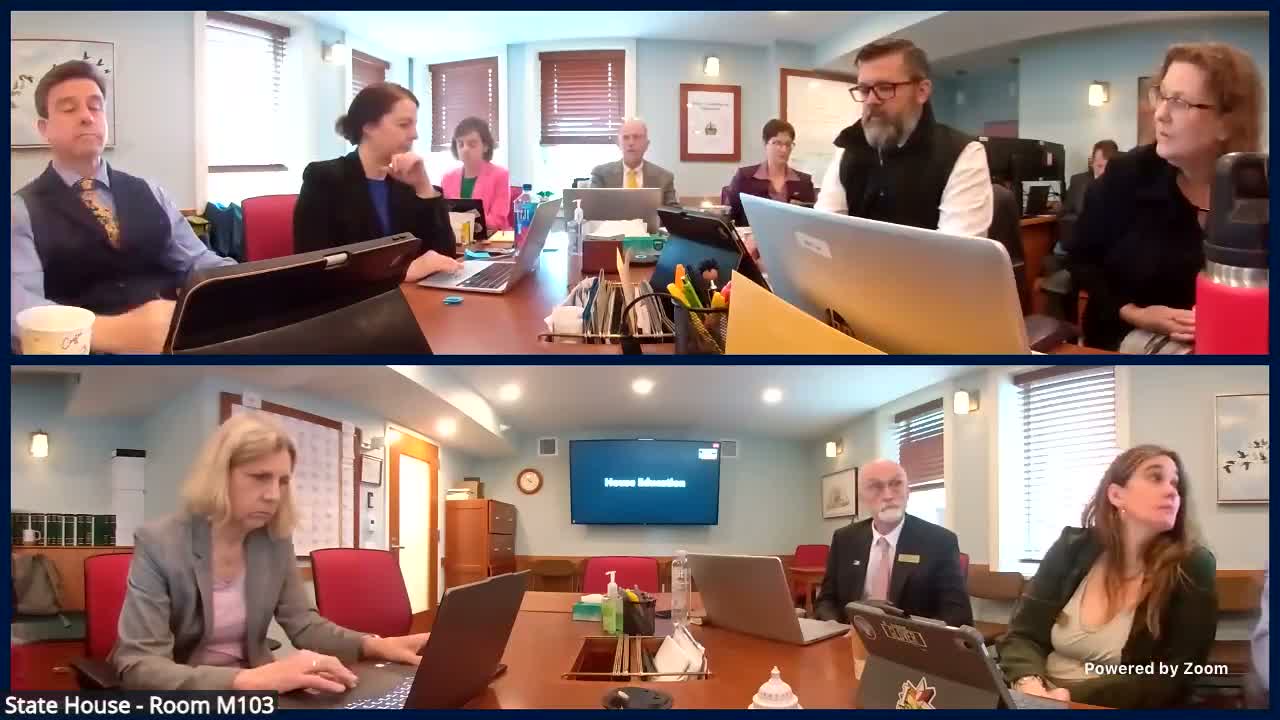
Committee members reported back to the Education Committee on May 7 about a national Community Schools conference, describing the model's pillars, local examples of services and partnerships, and a pressing question about sustaining funding beyond initial grants.
A committee member described Community Schools as a non-prescriptive model built on five pillars that helps connect schools with community resources, citing examples that ranged from literacy tutoring by seniors to evening classes led by students and community members. "They're doing everything from bringing seniors in to do literacy tutoring to meal programs... it felt many purposes and that it, you know, brought people in the community together," the member said.
Members reviewed Vermont's early rollout: an initial $10,000,000 federal infusion created a competitive grant program under Act 67 (2021) with a first cohort of five or six schools; a later approximately $1,000,000 addition supported a second cohort. "We have not added any more state funding... the state funding has been essentially ended," a member said, cautioning that one-time federal earmarks do not guarantee long-term support.
Speakers highlighted partnerships with the University of Vermont, which has sent social work and family-practice interns into rural schools to provide services and build workforce pipelines. Committee members also said the model's portability across communities—particularly in rural areas—was a key strength: "This interconnection was shown in so many different ways and the importance of funding sustainability," one member said.
Members asked whether districts are absorbing costs as grants expire. Respondents said districts have been trying to retain core elements by reallocating roles or restructuring duties, but that additional funding would be needed to sustain the full scope of services. Committee members also flagged data-infrastructure needs and recommended better integration of funding sources across state agencies; one member said a page of policy recommendations and a data-infrastructure "chunk" would be shared with the committee.
Transportation and logistics were raised as practical barriers: members discussed whether a regional CISA could coordinate fleets or vans to move students to CTE and program sites, and noted community schools coordinators often arrange long-distance travel for youth councils and other programs.
Several members urged the committee to keep the conversation alive and to circulate conference materials and policy recommendations; one member said Tony would scan and email the committee the conference recommendations and materials for follow-up.
Why it matters: Community Schools' integrated approach ties education, health and community supports together; without predictable, sustained funding and data systems, successful local pilots risk fading when initial grants end.
What’s next: Committee members agreed to circulate conference recommendations and data-infrastructure proposals and to consider follow-up steps to sustain successful community schools practices.
A committee member described Community Schools as a non-prescriptive model built on five pillars that helps connect schools with community resources, citing examples that ranged from literacy tutoring by seniors to evening classes led by students and community members. "They're doing everything from bringing seniors in to do literacy tutoring to meal programs... it felt many purposes and that it, you know, brought people in the community together," the member said.
Members reviewed Vermont's early rollout: an initial $10,000,000 federal infusion created a competitive grant program under Act 67 (2021) with a first cohort of five or six schools; a later approximately $1,000,000 addition supported a second cohort. "We have not added any more state funding... the state funding has been essentially ended," a member said, cautioning that one-time federal earmarks do not guarantee long-term support.
Speakers highlighted partnerships with the University of Vermont, which has sent social work and family-practice interns into rural schools to provide services and build workforce pipelines. Committee members also said the model's portability across communities—particularly in rural areas—was a key strength: "This interconnection was shown in so many different ways and the importance of funding sustainability," one member said.
Members asked whether districts are absorbing costs as grants expire. Respondents said districts have been trying to retain core elements by reallocating roles or restructuring duties, but that additional funding would be needed to sustain the full scope of services. Committee members also flagged data-infrastructure needs and recommended better integration of funding sources across state agencies; one member said a page of policy recommendations and a data-infrastructure "chunk" would be shared with the committee.
Transportation and logistics were raised as practical barriers: members discussed whether a regional CISA could coordinate fleets or vans to move students to CTE and program sites, and noted community schools coordinators often arrange long-distance travel for youth councils and other programs.
Several members urged the committee to keep the conversation alive and to circulate conference materials and policy recommendations; one member said Tony would scan and email the committee the conference recommendations and materials for follow-up.
Why it matters: Community Schools' integrated approach ties education, health and community supports together; without predictable, sustained funding and data systems, successful local pilots risk fading when initial grants end.
What’s next: Committee members agreed to circulate conference recommendations and data-infrastructure proposals and to consider follow-up steps to sustain successful community schools practices.
View the Full Meeting & All Its Details
This article offers just a summary. Unlock complete video, transcripts, and insights as a Founder Member.
✓
Watch full, unedited meeting videos
✓
Search every word spoken in unlimited transcripts
✓
AI summaries & real-time alerts (all government levels)
✓
Permanent access to expanding government content
30-day money-back guarantee
