Senate Finance reviews bill to require owner security, speed forfeiture in animal-cruelty cases
May 07, 2026 | Finance, SENATE, Committees, Legislative , Vermont
This article was created by AI summarizing key points discussed. AI makes mistakes, so for full details and context, please refer to the video of the full meeting. Please report any errors so we can fix them. Report an error »
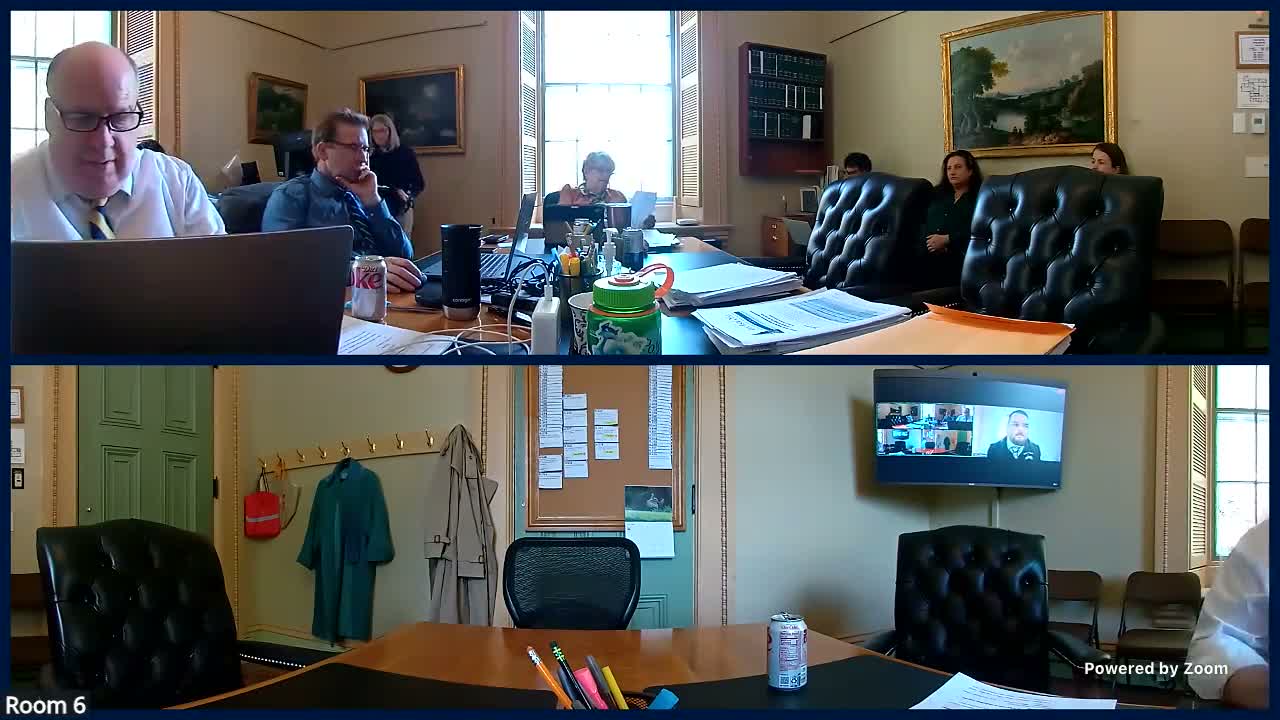
The Senate Finance Committee heard a walkthrough of H.578 on May 7, a bill the lead sponsor described as intended to shift the cost of caring for seized animals from shelters and taxpayers onto those convicted or accused of abuse.
The bill’s lead sponsor, identified in the transcript as a representative from South Burlington, told the committee she had worked on the measure for years and cited gaps in current law that leave rescued animals languishing while shelters shoulder long care costs. “The animals can’t wait any longer,” the sponsor said.
Hillary Cheddar Ames of the Office of Legislative Council summarized the bill’s procedural and finance components. Ames told the committee that H.578 would add time limits to forfeiture proceedings, require an owner seeking to contest forfeiture to post security to cover food and veterinary care while proceedings are pending, and direct posted security into an animal welfare fund to reimburse organizations that care for seized animals.
Ames described interim statutory amounts included in the bill so the law would have a baseline until the director of animal welfare adopts detailed rules. For nonlivestock animals the transcript lists a default of $1 per animal per day for food and a $250 flat veterinary charge when immediate care is required; for livestock the transcript lists $2.50 per animal per day for food and references a separate veterinary amount. Ames said the rules adopted by the director will ultimately contain more specific amounts and that owners may request a full waiver or a reduction of security based on financial hardship.
Committee members asked whether delegating these interim amounts to rulemaking — and giving the director authority to set more detailed schedules later — was appropriate. Several members pressed for an upward bound or other guardrails so a department could not set unexpectedly large charges, and expressed concern about creating the impression that this is a source of revenue for the state. Fiscal staff and witnesses emphasized that the provision is intended to recover costs for holding and caring for animals, not to raise general revenue.
The bill’s procedural changes are designed to speed placement when owners do not contest forfeiture: if an owner does not contest within 14 days the owner forfeits title and the animals may be rehomed more quickly. Ames said the interim amounts were intended as a modest placeholder while the director develops a more detailed rule table by species and circumstance, and reiterated that hardship waivers would be available.
Several committee members said they favored a faster, committee-level resolution of amounts rather than a full rulemaking process but recognized that rulemaking would allow more precise, species-specific rates. The transcript records broad agreement on the policy goals — reducing shelter burdens and avoiding taxpayer exposure — alongside caution about administrative authority and fiscal signals.
The committee did not take a final vote on H.578 during this session; members indicated they would follow up and consider implementation details and recommended language in a future meeting.
Next steps: the committee will return to H.578 for further drafting and possible recommendation on the security schedule and waiver language before advancing any final measure.
The bill’s lead sponsor, identified in the transcript as a representative from South Burlington, told the committee she had worked on the measure for years and cited gaps in current law that leave rescued animals languishing while shelters shoulder long care costs. “The animals can’t wait any longer,” the sponsor said.
Hillary Cheddar Ames of the Office of Legislative Council summarized the bill’s procedural and finance components. Ames told the committee that H.578 would add time limits to forfeiture proceedings, require an owner seeking to contest forfeiture to post security to cover food and veterinary care while proceedings are pending, and direct posted security into an animal welfare fund to reimburse organizations that care for seized animals.
Ames described interim statutory amounts included in the bill so the law would have a baseline until the director of animal welfare adopts detailed rules. For nonlivestock animals the transcript lists a default of $1 per animal per day for food and a $250 flat veterinary charge when immediate care is required; for livestock the transcript lists $2.50 per animal per day for food and references a separate veterinary amount. Ames said the rules adopted by the director will ultimately contain more specific amounts and that owners may request a full waiver or a reduction of security based on financial hardship.
Committee members asked whether delegating these interim amounts to rulemaking — and giving the director authority to set more detailed schedules later — was appropriate. Several members pressed for an upward bound or other guardrails so a department could not set unexpectedly large charges, and expressed concern about creating the impression that this is a source of revenue for the state. Fiscal staff and witnesses emphasized that the provision is intended to recover costs for holding and caring for animals, not to raise general revenue.
The bill’s procedural changes are designed to speed placement when owners do not contest forfeiture: if an owner does not contest within 14 days the owner forfeits title and the animals may be rehomed more quickly. Ames said the interim amounts were intended as a modest placeholder while the director develops a more detailed rule table by species and circumstance, and reiterated that hardship waivers would be available.
Several committee members said they favored a faster, committee-level resolution of amounts rather than a full rulemaking process but recognized that rulemaking would allow more precise, species-specific rates. The transcript records broad agreement on the policy goals — reducing shelter burdens and avoiding taxpayer exposure — alongside caution about administrative authority and fiscal signals.
The committee did not take a final vote on H.578 during this session; members indicated they would follow up and consider implementation details and recommended language in a future meeting.
Next steps: the committee will return to H.578 for further drafting and possible recommendation on the security schedule and waiver language before advancing any final measure.
Don't Miss a Word: See the Full Meeting!
Go beyond summaries. Unlock every video, transcript, and key insight with a Founder Membership.
✓
Get instant access to full meeting videos
✓
Search and clip any phrase from complete transcripts
✓
Receive AI-powered summaries & custom alerts
✓
Enjoy lifetime, unrestricted access to government data
30-day money-back guarantee
