Senate Government Operations committee debates reactivating Government Accountability Committee; subpoenas stripped from draft
May 07, 2026 | Government Operations, SENATE, Committees, Legislative , Vermont
This article was created by AI summarizing key points discussed. AI makes mistakes, so for full details and context, please refer to the video of the full meeting. Please report any errors so we can fix them. Report an error »
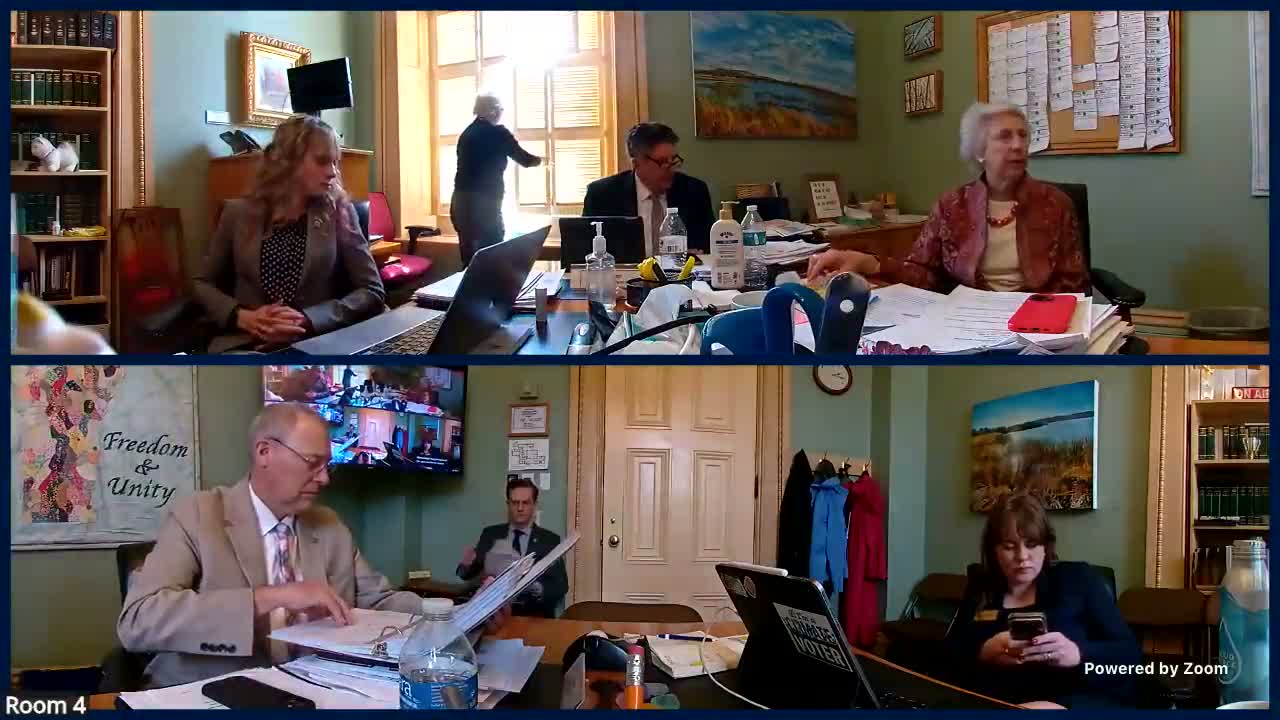
The Senate Committee on Government Operations on May 7 took up S.3.24, a draft bill to revive a Government Accountability Committee (GAC), and discussed whether to attach its provisions to the live vehicle H.67.
Committee members focused early debate on structure and scope. "I think creating a joint oversight committee on government accountability makes the most amount of sense," a committee member said, urging a joint legislative body similar to existing oversight panels. Members considered an eight-member panel (four senators and four representatives) with additional ex officio participation from the chief performance officer.
Several members pushed to narrow or remove enforcement powers from the draft during the markup. Chair Jane Taylor said the panel would "delete the ability for subpoena," and the group signaled agreement to remove subpoenas and depositions and to take out a section that would have required agencies to change state grant-processing rules. The transcript records this as drafting consensus; no formal floor vote or recorded roll-call on the deletions appears in the meeting record.
Members also debated staffing and funding. H.67 includes a $300,000 proposal for the Joint Fiscal Office to hire an additional staffer to support oversight work, but some argued the oversight function should primarily be performed by legislators rather than shifted to staff. "I think it's inappropriate for a staff member to do this work. I think the legislators need to do this work," one lawmaker said.
To reduce the risk of politicization, senators discussed selection criteria and referral mechanisms. Speakers pressed for language that limits the committee to issues of "significant public concern" and for a process allowing issues either to be selected by the committee membership or to be referred by resolution from either chamber. One member warned concerns the body could become a "political witch hunt," and others proposed guardrails such as guaranteed representation of major parties and independents.
The committee also debated quantitative triggers for review. The draft carries a monetary threshold of $100,000,000 for programs or appropriations that might be considered significant; several members proposed lowering that threshold to $50,000,000 or $10,000,000 to make the measure more practical for state programs. Members suggested coordinating early work with the State Auditor's office and using existing audit selections as an input for the committee's review agenda.
Committee members proposed other additions and narrowings: one member asked that travel-disclosure and certain lobbyist-disclosure provisions be folded into the live vehicle if the House does not advance them; another urged limiting advertising-related language for the current year and revisiting it later.
The committee agreed to continue drafting and to return with edited language. The panel set follow-up items for the next meeting, including a review of the Burlington charter and further explanation of the PAC definition by Tim Devlin. No final passage or formal vote on S.3.24 or H.67 was recorded in the transcript of the session.
Next procedural step: staff will produce a revised draft reflecting the agreed deletions and membership language; the committee will reconvene to review the Burlington charter and hear follow-up testimony as scheduled.
Committee members focused early debate on structure and scope. "I think creating a joint oversight committee on government accountability makes the most amount of sense," a committee member said, urging a joint legislative body similar to existing oversight panels. Members considered an eight-member panel (four senators and four representatives) with additional ex officio participation from the chief performance officer.
Several members pushed to narrow or remove enforcement powers from the draft during the markup. Chair Jane Taylor said the panel would "delete the ability for subpoena," and the group signaled agreement to remove subpoenas and depositions and to take out a section that would have required agencies to change state grant-processing rules. The transcript records this as drafting consensus; no formal floor vote or recorded roll-call on the deletions appears in the meeting record.
Members also debated staffing and funding. H.67 includes a $300,000 proposal for the Joint Fiscal Office to hire an additional staffer to support oversight work, but some argued the oversight function should primarily be performed by legislators rather than shifted to staff. "I think it's inappropriate for a staff member to do this work. I think the legislators need to do this work," one lawmaker said.
To reduce the risk of politicization, senators discussed selection criteria and referral mechanisms. Speakers pressed for language that limits the committee to issues of "significant public concern" and for a process allowing issues either to be selected by the committee membership or to be referred by resolution from either chamber. One member warned concerns the body could become a "political witch hunt," and others proposed guardrails such as guaranteed representation of major parties and independents.
The committee also debated quantitative triggers for review. The draft carries a monetary threshold of $100,000,000 for programs or appropriations that might be considered significant; several members proposed lowering that threshold to $50,000,000 or $10,000,000 to make the measure more practical for state programs. Members suggested coordinating early work with the State Auditor's office and using existing audit selections as an input for the committee's review agenda.
Committee members proposed other additions and narrowings: one member asked that travel-disclosure and certain lobbyist-disclosure provisions be folded into the live vehicle if the House does not advance them; another urged limiting advertising-related language for the current year and revisiting it later.
The committee agreed to continue drafting and to return with edited language. The panel set follow-up items for the next meeting, including a review of the Burlington charter and further explanation of the PAC definition by Tim Devlin. No final passage or formal vote on S.3.24 or H.67 was recorded in the transcript of the session.
Next procedural step: staff will produce a revised draft reflecting the agreed deletions and membership language; the committee will reconvene to review the Burlington charter and hear follow-up testimony as scheduled.
Don't Miss a Word: See the Full Meeting!
Go beyond summaries. Unlock every video, transcript, and key insight with a Founder Membership.
✓
Get instant access to full meeting videos
✓
Search and clip any phrase from complete transcripts
✓
Receive AI-powered summaries & custom alerts
✓
Enjoy lifetime, unrestricted access to government data
30-day money-back guarantee
