Council adopts code of conduct after debate over complaint process and confidentiality
May 07, 2026 | Ithaca City, Tompkins County, New York
This article was created by AI summarizing key points discussed. AI makes mistakes, so for full details and context, please refer to the video of the full meeting. Please report any errors so we can fix them. Report an error »
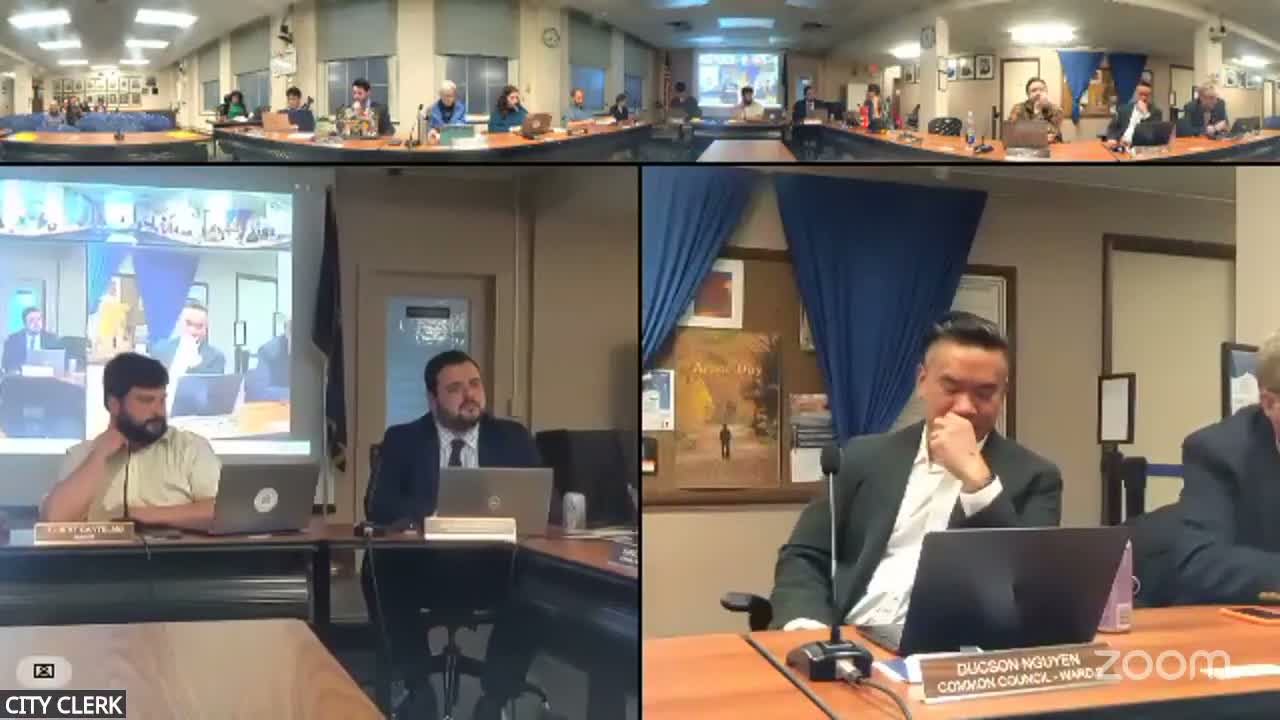
The Common Council on May 6 adopted a city council code of conduct and associated procedures after more than an hour of debate over confidentiality, due process, and whether complainants should be required to testify at hearings.
Alderson Fabrizio proposed two friendly amendments: one to require complainants receive a copy of allegations (allowing redactions where necessary), and a second that would have allowed the accused or their counsel to request complainant testimony or cross‑examination. The council accepted the first amendment unanimously but ultimately withdrew the second amid concerns about chilling effects on complainants and the appropriateness of public cross‑examination in a quasi‑employment/organizational process. The mayor and several members expressed concern about adding last‑minute language on the floor and preferred that additional procedural changes be refined in committee.
Council members debated multiple procedural safeguards: the role of the ethics committee in initial investigations, whether hearings should be public, the threshold for sanctions (two‑thirds of council required), and how to balance transparency with protections for complainants and due‑process rights for elected officials. City Attorney Kessler explained that typical investigatory practice involves a designated investigator who interviews parties and issues findings; he cautioned that public‑style cross‑examination is unusual in such contexts.
The resolution as amended passed on a recorded vote of 9 to 1. Councilors said they would continue to refine the procedures in future meetings and obtain clarity on confidentiality rules and the ethics committee’s role as needed.
Alderson Fabrizio proposed two friendly amendments: one to require complainants receive a copy of allegations (allowing redactions where necessary), and a second that would have allowed the accused or their counsel to request complainant testimony or cross‑examination. The council accepted the first amendment unanimously but ultimately withdrew the second amid concerns about chilling effects on complainants and the appropriateness of public cross‑examination in a quasi‑employment/organizational process. The mayor and several members expressed concern about adding last‑minute language on the floor and preferred that additional procedural changes be refined in committee.
Council members debated multiple procedural safeguards: the role of the ethics committee in initial investigations, whether hearings should be public, the threshold for sanctions (two‑thirds of council required), and how to balance transparency with protections for complainants and due‑process rights for elected officials. City Attorney Kessler explained that typical investigatory practice involves a designated investigator who interviews parties and issues findings; he cautioned that public‑style cross‑examination is unusual in such contexts.
The resolution as amended passed on a recorded vote of 9 to 1. Councilors said they would continue to refine the procedures in future meetings and obtain clarity on confidentiality rules and the ethics committee’s role as needed.
View the Full Meeting & All Its Details
This article offers just a summary. Unlock complete video, transcripts, and insights as a Founder Member.
✓
Watch full, unedited meeting videos
✓
Search every word spoken in unlimited transcripts
✓
AI summaries & real-time alerts (all government levels)
✓
Permanent access to expanding government content
30-day money-back guarantee
