Legislative education panel reviews bill tying new foundation formula to study committees and pre-K plans
May 07, 2026 | Education, SENATE, Committees, Legislative , Vermont
This article was created by AI summarizing key points discussed. AI makes mistakes, so for full details and context, please refer to the video of the full meeting. Please report any errors so we can fix them. Report an error »
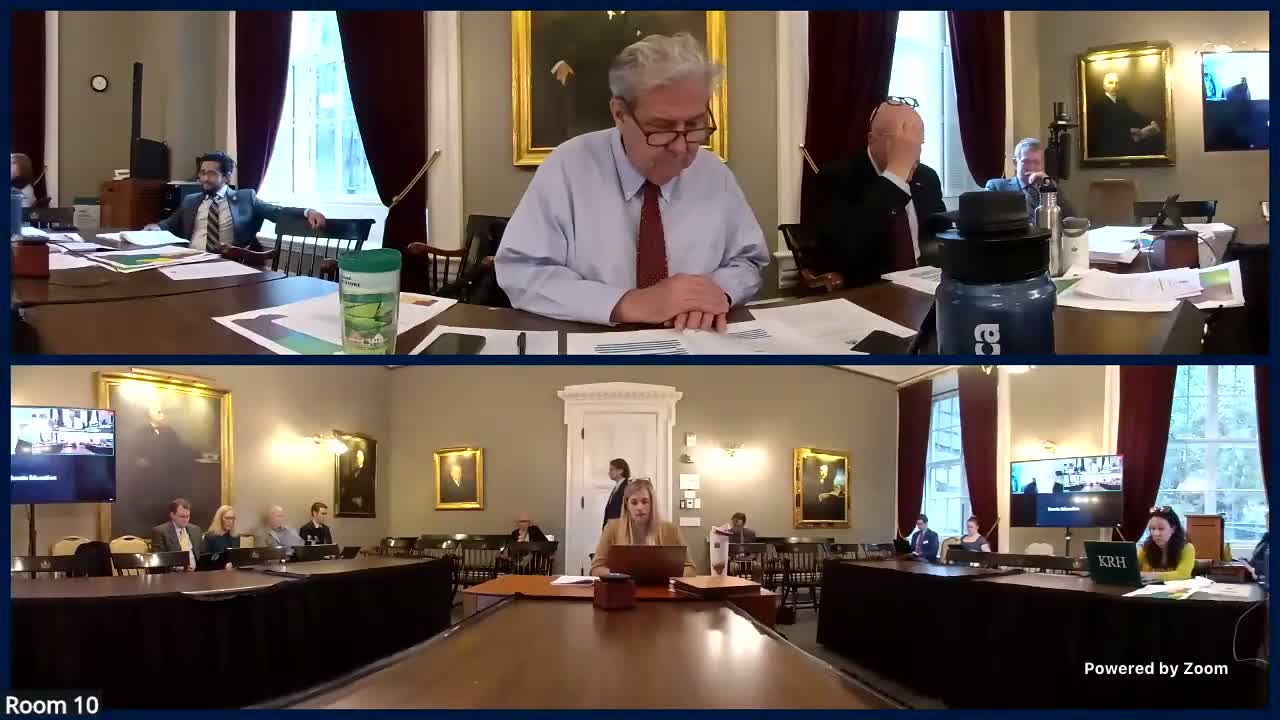
A state legislative education committee spent its session walking through a proposed education finance bill that would require local study committees, provide limited reimbursement and facilitator funding, and delay a new foundation funding formula until several statutory conditions are met. Committee members pressed for clarity on who will track deadlines, how sparsity will be measured, and whether required legislative fixes for transportation, special education and universal prekindergarten can be completed by the contingencies’ deadlines.
The committee’s presenter summarized key dates and procedures in the bill. If a study committee recommends forming a unified union school district, voters in the identified districts would cast ballots on or before Nov. 7, 2028, and the state board must issue required findings under current law on or before June 1, 2028. The presenter said a status report on study committee membership and progress will be provided to the committee in February 2027 and that the lead facilitator must file a final study report on or before Jan. 1, 2029.
Why it matters: The bill links major reforms to a set of process-oriented contingencies. Committee members warned that the contingency list obligates future legislatures to solve high-cost, complex issues (special education funding, school construction debt, transportation, and universal pre-K) before the foundation formula can take effect, creating uncertainty about timing and implementation.
Central provisions and funding
- Study committees: Facilitators form study committees made up of school board members under current law; the facilitator may document deviations from mapped guidance and adjust membership if a district is misassigned. The presenter emphasized individuals may not serve on more than one study committee simultaneously.
- Reimbursement grants: Study committees would be eligible for reimbursement grants of up to $10,000 each, administered by the Agency of Education on a reimbursement basis; the presenter said reimbursements must not total more than $10,000 per study committee.
- Facilitator appropriation: The bill claims $442,000 would be drawn from last year’s Act 73 education transformation appropriation to fund facilitators: roughly $50,000 per facilitator, $60,000 for a lead facilitator and $32,000 for administrative costs, according to the presenter’s figures.
- Seesaw executive director grant: If the Seesaw construct remains in law, each Seesaw not yet operational would be eligible for a $50,000 grant to hire its first executive director.
Contingencies delaying the foundation formula
The presenter listed multiple contingencies that must be met before the foundation formula becomes effective: certified results from any section-13 study committee votes; a Joint Fiscal Office (JFO) fiscal analysis (using FY27 data) comparing current appropriated state funding to the proposed foundation formula (JFO analysis due by Dec. 15, 2029); and enacted legislation addressing how to measure sparsity, whether and how to weight secondary vs. elementary costs, how to account for Career and Technical Education (CTE), regional operating-cost differences (including legacy collective-bargaining impacts), special education funding, school construction/debt repayment, transportation funding, and universal pre-K.
On measuring sparsity, members raised past debate about using ZIP codes versus other geographic units; the presenter said the contingency requires the legislature to pass statutory measures defining the geographic standard before the formula takes effect.
Prekindergarten provisions
The bill contains findings and intent language on pre-K: Vermont ranks second nationally in access for 4-year-olds (76% statewide), but access varies widely by county (examples cited by the presenter: Essex County 11%; Windsor and Windham counties 95%; Chittenden County 93%; Franklin County 55%; Grand Isle 61%), and fewer than 5% of prequalified providers offer a full day (4+ hours). The bill directs Building Bright Futures (BBF), the Agency of Education (AOE) and the Department for Children and Families (DCF) to jointly monitor pre-K and requires annual reporting; BBF must submit a written status report to the legislature by Dec. 1, 2026 and to the Joint Fiscal Committee by Oct. 1, 2026.
JFO contractor and data work
JFO is required to contract with a vendor experienced in Vermont’s education funding system to produce an updated cost-of-care analysis for pre-K (using statewide tuition rates and other recent cost studies). The presenter said there is an appropriation for JFO to hire that contractor but the transcript does not specify the appropriation amount.
Tools for districts and study committees
The bill would require the Department of Taxes to publish an interactive education-funding calculator by Oct. 1, 2027. The tool must let a district, study committee or any internet user compare FY27 state funding under current law with estimated funding under the proposed foundation formula; the Department of Taxes must consult with JFO, AOE and the Department of Finance and Management and submit a preliminary plan and a preliminary version of the calculator to the Joint Fiscal Committee in September 2027.
Committee concerns and next steps
Members repeatedly asked who will “keep the dates” and track certifications and agency reports, noting upcoming turnover from elections; the presenter said continuity will fall to whoever occupies the seats next year and that staff will help catch new members up. Members also pressed whether the legislature can resolve the enumerated high-cost issues by the contingencies’ deadlines and whether some contingency items (for example, universal pre-K policy or transportation funding) would effectively bind future legislatures—presenter replied the contingency requires enacted legislation but does not prescribe particular policy outcomes.
No formal votes or final actions were recorded in the transcript; the committee ended the session planning to begin data-collection review the next day.
The committee’s presenter summarized key dates and procedures in the bill. If a study committee recommends forming a unified union school district, voters in the identified districts would cast ballots on or before Nov. 7, 2028, and the state board must issue required findings under current law on or before June 1, 2028. The presenter said a status report on study committee membership and progress will be provided to the committee in February 2027 and that the lead facilitator must file a final study report on or before Jan. 1, 2029.
Why it matters: The bill links major reforms to a set of process-oriented contingencies. Committee members warned that the contingency list obligates future legislatures to solve high-cost, complex issues (special education funding, school construction debt, transportation, and universal pre-K) before the foundation formula can take effect, creating uncertainty about timing and implementation.
Central provisions and funding
- Study committees: Facilitators form study committees made up of school board members under current law; the facilitator may document deviations from mapped guidance and adjust membership if a district is misassigned. The presenter emphasized individuals may not serve on more than one study committee simultaneously.
- Reimbursement grants: Study committees would be eligible for reimbursement grants of up to $10,000 each, administered by the Agency of Education on a reimbursement basis; the presenter said reimbursements must not total more than $10,000 per study committee.
- Facilitator appropriation: The bill claims $442,000 would be drawn from last year’s Act 73 education transformation appropriation to fund facilitators: roughly $50,000 per facilitator, $60,000 for a lead facilitator and $32,000 for administrative costs, according to the presenter’s figures.
- Seesaw executive director grant: If the Seesaw construct remains in law, each Seesaw not yet operational would be eligible for a $50,000 grant to hire its first executive director.
Contingencies delaying the foundation formula
The presenter listed multiple contingencies that must be met before the foundation formula becomes effective: certified results from any section-13 study committee votes; a Joint Fiscal Office (JFO) fiscal analysis (using FY27 data) comparing current appropriated state funding to the proposed foundation formula (JFO analysis due by Dec. 15, 2029); and enacted legislation addressing how to measure sparsity, whether and how to weight secondary vs. elementary costs, how to account for Career and Technical Education (CTE), regional operating-cost differences (including legacy collective-bargaining impacts), special education funding, school construction/debt repayment, transportation funding, and universal pre-K.
On measuring sparsity, members raised past debate about using ZIP codes versus other geographic units; the presenter said the contingency requires the legislature to pass statutory measures defining the geographic standard before the formula takes effect.
Prekindergarten provisions
The bill contains findings and intent language on pre-K: Vermont ranks second nationally in access for 4-year-olds (76% statewide), but access varies widely by county (examples cited by the presenter: Essex County 11%; Windsor and Windham counties 95%; Chittenden County 93%; Franklin County 55%; Grand Isle 61%), and fewer than 5% of prequalified providers offer a full day (4+ hours). The bill directs Building Bright Futures (BBF), the Agency of Education (AOE) and the Department for Children and Families (DCF) to jointly monitor pre-K and requires annual reporting; BBF must submit a written status report to the legislature by Dec. 1, 2026 and to the Joint Fiscal Committee by Oct. 1, 2026.
JFO contractor and data work
JFO is required to contract with a vendor experienced in Vermont’s education funding system to produce an updated cost-of-care analysis for pre-K (using statewide tuition rates and other recent cost studies). The presenter said there is an appropriation for JFO to hire that contractor but the transcript does not specify the appropriation amount.
Tools for districts and study committees
The bill would require the Department of Taxes to publish an interactive education-funding calculator by Oct. 1, 2027. The tool must let a district, study committee or any internet user compare FY27 state funding under current law with estimated funding under the proposed foundation formula; the Department of Taxes must consult with JFO, AOE and the Department of Finance and Management and submit a preliminary plan and a preliminary version of the calculator to the Joint Fiscal Committee in September 2027.
Committee concerns and next steps
Members repeatedly asked who will “keep the dates” and track certifications and agency reports, noting upcoming turnover from elections; the presenter said continuity will fall to whoever occupies the seats next year and that staff will help catch new members up. Members also pressed whether the legislature can resolve the enumerated high-cost issues by the contingencies’ deadlines and whether some contingency items (for example, universal pre-K policy or transportation funding) would effectively bind future legislatures—presenter replied the contingency requires enacted legislation but does not prescribe particular policy outcomes.
No formal votes or final actions were recorded in the transcript; the committee ended the session planning to begin data-collection review the next day.
View the Full Meeting & All Its Details
This article offers just a summary. Unlock complete video, transcripts, and insights as a Founder Member.
✓
Watch full, unedited meeting videos
✓
Search every word spoken in unlimited transcripts
✓
AI summaries & real-time alerts (all government levels)
✓
Permanent access to expanding government content
30-day money-back guarantee
