Upper Dublin board advances first reading of generative AI policy after hours of public concern
May 07, 2026 | Upper Dublin SD, School Districts, Pennsylvania
This article was created by AI summarizing key points discussed. AI makes mistakes, so for full details and context, please refer to the video of the full meeting. Please report any errors so we can fix them. Report an error »
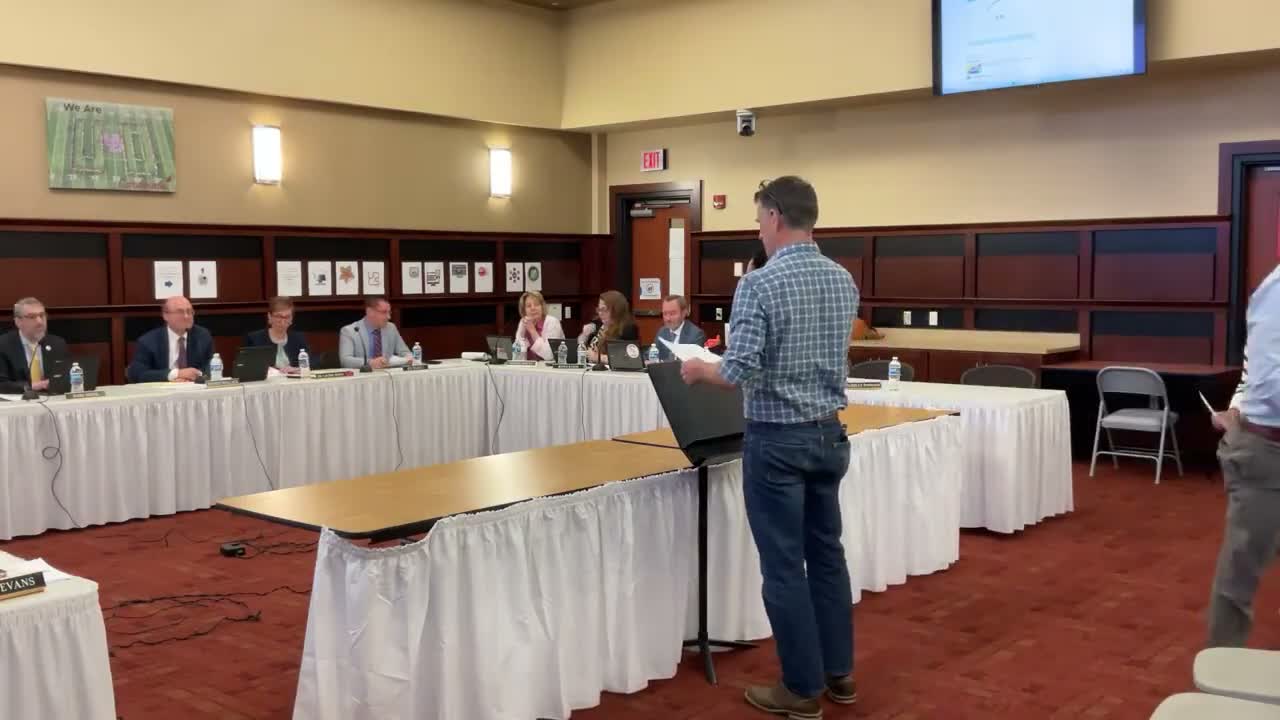
The Upper Dublin School District board advanced a first reading of Policy 8.15.1 on generative artificial intelligence on April 27, voting in favor 7–1 after an extended period of public comment calling for a pause on student deployment.
The motion to move Policy 8.15.1 forward as a first reading was made by Miss Evans and seconded by Mister Helm; the board chair announced the result as seven in favor and one opposed. Board members emphasized that a first reading does not enact policy and that the administration and board will continue to solicit public input and draft administrative regulations before any final vote.
A large block of residents, teachers, students and outside experts urged caution. "We respectfully urge the board to pause, not because AI has no place in education someday, but because the evidence required to responsibly place it in front of children does not yet exist," said Timothy McConnell, who identified himself as a taxpayer and member of an organized group, Upper Dublin Unplugged. Parents and educators repeatedly cited recent syntheses and guidance, including a Brookings task force and UNESCO recommendations, arguing the draft does not yet address developmental risks, notification to families, or age‑appropriate limits.
"The draft's tone is implementation — there is no acknowledgment of developmental risk, cognitive effects, or open questions in the body of the policy," a high‑school student told the board after reviewing the draft and asked that student deployment be held to a higher evidentiary standard.
Educators and experts urged specific changes: separate and specific provisions for adult professional use (teachers, administrators) versus student deployment; a peer‑reviewed evidence threshold for student authorization; explicit notification to families and opt‑out mechanisms; named triggers that would suspend or withdraw an approved tool; and an independent review process free of vendor influence with authority to recommend pause or rollback.
Board members acknowledged those concerns during debate. Some said having no policy at all leaves teachers without guidance; others said the student‑use provisions deserve more work. Several members supported scheduling an additional policy committee meeting in May to consider revisions and to draft an administrative regulation (AR) that would explain how any approved tools would be evaluated and managed.
Superintendent Dr. Smith said the administration would bring an AR draft aligned to the policy language when the board determines the next steps, and that additional committee meetings could be scheduled between first and second readings.
The vote on April 27 was recorded as a first reading approval: outcome "approved" for the procedural step of moving the policy forward to continued review. The board will consider further revisions and hold a second reading in a later meeting, at which the policy could be adopted, rejected, or returned for redrafting.
What’s next: Board members and administration indicated they will convene additional policy‑committee sessions to refine student‑vs‑adult provisions, clarify application criteria, and produce administrative regulations that specify data privacy reviews, approval gates for tools, family notification procedures and monitoring triggers.
Direct quotes from public commenters are drawn from the meeting transcript and attributed to the speakers listed by name at the time they spoke.
The motion to move Policy 8.15.1 forward as a first reading was made by Miss Evans and seconded by Mister Helm; the board chair announced the result as seven in favor and one opposed. Board members emphasized that a first reading does not enact policy and that the administration and board will continue to solicit public input and draft administrative regulations before any final vote.
A large block of residents, teachers, students and outside experts urged caution. "We respectfully urge the board to pause, not because AI has no place in education someday, but because the evidence required to responsibly place it in front of children does not yet exist," said Timothy McConnell, who identified himself as a taxpayer and member of an organized group, Upper Dublin Unplugged. Parents and educators repeatedly cited recent syntheses and guidance, including a Brookings task force and UNESCO recommendations, arguing the draft does not yet address developmental risks, notification to families, or age‑appropriate limits.
"The draft's tone is implementation — there is no acknowledgment of developmental risk, cognitive effects, or open questions in the body of the policy," a high‑school student told the board after reviewing the draft and asked that student deployment be held to a higher evidentiary standard.
Educators and experts urged specific changes: separate and specific provisions for adult professional use (teachers, administrators) versus student deployment; a peer‑reviewed evidence threshold for student authorization; explicit notification to families and opt‑out mechanisms; named triggers that would suspend or withdraw an approved tool; and an independent review process free of vendor influence with authority to recommend pause or rollback.
Board members acknowledged those concerns during debate. Some said having no policy at all leaves teachers without guidance; others said the student‑use provisions deserve more work. Several members supported scheduling an additional policy committee meeting in May to consider revisions and to draft an administrative regulation (AR) that would explain how any approved tools would be evaluated and managed.
Superintendent Dr. Smith said the administration would bring an AR draft aligned to the policy language when the board determines the next steps, and that additional committee meetings could be scheduled between first and second readings.
The vote on April 27 was recorded as a first reading approval: outcome "approved" for the procedural step of moving the policy forward to continued review. The board will consider further revisions and hold a second reading in a later meeting, at which the policy could be adopted, rejected, or returned for redrafting.
What’s next: Board members and administration indicated they will convene additional policy‑committee sessions to refine student‑vs‑adult provisions, clarify application criteria, and produce administrative regulations that specify data privacy reviews, approval gates for tools, family notification procedures and monitoring triggers.
Direct quotes from public commenters are drawn from the meeting transcript and attributed to the speakers listed by name at the time they spoke.
Don't Miss a Word: See the Full Meeting!
Go beyond summaries. Unlock every video, transcript, and key insight with a Founder Membership.
✓
Get instant access to full meeting videos
✓
Search and clip any phrase from complete transcripts
✓
Receive AI-powered summaries & custom alerts
✓
Enjoy lifetime, unrestricted access to government data
30-day money-back guarantee
