Anson County board pushes for revenue-neutral budget, weighs 2.5% COLA and merit pay plan
May 07, 2026 | Anson County, North Carolina
This article was created by AI summarizing key points discussed. AI makes mistakes, so for full details and context, please refer to the video of the full meeting. Please report any errors so we can fix them. Report an error »
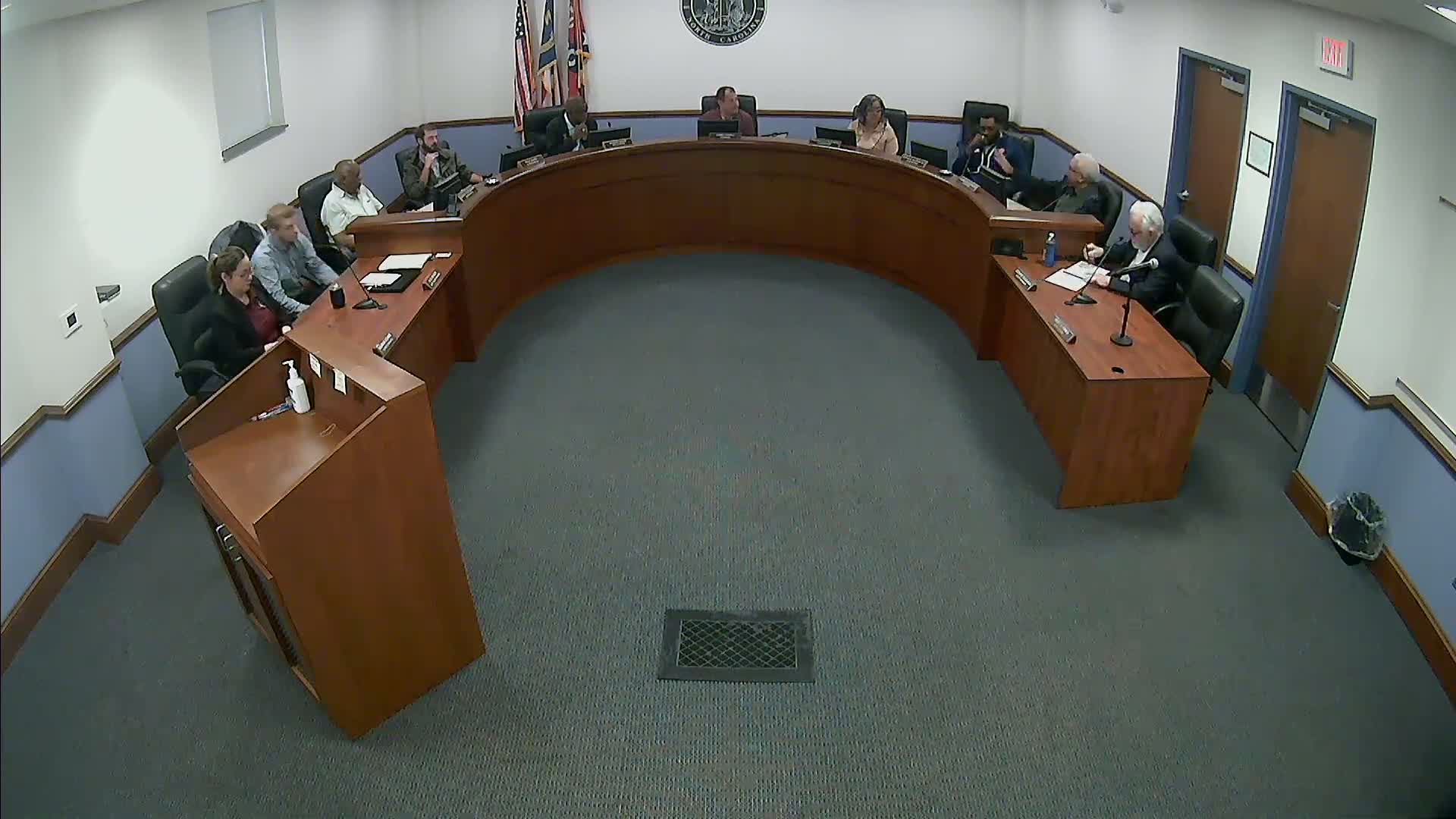
Chair Carter opened a May 7 budget workshop by urging the board to adopt a revenue-neutral tax rate so residents would not face higher taxes while the board considers department needs and revenue projections. "I think first and foremost, we have to adopt a revenue neutral budget," Carter said, adding the board should try to offset increases so "there is no additional cost in taxes to the citizens of this county."
Commissioner Gatewood proposed a 2.5% cost-of-living adjustment for all county employees, timed to January 2027, and urged work on a performance-management system that would let the county award merit increases to employees who meet supervisor-set objectives. "My recommendation is a 2 and a half percent COLA, January 2027," Gatewood said. He and other commissioners discussed whether to pair that approach with a merit-based program so that higher performers receive added increases.
Several commissioners pressed for targeted investments within a revenue-neutral framework. Commissioners named parks and recreation, public safety (law enforcement and EMS), and infrastructure as top priorities if funding allows. "If we don't invest in our young people in this county, we can't expect them to take care of us as we get older," Chair Carter said while urging investment in parks. Commissioners also suggested using hiring and schedule changes (for example, 12-hour 8 a.m.–8 p.m. shifts) to reduce overtime spending in high-overtime departments such as EMS.
The board discussed options for balancing quality and headcount: some commissioners argued for paying more for higher-skilled staff rather than hiring additional lower-paid positions; others cautioned that understaffed departments (for example, food-stamp caseworkers) risk higher error rates and eventual county liability if standards are not met. "Quality over quantity will save you time and money in the long run," one commissioner said; another countered that cutting staff can increase error rates and costs, noting DSS has been short‑staffed.
Finance staff and the manager said they will provide commissioners with department-by-department budget requests and the recommended budget so the board can evaluate what to keep or cut. The manager noted staff will prepare the revenue-neutral number after revaluation and collection-rate figures are finalized. The board did not take a formal vote at the workshop; members adjourned after asking managers to return departmental requests and additional detail for upcoming meetings.
Ending: The board directed staff to supply full departmental budgets and revenue-neutral calculations before the next meeting so commissioners can identify cuts or re‑allocations. The workshop closed with a motion to adjourn that was moved and seconded; no roll-call vote is recorded in the transcript excerpt.
Commissioner Gatewood proposed a 2.5% cost-of-living adjustment for all county employees, timed to January 2027, and urged work on a performance-management system that would let the county award merit increases to employees who meet supervisor-set objectives. "My recommendation is a 2 and a half percent COLA, January 2027," Gatewood said. He and other commissioners discussed whether to pair that approach with a merit-based program so that higher performers receive added increases.
Several commissioners pressed for targeted investments within a revenue-neutral framework. Commissioners named parks and recreation, public safety (law enforcement and EMS), and infrastructure as top priorities if funding allows. "If we don't invest in our young people in this county, we can't expect them to take care of us as we get older," Chair Carter said while urging investment in parks. Commissioners also suggested using hiring and schedule changes (for example, 12-hour 8 a.m.–8 p.m. shifts) to reduce overtime spending in high-overtime departments such as EMS.
The board discussed options for balancing quality and headcount: some commissioners argued for paying more for higher-skilled staff rather than hiring additional lower-paid positions; others cautioned that understaffed departments (for example, food-stamp caseworkers) risk higher error rates and eventual county liability if standards are not met. "Quality over quantity will save you time and money in the long run," one commissioner said; another countered that cutting staff can increase error rates and costs, noting DSS has been short‑staffed.
Finance staff and the manager said they will provide commissioners with department-by-department budget requests and the recommended budget so the board can evaluate what to keep or cut. The manager noted staff will prepare the revenue-neutral number after revaluation and collection-rate figures are finalized. The board did not take a formal vote at the workshop; members adjourned after asking managers to return departmental requests and additional detail for upcoming meetings.
Ending: The board directed staff to supply full departmental budgets and revenue-neutral calculations before the next meeting so commissioners can identify cuts or re‑allocations. The workshop closed with a motion to adjourn that was moved and seconded; no roll-call vote is recorded in the transcript excerpt.
Don't Miss a Word: See the Full Meeting!
Go beyond summaries. Unlock every video, transcript, and key insight with a Founder Membership.
✓
Get instant access to full meeting videos
✓
Search and clip any phrase from complete transcripts
✓
Receive AI-powered summaries & custom alerts
✓
Enjoy lifetime, unrestricted access to government data
30-day money-back guarantee
