Committee backs S.212 to create general permits for water and septic connections, repeal neighborhood fee cap
May 07, 2026 | Ways & Means, HOUSE OF REPRESENTATIVES, Committees, Legislative , Vermont
This article was created by AI summarizing key points discussed. AI makes mistakes, so for full details and context, please refer to the video of the full meeting. Please report any errors so we can fix them. Report an error »
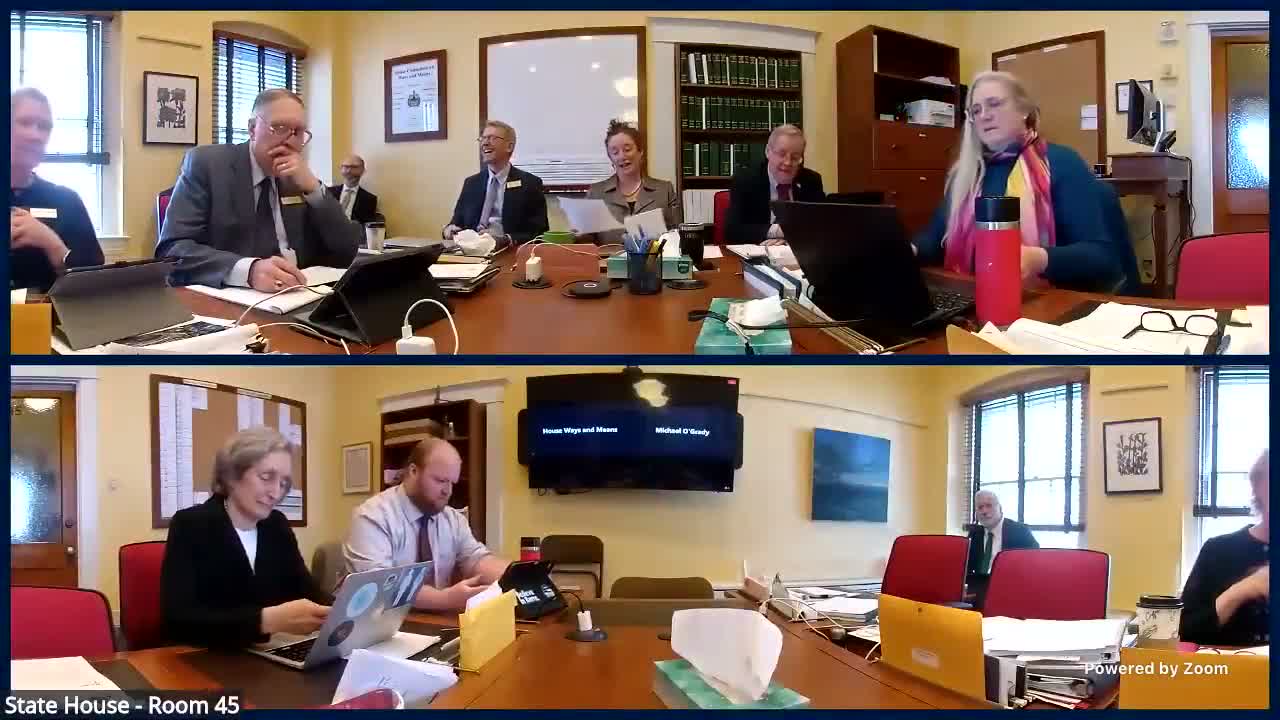
The Vermont House Ways & Means Committee voted S.212 favorable as amended on May 7 after hearing presentations on a bill that would streamline permitting for potable water and wastewater service connections, revise related fees and effective dates, and allow limited municipal and pretreatment delegation.
Michael Grady of Legislative Council told the committee S.212 defines ‘‘service connections’’ as the pipe from a structure to the public main (excluding internal plumbing) and would require those connections to receive the same permit now required for wells and septic systems. Grady said the bill’s central tool is a mandated general permit that applies to a class of similar connections rather than individualized, site-specific permits: “Instead of issuing 500 individual permits, the agency issues one permit,” he said, explaining that the Agency of Natural Resources (ANR) would publish a pictorial manual and may give deference to licensed designers when they certify compliance.
The bill would require ANR to issue the required general permit by Dec. 1, 2027, and to begin accepting licensed-engineer certifications on Jan. 1, 2028, Grady said. He also described criteria for partial municipal delegation: a municipality must own the public water or wastewater system (not, for example, a fire district), demonstrate administrative qualifications and sufficient capacity, obtain legislative authorization at the local level, and transmit documentation of approvals to ANR.
S.212 makes several fee and revenue changes. Grady told the committee municipalities that conduct technical reviews may charge local fees and must transmit a $100 administrative filing to ANR so the state can maintain a centralized permit record. Under the draft general-permit fee table, Grady said design flows under 2,000 gallons per day would carry a $250 fee; 2,000–6,500 gpd would be $2,500; and flows greater than 6,500 gpd would be $5,000 — lower than the corresponding individual-permit amounts in current law. Those numbers were presented by Grady as examples of the proposed general-permit fee tiers intended to reflect lower ANR processing time for generalized coverage than for individually tailored permits.
Tim Burnett of the Joint Fiscal Office described fiscal uncertainties tied to an expanding set of ‘‘designated’’ centers and neighborhoods referenced in state statute (24 V.S.A. chapter 76A in statute-related language). He said ANR mapping indicates the number of permits that would be eligible for the old $50 neighborhood cap could increase substantially (ANR estimated a multiple of roughly 6–8 times in preliminary comparisons), which is why ANR asked the committee to strike the neighborhood cap. Grady said the committee instead adopted two amendments: first, replacing the phrase “memorandum of understanding” with “agreement” for delegation documents; second, shifting the bill’s effective date to July 1, 2026, to allow implementation time.
The Joint Fiscal Office and ANR presenters told members the net fiscal impact is uncertain because the proposal moves several levers at once: eliminating the neighborhood cap would increase revenue on some projects, while the new, lower connection fees would reduce revenue from other permit categories. Sal (committee presenter) and analysts reported their modeling shows those effects largely offset and described the overall revenue impact as modest, though they flagged specific categories (administrative fees, expanded designated areas, and repealed exemptions) as uncertain.
On pretreatment — the regulation of industrial or commercial discharges before they reach a publicly owned treatment work (POTW) — Grady said the bill authorizes the secretary to enter an agreement with a POTW owner to delegate pretreatment permitting and enforcement (including civil, criminal, or administrative penalties) if EPA reauthorizes or otherwise approves the state’s approach. ‘‘The owner of a POTW that the secretary enters into an agreement with may, as part of the agreement, set application fees and other fees necessary for regulation,’’ Grady said.
Committee members asked procedural and local-impact questions about who receives which fees, whether the changes would raise builders’ costs, and how capacity is determined in older systems; presenters reiterated that state-level fees would continue to flow to ANR’s environmental permit fund while municipal fees collected under delegated authority would be retained by the municipality. Supporters argued the general permit should reduce engineering and permitting costs for builders because licensed designers and engineers could rely on a standard manual and certification process.
A committee member moved the committee find S.212 favorable as amended, noting no discernible fiscal impact, and the motion passed on a roll call that the committee reported as 10 yes, 0 no, 1 absent/abstention. The chair announced a short break after the vote.
What’s next: With the committee’s favorable report, S.212 moves forward in the legislative process; ANR would be directed to prepare the general permit and associated manual under the timelines included in the bill if it becomes law.
Michael Grady of Legislative Council told the committee S.212 defines ‘‘service connections’’ as the pipe from a structure to the public main (excluding internal plumbing) and would require those connections to receive the same permit now required for wells and septic systems. Grady said the bill’s central tool is a mandated general permit that applies to a class of similar connections rather than individualized, site-specific permits: “Instead of issuing 500 individual permits, the agency issues one permit,” he said, explaining that the Agency of Natural Resources (ANR) would publish a pictorial manual and may give deference to licensed designers when they certify compliance.
The bill would require ANR to issue the required general permit by Dec. 1, 2027, and to begin accepting licensed-engineer certifications on Jan. 1, 2028, Grady said. He also described criteria for partial municipal delegation: a municipality must own the public water or wastewater system (not, for example, a fire district), demonstrate administrative qualifications and sufficient capacity, obtain legislative authorization at the local level, and transmit documentation of approvals to ANR.
S.212 makes several fee and revenue changes. Grady told the committee municipalities that conduct technical reviews may charge local fees and must transmit a $100 administrative filing to ANR so the state can maintain a centralized permit record. Under the draft general-permit fee table, Grady said design flows under 2,000 gallons per day would carry a $250 fee; 2,000–6,500 gpd would be $2,500; and flows greater than 6,500 gpd would be $5,000 — lower than the corresponding individual-permit amounts in current law. Those numbers were presented by Grady as examples of the proposed general-permit fee tiers intended to reflect lower ANR processing time for generalized coverage than for individually tailored permits.
Tim Burnett of the Joint Fiscal Office described fiscal uncertainties tied to an expanding set of ‘‘designated’’ centers and neighborhoods referenced in state statute (24 V.S.A. chapter 76A in statute-related language). He said ANR mapping indicates the number of permits that would be eligible for the old $50 neighborhood cap could increase substantially (ANR estimated a multiple of roughly 6–8 times in preliminary comparisons), which is why ANR asked the committee to strike the neighborhood cap. Grady said the committee instead adopted two amendments: first, replacing the phrase “memorandum of understanding” with “agreement” for delegation documents; second, shifting the bill’s effective date to July 1, 2026, to allow implementation time.
The Joint Fiscal Office and ANR presenters told members the net fiscal impact is uncertain because the proposal moves several levers at once: eliminating the neighborhood cap would increase revenue on some projects, while the new, lower connection fees would reduce revenue from other permit categories. Sal (committee presenter) and analysts reported their modeling shows those effects largely offset and described the overall revenue impact as modest, though they flagged specific categories (administrative fees, expanded designated areas, and repealed exemptions) as uncertain.
On pretreatment — the regulation of industrial or commercial discharges before they reach a publicly owned treatment work (POTW) — Grady said the bill authorizes the secretary to enter an agreement with a POTW owner to delegate pretreatment permitting and enforcement (including civil, criminal, or administrative penalties) if EPA reauthorizes or otherwise approves the state’s approach. ‘‘The owner of a POTW that the secretary enters into an agreement with may, as part of the agreement, set application fees and other fees necessary for regulation,’’ Grady said.
Committee members asked procedural and local-impact questions about who receives which fees, whether the changes would raise builders’ costs, and how capacity is determined in older systems; presenters reiterated that state-level fees would continue to flow to ANR’s environmental permit fund while municipal fees collected under delegated authority would be retained by the municipality. Supporters argued the general permit should reduce engineering and permitting costs for builders because licensed designers and engineers could rely on a standard manual and certification process.
A committee member moved the committee find S.212 favorable as amended, noting no discernible fiscal impact, and the motion passed on a roll call that the committee reported as 10 yes, 0 no, 1 absent/abstention. The chair announced a short break after the vote.
What’s next: With the committee’s favorable report, S.212 moves forward in the legislative process; ANR would be directed to prepare the general permit and associated manual under the timelines included in the bill if it becomes law.
Don't Miss a Word: See the Full Meeting!
Go beyond summaries. Unlock every video, transcript, and key insight with a Founder Membership.
✓
Get instant access to full meeting videos
✓
Search and clip any phrase from complete transcripts
✓
Receive AI-powered summaries & custom alerts
✓
Enjoy lifetime, unrestricted access to government data
30-day money-back guarantee
