Insurers and hospitals warn of operational and federal risks as committee considers reference‑based pricing
May 07, 2026 | Health Care, HOUSE OF REPRESENTATIVES, Committees, Legislative , Vermont
This article was created by AI summarizing key points discussed. AI makes mistakes, so for full details and context, please refer to the video of the full meeting. Please report any errors so we can fix them. Report an error »
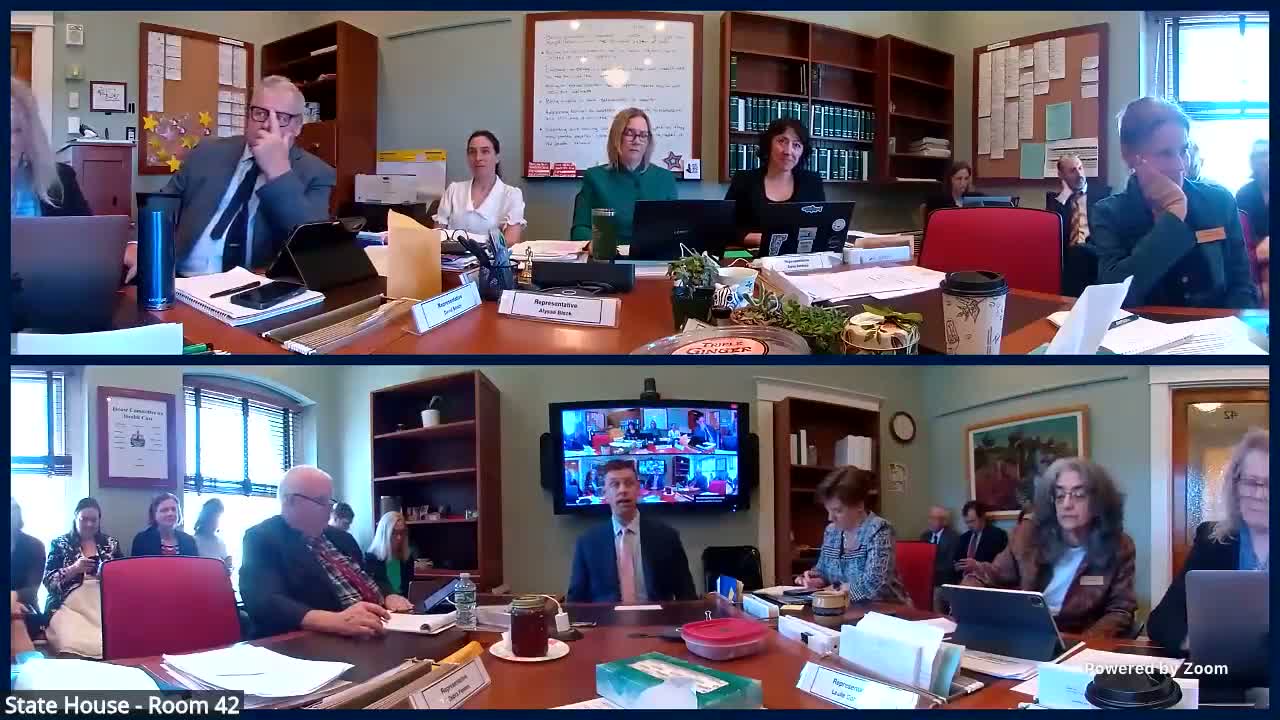
Witnesses from insurers, hospitals and unions told the committee that reference‑based pricing and the bill’s price‑reporting requirements could reduce premiums for some markets but carry operational, regulatory and federal‑compliance risks.
Courtney Harness of Blue Cross and Blue Shield of Vermont said moving reference‑based pricing into the Qualified Health Plan (QHP) market "would be expensive and messy," though the carrier said it trusts the care board to set technical rules. "If the Green Mountain Care Board said to you, you will not pay hospitals more than 250% of Medicare..." a member asked; Harness replied she had described the approach as "messy and expensive" but not impossible.
Devin Green of the Vermont Association of Hospitals and Health Systems asked for a single, standard methodology for price reporting and warned that reporting prices as a percentage of Medicare could be administratively burdensome and might conflict with federal rules that protect critical access hospitals. "We are worried about federal compliance issues around this," he said, citing Medicare cost apportionment, bad‑debt requirements and anti‑kickback concerns.
Hospital testimony asked for exemptions or special treatment for critical access and Medicare‑dependent rural hospitals and for clearer definitions of terms such as "hospital spend." The association offered to work with the Green Mountain Care Board and submit memos on compliance and methodology.
Adam Norton of VSEA urged that state employees be included in any pilot, saying savings would be meaningful only if stakeholders were included and warning that higher employee cost‑sharing can trigger compensating wage increases. On the other side, supporters such as the Vermont School Boards Association argued that shifting first‑dollar responsibility to employees would help restrain property‑tax growth.
Committee members pressed witnesses on trade‑offs: whether to set more specific legislative language or rely on the Care Board’s rulemaking in 2027; whether savings would materialize and for whom; and how to avoid unintended consequences for rural hospitals and certain specialty groups.
The chair asked stakeholders to work offline with the Care Board and committee staff to produce technical memos; the committee will reconvene for markup with technical fixes still outstanding.
Courtney Harness of Blue Cross and Blue Shield of Vermont said moving reference‑based pricing into the Qualified Health Plan (QHP) market "would be expensive and messy," though the carrier said it trusts the care board to set technical rules. "If the Green Mountain Care Board said to you, you will not pay hospitals more than 250% of Medicare..." a member asked; Harness replied she had described the approach as "messy and expensive" but not impossible.
Devin Green of the Vermont Association of Hospitals and Health Systems asked for a single, standard methodology for price reporting and warned that reporting prices as a percentage of Medicare could be administratively burdensome and might conflict with federal rules that protect critical access hospitals. "We are worried about federal compliance issues around this," he said, citing Medicare cost apportionment, bad‑debt requirements and anti‑kickback concerns.
Hospital testimony asked for exemptions or special treatment for critical access and Medicare‑dependent rural hospitals and for clearer definitions of terms such as "hospital spend." The association offered to work with the Green Mountain Care Board and submit memos on compliance and methodology.
Adam Norton of VSEA urged that state employees be included in any pilot, saying savings would be meaningful only if stakeholders were included and warning that higher employee cost‑sharing can trigger compensating wage increases. On the other side, supporters such as the Vermont School Boards Association argued that shifting first‑dollar responsibility to employees would help restrain property‑tax growth.
Committee members pressed witnesses on trade‑offs: whether to set more specific legislative language or rely on the Care Board’s rulemaking in 2027; whether savings would materialize and for whom; and how to avoid unintended consequences for rural hospitals and certain specialty groups.
The chair asked stakeholders to work offline with the Care Board and committee staff to produce technical memos; the committee will reconvene for markup with technical fixes still outstanding.
View the Full Meeting & All Its Details
This article offers just a summary. Unlock complete video, transcripts, and insights as a Founder Member.
✓
Watch full, unedited meeting videos
✓
Search every word spoken in unlimited transcripts
✓
AI summaries & real-time alerts (all government levels)
✓
Permanent access to expanding government content
30-day money-back guarantee
