Joliet council approves amended Rock Run redevelopment deal to anchor DICK'S House of Sport
May 07, 2026 | Joliet, Will County, Illinois
This article was created by AI summarizing key points discussed. AI makes mistakes, so for full details and context, please refer to the video of the full meeting. Please report any errors so we can fix them. Report an error »
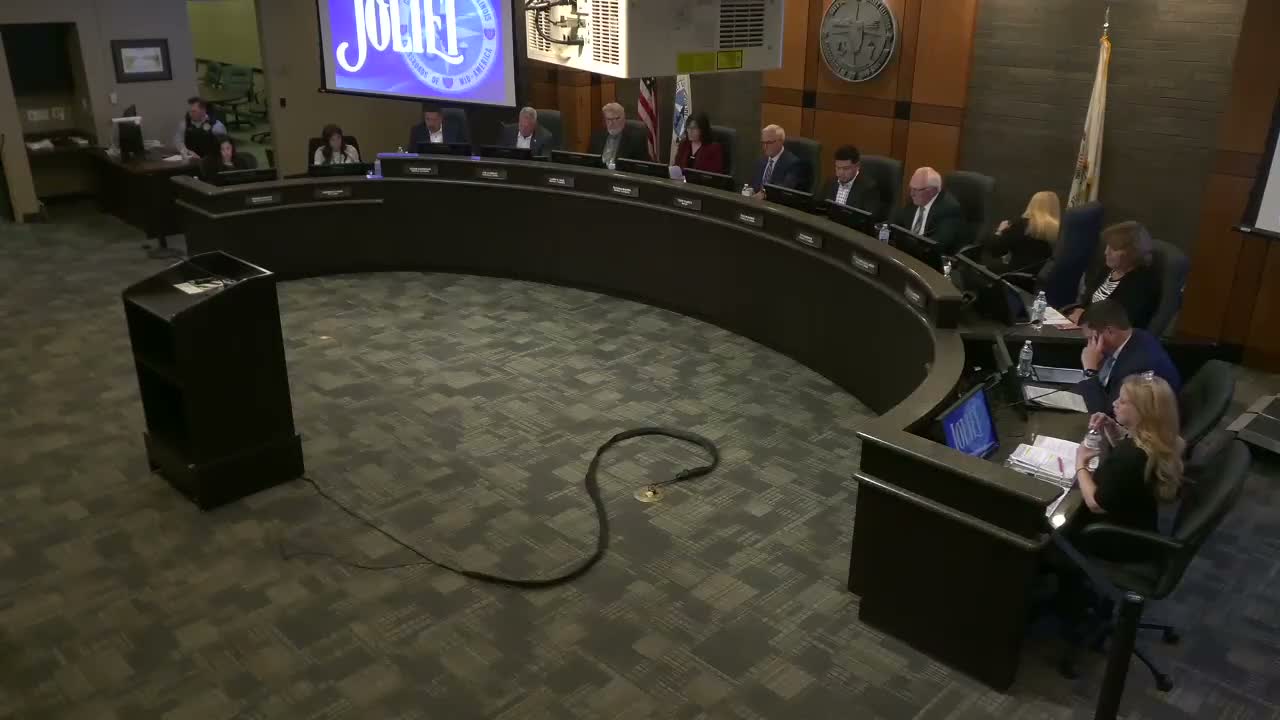
The Joliet City Council on May 5 adopted an amended redevelopment agreement for the Rock Run Collection that city officials say rebalances risk, ties incentive payments to performance, and speeds retail development at the 300‑acre site near I‑55 and I‑80.
Kevin Singh, the city's finance director, said the amendment reduces the city’s exposure compared with the previous $100 million bond arrangement and creates a payment structure that reimburses incentives only from taxes generated on the project site. "Our risk is being reduced by $16,200,000 just by approval of the agreement," Singh said during the council meeting.
Developers and anchor tenants framed the project as a major regional draw. "This amended and restated redevelopment agreement will tie incentives directly to performance, attract a major anchor with DICK'S House of Sport and put Rock Run Collection on track to be the first‑of‑its‑kind destination for shopping and dining," a Cullinan Properties representative told the council. Vince Corno, representing DICK'S House of Sport, described the anchor concept as an experiential, mixed‑use retail prototype and said Joliet would host one of the first ground‑up prototypes in the Chicagoland market.
Cullinan's chief strategy officer, Maria Touliapoulos, presented the project's economic projections, saying the full master development would generate roughly 8,000 construction jobs and about 5,000 permanent jobs. "The total master development will be responsible for 8,000 construction jobs resulting in over $510,000,000 in wages as well as 5,000 permanent jobs with $200,000,000 in annual wages," Touliapoulos said.
Labor and community stakeholders addressed the council during public comment. Dan Wexler of the Indiana‑Illinois‑Iowa Foundation for Fair Contracting urged approval and emphasized the role of a project labor agreement in ensuring responsible construction: "A project labor agreement brings stability, skilled labor, apprenticeship opportunities, and consistent labor standards to a project of this size and complexity." He added that incentives in the amended agreement would be paid only after performance is demonstrated.
City attorney and negotiators said the new agreement adds remedies and penalties for nonperformance and creates a reimbursement structure so incentive payments are generated from activity on the site rather than the city’s general fund. City staff also noted that the incentive payments will be reduced annually if the project is delayed and that the financial terms assume 80% taxable retail occupancy in early projections.
After questions from council members about retail mix, potential amenities such as an ice rink, and impacts on the existing DICK'S store in the area, the council voted to approve the resolution authorizing the amended agreement.
The council's vote advances multiple related approvals the developers still need (leases, vertical construction and subsequent permitting). City officials said incentive payments will be tied to the opening of stores, executed leases, and vertical construction milestones. Developers said they have contingent leases and expect to actively recruit additional national and regional tenants once the agreement is finalized and the project moves to construction.
Kevin Singh, the city's finance director, said the amendment reduces the city’s exposure compared with the previous $100 million bond arrangement and creates a payment structure that reimburses incentives only from taxes generated on the project site. "Our risk is being reduced by $16,200,000 just by approval of the agreement," Singh said during the council meeting.
Developers and anchor tenants framed the project as a major regional draw. "This amended and restated redevelopment agreement will tie incentives directly to performance, attract a major anchor with DICK'S House of Sport and put Rock Run Collection on track to be the first‑of‑its‑kind destination for shopping and dining," a Cullinan Properties representative told the council. Vince Corno, representing DICK'S House of Sport, described the anchor concept as an experiential, mixed‑use retail prototype and said Joliet would host one of the first ground‑up prototypes in the Chicagoland market.
Cullinan's chief strategy officer, Maria Touliapoulos, presented the project's economic projections, saying the full master development would generate roughly 8,000 construction jobs and about 5,000 permanent jobs. "The total master development will be responsible for 8,000 construction jobs resulting in over $510,000,000 in wages as well as 5,000 permanent jobs with $200,000,000 in annual wages," Touliapoulos said.
Labor and community stakeholders addressed the council during public comment. Dan Wexler of the Indiana‑Illinois‑Iowa Foundation for Fair Contracting urged approval and emphasized the role of a project labor agreement in ensuring responsible construction: "A project labor agreement brings stability, skilled labor, apprenticeship opportunities, and consistent labor standards to a project of this size and complexity." He added that incentives in the amended agreement would be paid only after performance is demonstrated.
City attorney and negotiators said the new agreement adds remedies and penalties for nonperformance and creates a reimbursement structure so incentive payments are generated from activity on the site rather than the city’s general fund. City staff also noted that the incentive payments will be reduced annually if the project is delayed and that the financial terms assume 80% taxable retail occupancy in early projections.
After questions from council members about retail mix, potential amenities such as an ice rink, and impacts on the existing DICK'S store in the area, the council voted to approve the resolution authorizing the amended agreement.
The council's vote advances multiple related approvals the developers still need (leases, vertical construction and subsequent permitting). City officials said incentive payments will be tied to the opening of stores, executed leases, and vertical construction milestones. Developers said they have contingent leases and expect to actively recruit additional national and regional tenants once the agreement is finalized and the project moves to construction.
View the Full Meeting & All Its Details
This article offers just a summary. Unlock complete video, transcripts, and insights as a Founder Member.
✓
Watch full, unedited meeting videos
✓
Search every word spoken in unlimited transcripts
✓
AI summaries & real-time alerts (all government levels)
✓
Permanent access to expanding government content
30-day money-back guarantee
