Committee advances memo to activate vacant storefronts, sends it for workload analysis
May 07, 2026 | San Jose , Santa Clara County, California
This article was created by AI summarizing key points discussed. AI makes mistakes, so for full details and context, please refer to the video of the full meeting. Please report any errors so we can fix them. Report an error »
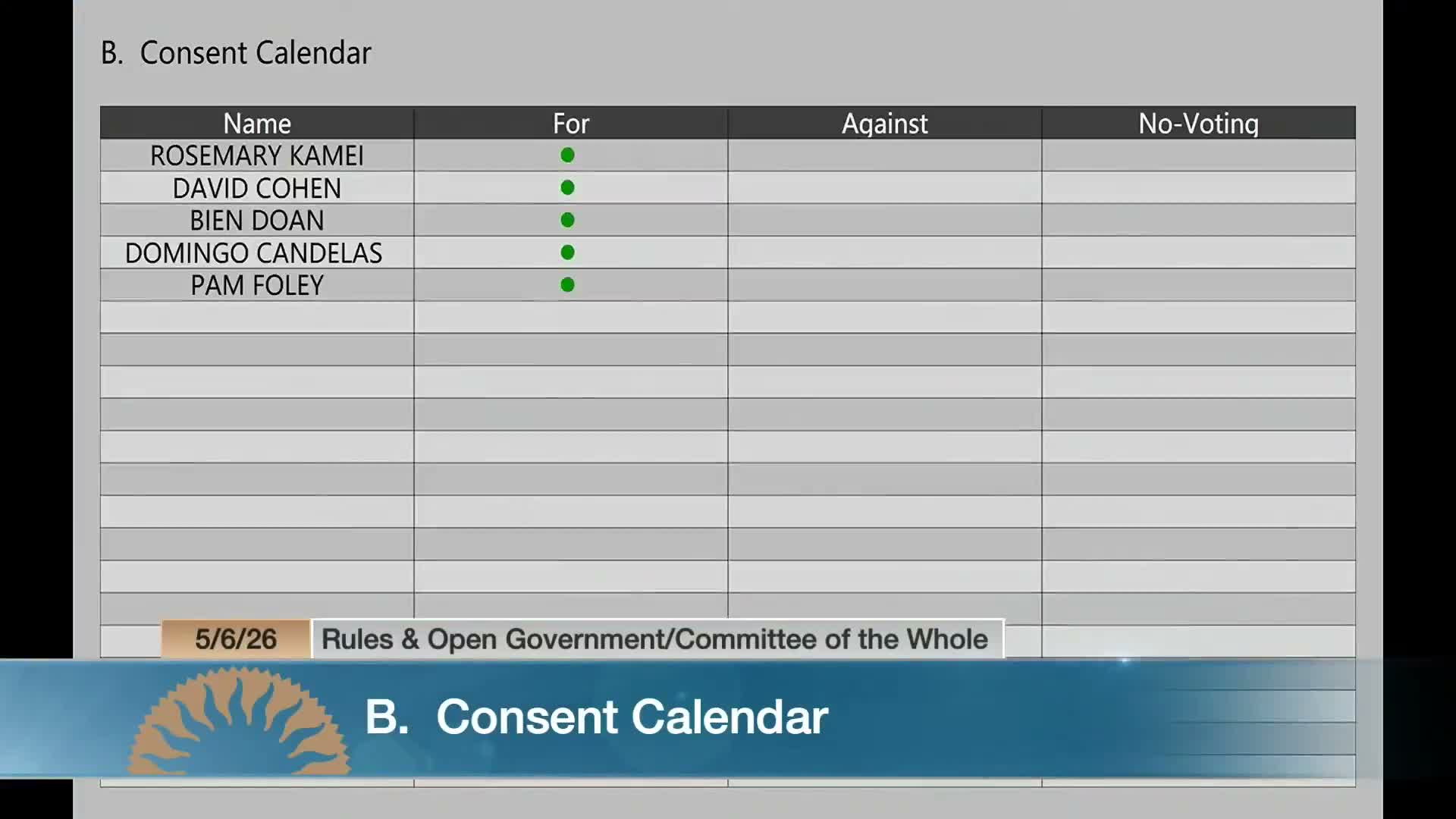
The Rules and Open Government Committee voted unanimously to advance a policy analysis memo on tools to activate vacant commercial storefronts, sending it to staff for a workload analysis that could return in one to two weeks.
Council Member Mokehay framed the effort as broader than storefront aesthetics, calling it an economic development strategy that touches "all 5 of our city council priorities." He said turning empty spaces into businesses or community uses "makes our streets feel safer and more cared for, supports small business entrepreneurs, creates healthier, safer, better lit corridors, and cleans up our neighborhoods."
A public commenter urged the committee to partner with nearby San Jose State students and programs, saying the university "have civil engineers, they have people that are hungry to get something done" and suggesting the city explore collaborations to give students practical experience while activating storefront space. Council Member Jordan Bridal, District 3, recommended the committee consider allowing two different businesses to share a single storefront at different times — "two completely different businesses operating in the same storefront, presumably ... each paying half the rent" — and asked staff to evaluate whether zoning or permitting restrictions would need to change to allow such arrangements.
Vice Mayor moved approval of the memo "subject to workload analysis," and a second motion carried. Chair recorded the vote as "motion carries 5–0." Committee members said the memo could reduce long vacancy timelines and give the Planning, Building and Code Enforcement (PBC) staff room to plan implementation.
The committee provided direction to staff to return with workload impacts and criteria; no ordinance or regulation was adopted at this meeting. The next procedural step is for staff to complete the workload analysis and report back to the committee.
Council Member Mokehay framed the effort as broader than storefront aesthetics, calling it an economic development strategy that touches "all 5 of our city council priorities." He said turning empty spaces into businesses or community uses "makes our streets feel safer and more cared for, supports small business entrepreneurs, creates healthier, safer, better lit corridors, and cleans up our neighborhoods."
A public commenter urged the committee to partner with nearby San Jose State students and programs, saying the university "have civil engineers, they have people that are hungry to get something done" and suggesting the city explore collaborations to give students practical experience while activating storefront space. Council Member Jordan Bridal, District 3, recommended the committee consider allowing two different businesses to share a single storefront at different times — "two completely different businesses operating in the same storefront, presumably ... each paying half the rent" — and asked staff to evaluate whether zoning or permitting restrictions would need to change to allow such arrangements.
Vice Mayor moved approval of the memo "subject to workload analysis," and a second motion carried. Chair recorded the vote as "motion carries 5–0." Committee members said the memo could reduce long vacancy timelines and give the Planning, Building and Code Enforcement (PBC) staff room to plan implementation.
The committee provided direction to staff to return with workload impacts and criteria; no ordinance or regulation was adopted at this meeting. The next procedural step is for staff to complete the workload analysis and report back to the committee.
Don't Miss a Word: See the Full Meeting!
Go beyond summaries. Unlock every video, transcript, and key insight with a Founder Membership.
✓
Get instant access to full meeting videos
✓
Search and clip any phrase from complete transcripts
✓
Receive AI-powered summaries & custom alerts
✓
Enjoy lifetime, unrestricted access to government data
30-day money-back guarantee
