PUC approves near-term demand-response flexibility, denies preapproval of large ECA purchases in Public Service reliability plan
May 07, 2026 | Public Utilities Commission, Governor's Boards and Commissions, Organizations, Executive, Colorado
This article was created by AI summarizing key points discussed. AI makes mistakes, so for full details and context, please refer to the video of the full meeting. Please report any errors so we can fix them. Report an error »
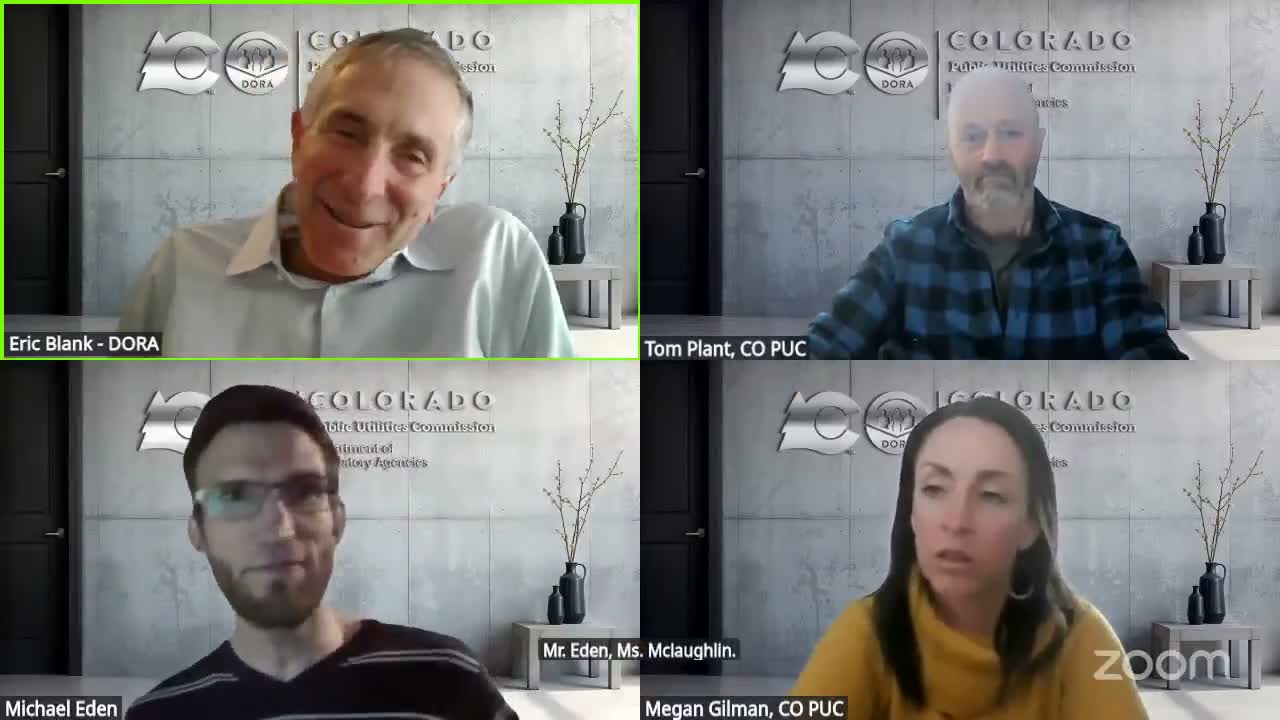
The Public Utilities Commission on May 6, 2026 discussed Public Service Company of Colorado's Reliability Action Plan and associated motion seeking expedited authority and up to $100 million in Electric Commodity Adjustment (ECA) funds to secure near-term capacity. Advisors and staff recommended a selective, constrained approach: approve procedural and limited budget flexibility for several demand-response and customer-facing programs while declining to preapprove large ECA-funded purchases without additional detail.
Mike Levine of the commission's advisory team summarized the company's April 15 filing, saying, "The motion and reliability action plan requests $100,000,000 in funds via the Electric Commodity Adjustment or ECA to pursue numerous potential actions to shore up the company's resource adequacy position." Levine said the company's proposals included increasing ISOC incentives, increasing flexibility for other DR programs, repairing Hayden Unit 2, buying capacity from Craig Unit 1, and acquiring small dispatchable gas generators and battery storage.
Advisors recommended approving near-term changes to the Interruptible Service Option Credit (ISOC) program (including anchoring ISOC credits to short-term market prices, relaxing the June 1 enrollment deadline, and permitting compliance advice letters on short notice). Staff and advisors estimated ISOC increases could yield roughly 8 megawatts of incremental capacity in 2026 and about 14 megawatts by 2027 at an estimated incremental cost of $6'$12 million, depending on participation. The commission also approved an additional $3 million for AC rewards, which advisors said could procure about 35'40 MW of capacity in 2026.
At the same time, advisors and staff recommended denying preapproval of major ECA-funded actions where the company provided insufficient detail. On Hayden Unit 2, advisors agreed with intervenors that the commission should not grant broad preapproved ECA funding or rule waivers without evidence that repairs would timely provide capacity; advisors said staff was not opposed to cost recovery in a later proceeding, but that the commission should not make a prudency determination now. On a proposed purchase of capacity from Craig Unit 1, staff and advisors urged rejection of preapproval because the company supplied no cost, capacity, or contract detail and several parties noted the unit remains on temporary federal orders.
The commission also reviewed the company's proposal to acquire small dispatchable resources (mobile gas generators and battery units). Advisors recommended denying preapproval for ECA funding for that proposal because the filing lacked identified sites, equipment, permitting analysis, cost-benefit details and an operational timeline; they did not preclude future prudency review in a cost-recovery case.
Several commissioners pressed the company for better transparency on the transmission side of near-term procurement. Chair Eric Blank said the commission needs clearer information about which substations and lines are constrained and what transmission work would be required to interconnect new resources, stating, "they need to quickly provide us with a far better picture of the transmission system... with identified substations and defined cost to get to the substation." Commissioners warned that selecting generation without transparent transmission analysis risks unfair advantages to company-owned bids and urged the company to present those transmission impacts promptly so bidders can respond fairly.
What the commission decided: advisors'and staff'recommendations were largely accepted: the commission approved limited procedural and budget flexibility for ISOC and several DR programs (with the expectation that total spend remain within or be justified against existing DSM budgets), approved an additional $3 million for AC rewards, granted intervention requests, and declined to preapprove large ECA expenditures or prudency findings for Hayden repairs, Craig Unit 1 purchases, or unspecified small dispatchable resources. Commissioners directed staff to include stronger expectations in the order about ISOC customer performance and to ask the company to provide a clearer, line-by-line presentation of changes between prior and current load-and-resource tables and a transparent transmission plan for NTP resources.
Mike Levine of the commission's advisory team summarized the company's April 15 filing, saying, "The motion and reliability action plan requests $100,000,000 in funds via the Electric Commodity Adjustment or ECA to pursue numerous potential actions to shore up the company's resource adequacy position." Levine said the company's proposals included increasing ISOC incentives, increasing flexibility for other DR programs, repairing Hayden Unit 2, buying capacity from Craig Unit 1, and acquiring small dispatchable gas generators and battery storage.
Advisors recommended approving near-term changes to the Interruptible Service Option Credit (ISOC) program (including anchoring ISOC credits to short-term market prices, relaxing the June 1 enrollment deadline, and permitting compliance advice letters on short notice). Staff and advisors estimated ISOC increases could yield roughly 8 megawatts of incremental capacity in 2026 and about 14 megawatts by 2027 at an estimated incremental cost of $6'$12 million, depending on participation. The commission also approved an additional $3 million for AC rewards, which advisors said could procure about 35'40 MW of capacity in 2026.
At the same time, advisors and staff recommended denying preapproval of major ECA-funded actions where the company provided insufficient detail. On Hayden Unit 2, advisors agreed with intervenors that the commission should not grant broad preapproved ECA funding or rule waivers without evidence that repairs would timely provide capacity; advisors said staff was not opposed to cost recovery in a later proceeding, but that the commission should not make a prudency determination now. On a proposed purchase of capacity from Craig Unit 1, staff and advisors urged rejection of preapproval because the company supplied no cost, capacity, or contract detail and several parties noted the unit remains on temporary federal orders.
The commission also reviewed the company's proposal to acquire small dispatchable resources (mobile gas generators and battery units). Advisors recommended denying preapproval for ECA funding for that proposal because the filing lacked identified sites, equipment, permitting analysis, cost-benefit details and an operational timeline; they did not preclude future prudency review in a cost-recovery case.
Several commissioners pressed the company for better transparency on the transmission side of near-term procurement. Chair Eric Blank said the commission needs clearer information about which substations and lines are constrained and what transmission work would be required to interconnect new resources, stating, "they need to quickly provide us with a far better picture of the transmission system... with identified substations and defined cost to get to the substation." Commissioners warned that selecting generation without transparent transmission analysis risks unfair advantages to company-owned bids and urged the company to present those transmission impacts promptly so bidders can respond fairly.
What the commission decided: advisors'and staff'recommendations were largely accepted: the commission approved limited procedural and budget flexibility for ISOC and several DR programs (with the expectation that total spend remain within or be justified against existing DSM budgets), approved an additional $3 million for AC rewards, granted intervention requests, and declined to preapprove large ECA expenditures or prudency findings for Hayden repairs, Craig Unit 1 purchases, or unspecified small dispatchable resources. Commissioners directed staff to include stronger expectations in the order about ISOC customer performance and to ask the company to provide a clearer, line-by-line presentation of changes between prior and current load-and-resource tables and a transparent transmission plan for NTP resources.
Don't Miss a Word: See the Full Meeting!
Go beyond summaries. Unlock every video, transcript, and key insight with a Founder Membership.
✓
Get instant access to full meeting videos
✓
Search and clip any phrase from complete transcripts
✓
Receive AI-powered summaries & custom alerts
✓
Enjoy lifetime, unrestricted access to government data
30-day money-back guarantee
