Ohio Recovery Housing tells Athens planners how certification, registry and complaints work
May 07, 2026 | Athens Shade Tree Commission , Athens , Athens County, Ohio
This article was created by AI summarizing key points discussed. AI makes mistakes, so for full details and context, please refer to the video of the full meeting. Please report any errors so we can fix them. Report an error »
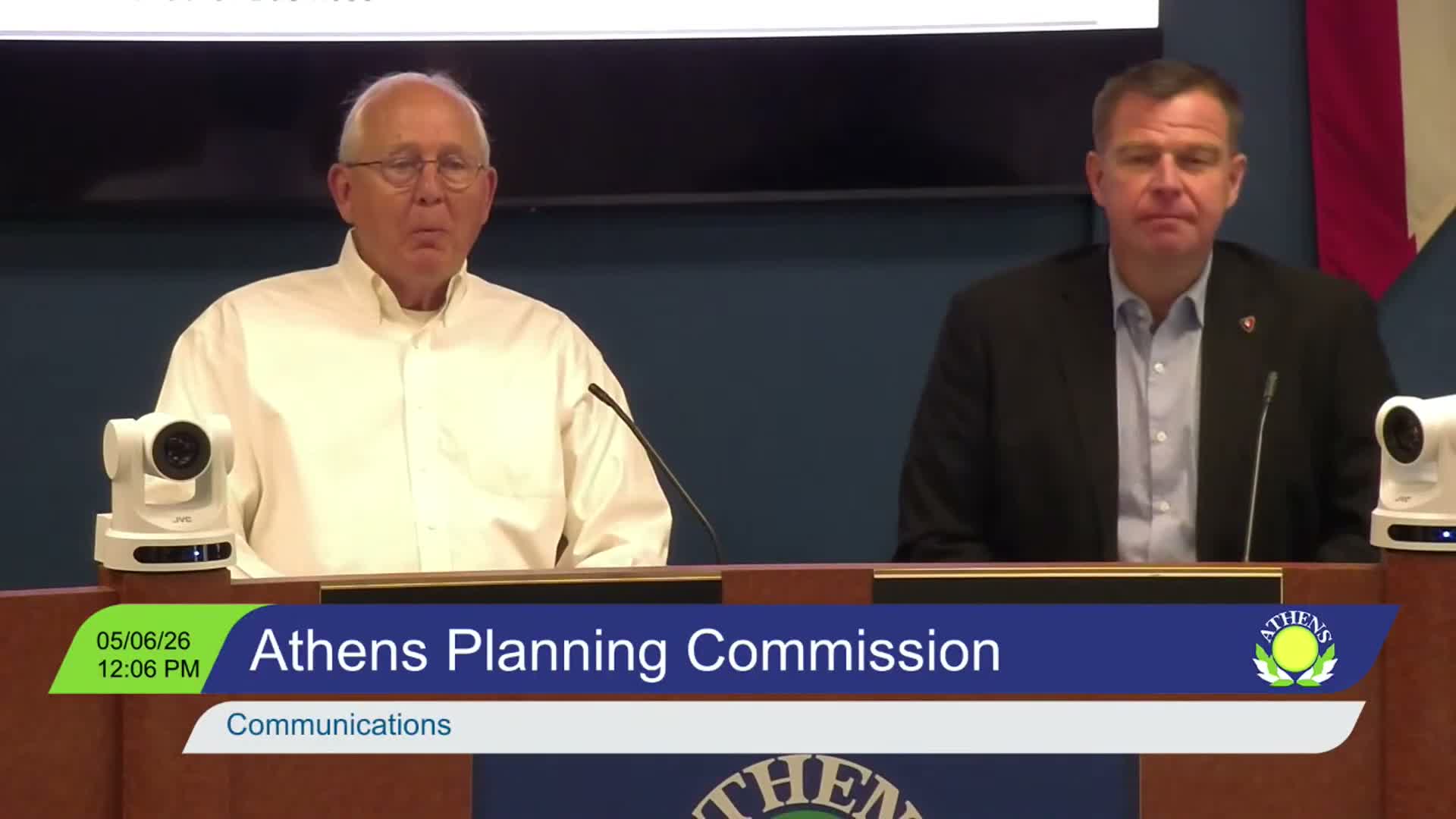
Kelly Manns, co‑interim executive director of Ohio Recovery Housing, told the Athens City Planning Commission on May 6 that Ohio’s system for recovery residences combines industry standards, a public registry and a complaints process intended to protect neighbors and residents.
Manns, who identified ORH as the state affiliate of the National Alliance for Recovery Residences, said ORH certifies level‑1 (peer run), level‑2 (monitored) and level‑3 (supervised) homes and that level‑4 facilities remain licensed residential treatment. She summarized ORH’s certification review as covering administrative and operational policies, recovery supports for residents, a “good neighbor” policy and a physical property inspection. “We review every line of every policy that is required,” Manns said during her presentation.
Manns said the state registry and the Ohio Department of Behavioral Health (DBH) play distinct roles: operators must submit a DBH form within 30 days of moving in their first resident, and ORH requires an application by the date the first resident moves in. Until the application appears on the public registry, ORH staff can still inspect and investigate when complaints arrive. She also described the ORH online applicant portal, RHODES, and said ORH may require corrections, re‑inspections, or report unresolved problems to DBH; in severe cases, DBH referrals can lead to attorney general injunctions or local criminal prosecutions.
Manns cited research in broad terms when describing outcomes: “For every dollar invested in recovery housing, Ohio saves $6 in reduced criminal justice expenses, reduced child services expenses, reduced medical expenses,” and she said recovery housing also generates local economic activity. She emphasized that recovery residences are residential landlords, not treatment centers, and described resident‑driven lengths of stay and rules about what services belong in the home versus the community.
Commissioners asked practical questions. One commissioner asked whether residents sign leases and how operators are paid; Manns said residents sign leases and ORH is not aware of a direct Medicaid or insurance funding stream for housing — operators typically rely on leases, local subsidies for limited periods, fundraising or a braided funding approach. On enforcement, Manns said ORH is the “front door” for complaints and that ORH triages complaints, conducts investigations for certified houses and passes noncertified complaints to DBH for further action.
Why it matters: Planning commissioners and many residents in Athens are weighing how to respond to unregistered or for‑profit recovery operators in residential neighborhoods. The ORH presentation clarified state expectations for certification and the complaint path local residents can use, but it did not alter local zoning. The commission did not adopt any ordinance changes at the meeting.
Next steps: Commissioners continued a broader conversation about zoning, occupancy and density limits and said they were consulting legal counsel before proposing code changes. ORH staff encouraged neighbors to use the complaints portal and said ORH and DBH coordinate on escalations.
Manns, who identified ORH as the state affiliate of the National Alliance for Recovery Residences, said ORH certifies level‑1 (peer run), level‑2 (monitored) and level‑3 (supervised) homes and that level‑4 facilities remain licensed residential treatment. She summarized ORH’s certification review as covering administrative and operational policies, recovery supports for residents, a “good neighbor” policy and a physical property inspection. “We review every line of every policy that is required,” Manns said during her presentation.
Manns said the state registry and the Ohio Department of Behavioral Health (DBH) play distinct roles: operators must submit a DBH form within 30 days of moving in their first resident, and ORH requires an application by the date the first resident moves in. Until the application appears on the public registry, ORH staff can still inspect and investigate when complaints arrive. She also described the ORH online applicant portal, RHODES, and said ORH may require corrections, re‑inspections, or report unresolved problems to DBH; in severe cases, DBH referrals can lead to attorney general injunctions or local criminal prosecutions.
Manns cited research in broad terms when describing outcomes: “For every dollar invested in recovery housing, Ohio saves $6 in reduced criminal justice expenses, reduced child services expenses, reduced medical expenses,” and she said recovery housing also generates local economic activity. She emphasized that recovery residences are residential landlords, not treatment centers, and described resident‑driven lengths of stay and rules about what services belong in the home versus the community.
Commissioners asked practical questions. One commissioner asked whether residents sign leases and how operators are paid; Manns said residents sign leases and ORH is not aware of a direct Medicaid or insurance funding stream for housing — operators typically rely on leases, local subsidies for limited periods, fundraising or a braided funding approach. On enforcement, Manns said ORH is the “front door” for complaints and that ORH triages complaints, conducts investigations for certified houses and passes noncertified complaints to DBH for further action.
Why it matters: Planning commissioners and many residents in Athens are weighing how to respond to unregistered or for‑profit recovery operators in residential neighborhoods. The ORH presentation clarified state expectations for certification and the complaint path local residents can use, but it did not alter local zoning. The commission did not adopt any ordinance changes at the meeting.
Next steps: Commissioners continued a broader conversation about zoning, occupancy and density limits and said they were consulting legal counsel before proposing code changes. ORH staff encouraged neighbors to use the complaints portal and said ORH and DBH coordinate on escalations.
Don't Miss a Word: See the Full Meeting!
Go beyond summaries. Unlock every video, transcript, and key insight with a Founder Membership.
✓
Get instant access to full meeting videos
✓
Search and clip any phrase from complete transcripts
✓
Receive AI-powered summaries & custom alerts
✓
Enjoy lifetime, unrestricted access to government data
30-day money-back guarantee
