Wildlife commissioners adopt 2026–27 big‑game quotas, cite adaptive management and herd health
May 07, 2026 | Churchill County, Nevada
This article was created by AI summarizing key points discussed. AI makes mistakes, so for full details and context, please refer to the video of the full meeting. Please report any errors so we can fix them. Report an error »
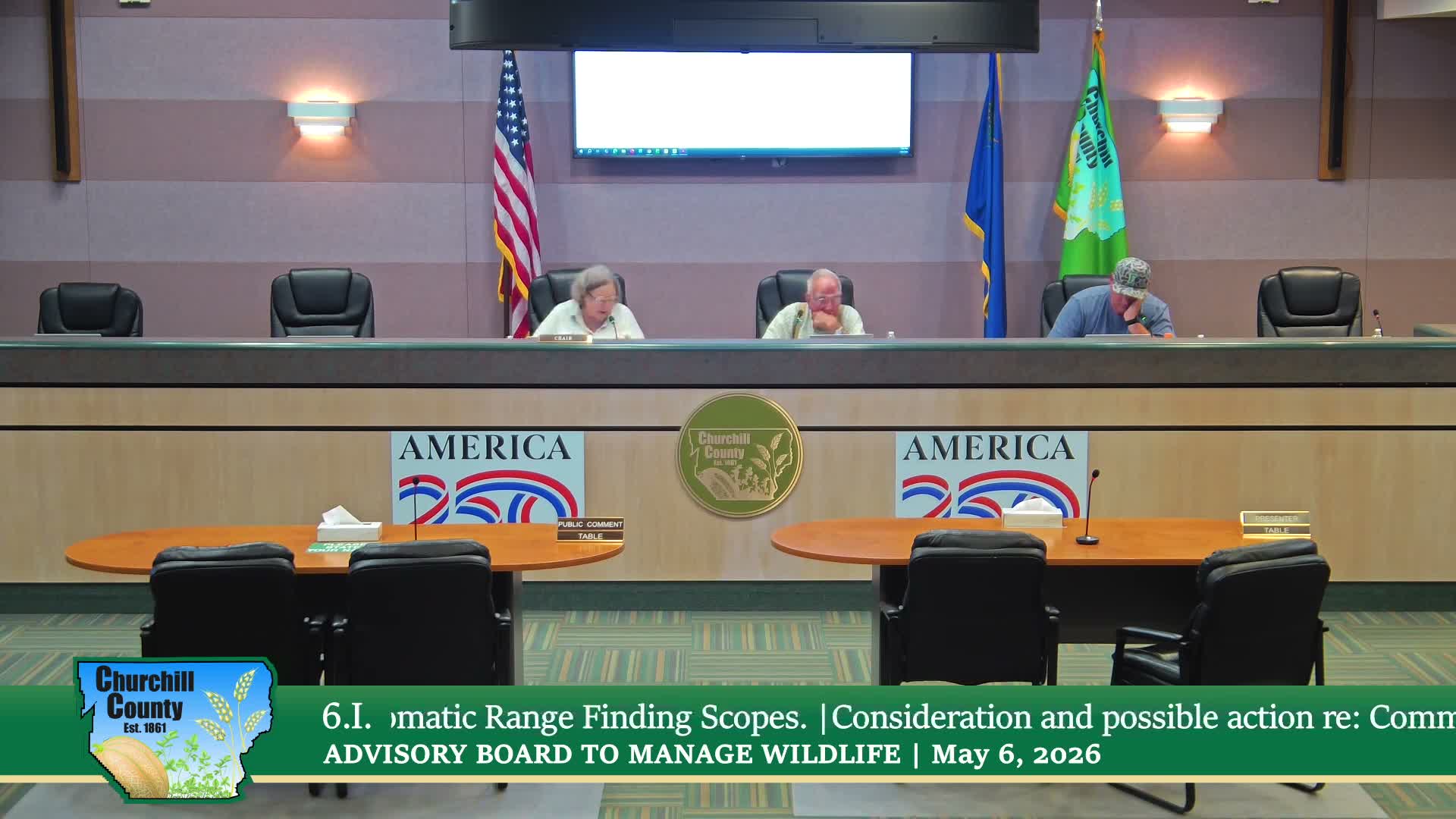
The Nevada Board of Wildlife Commissioners voted to adopt Regulation 26.11, which sets the department’s big‑game quotas for the 2026–27 season, after a discussion focused on adaptive management, buck:doe targets and local herd health.
Cooper Munson, Western Region Game Division supervisor for the Nevada Department of Wildlife, told commissioners the department will operate “on the adjustable, post hunt buck ratio of 30 to 40,” a target intended to guide how many buck and antlerless tags are issued in affected units. “As for elk, the adaptive management process has given us, the department, the ability to increase or decrease certain elk herds by up to 10% per year,” Munson said during the meeting.
Commissioners and staff discussed specific quota shifts that will reduce some antlerless elk harvests while increasing or restoring tags in other units. Munson said those adjustments include substantial reductions in antlerless tags for several hunts that were cut last year and an effort this season to minimize cow harvests in some areas so herds can recover.
The board also noted small increases in some moose tags; Munson reported the moose hunt had a 100% success rate the previous two years and that two bulls were harvested each season. He warned that bighorn sheep herds remain a concern: pre‑sampling in the Stillwater herd showed indicators of disease, and NDOW continues to detect microplasma in multiple units, making recruitment and population recovery uncertain.
A commissioner asked whether herd declines were driven by past quota increases or by disease. Munson said both factors play a role: prior increases intended to reduce a herd appear to have lowered populations in some areas, and ongoing disease monitoring is shaping current quota recommendations.
A motion to approve Regulation 26.11 “as written” was made, seconded and approved by voice vote. The regulation will govern tag allocations and quotas for the coming season; NDOW staff will monitor outcomes under the adaptive‑management framework and return with updates as needed.
The board’s action follows related votes during the meeting on hunting policy adjustments that affect junior tags and allocation percentages; staff and commissioners said those policy changes are intended to expand youth opportunities while balancing overall herd objectives.
Cooper Munson, Western Region Game Division supervisor for the Nevada Department of Wildlife, told commissioners the department will operate “on the adjustable, post hunt buck ratio of 30 to 40,” a target intended to guide how many buck and antlerless tags are issued in affected units. “As for elk, the adaptive management process has given us, the department, the ability to increase or decrease certain elk herds by up to 10% per year,” Munson said during the meeting.
Commissioners and staff discussed specific quota shifts that will reduce some antlerless elk harvests while increasing or restoring tags in other units. Munson said those adjustments include substantial reductions in antlerless tags for several hunts that were cut last year and an effort this season to minimize cow harvests in some areas so herds can recover.
The board also noted small increases in some moose tags; Munson reported the moose hunt had a 100% success rate the previous two years and that two bulls were harvested each season. He warned that bighorn sheep herds remain a concern: pre‑sampling in the Stillwater herd showed indicators of disease, and NDOW continues to detect microplasma in multiple units, making recruitment and population recovery uncertain.
A commissioner asked whether herd declines were driven by past quota increases or by disease. Munson said both factors play a role: prior increases intended to reduce a herd appear to have lowered populations in some areas, and ongoing disease monitoring is shaping current quota recommendations.
A motion to approve Regulation 26.11 “as written” was made, seconded and approved by voice vote. The regulation will govern tag allocations and quotas for the coming season; NDOW staff will monitor outcomes under the adaptive‑management framework and return with updates as needed.
The board’s action follows related votes during the meeting on hunting policy adjustments that affect junior tags and allocation percentages; staff and commissioners said those policy changes are intended to expand youth opportunities while balancing overall herd objectives.
View the Full Meeting & All Its Details
This article offers just a summary. Unlock complete video, transcripts, and insights as a Founder Member.
✓
Watch full, unedited meeting videos
✓
Search every word spoken in unlimited transcripts
✓
AI summaries & real-time alerts (all government levels)
✓
Permanent access to expanding government content
30-day money-back guarantee
