Board hears MTSS plan aimed at lowering special-education identifications and expanding targeted supports
May 05, 2026 | NORTH SYRACUSE CENTRAL SCHOOL DISTRICT, School Districts, New York
This article was created by AI summarizing key points discussed. AI makes mistakes, so for full details and context, please refer to the video of the full meeting. Please report any errors so we can fix them. Report an error »
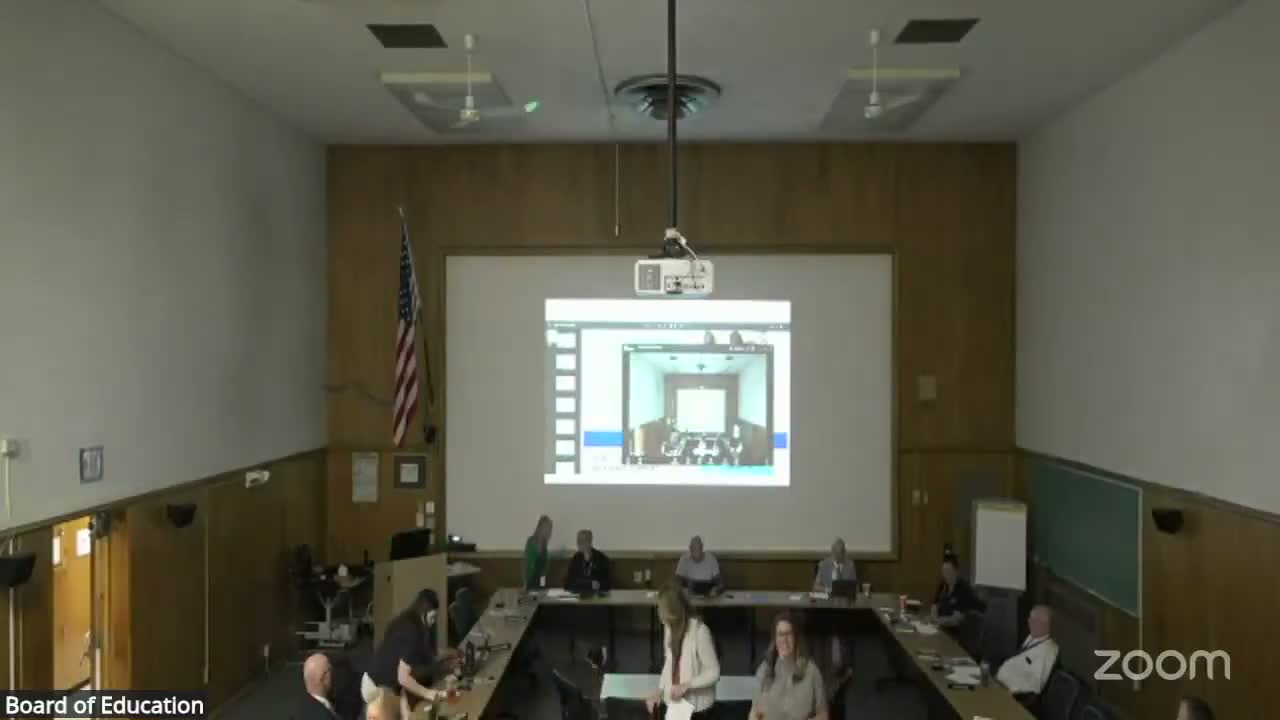
The North Syracuse Central School District board on Monday heard a detailed presentation on the district's Multi-Tiered System of Supports, including specific steps intended to strengthen universal instruction and expand targeted interventions to help students meet grade-level expectations.
Dr. Mandevale, the district's director of elementary education in ELA, told the board the district is continuing a recertification and alignment effort for MTSS that emphasizes academic and social-emotional learning across three tiers. "MTSS is really trying to meet the needs of all students and the whole child," Dr. Mandevale said, explaining that Tier 1 provides high-quality instruction for all learners, Tier 2 offers targeted interventions for students not making expected progress, and Tier 3 brings intensive, individualized supports.
The presentation flagged several baseline data points and goals. Presenters said the district's special-education identification rate is about 20 percent, compared with a New York State average of roughly 13 to 15 percent; they said a stronger MTSS should help lower that figure by meeting needs within general education earlier. "When we see a strong MTSS system in place, oftentimes you see a decrease in that identification rate, because we're meeting the needs through our existing general education system," Dr. Mandevale said.
Presenters described district structures that will anchor the work: building-level guiding coalitions or building planning teams, collaborative team meetings (CTMs), a k–12 universal screener and newly standardized School Support Team (SST) guidance. They said the district is creating a single, comprehensive MTSS guidance document and expects to provide ongoing staff training and improved record-keeping so interventions prescribed at SST remain visible to future teachers.
Board members pressed for implementation details, particularly at secondary schools with block schedules. One board member asked whether secondary teachers could carve Tier 2 instruction into existing blocks rather than requiring an additional separate period. Presenters said the goal is to integrate Tier 2 instruction within content-area blocks when possible, and to develop consistent expectations for "win time" or intervention blocks so students receive targeted supports during the school day rather than only after school.
The meeting also surfaced a discussion about models of service delivery for specialists. A board member raised concerns about relying on brief, informal "five-minute" speech interventions in hallways; presenters acknowledged the evidence supporting flexible delivery models and said they would work to address family communication and staffing permissions where needed.
Next steps identified by district staff included finalizing the MTSS guidance document, developing common formative assessments for quicker progress checks, improving progress monitoring across grade levels, and continuing staff and family education about the MTSS process. Presenters said success will be measured by increases in ELA and math growth on state-aligned assessments, reduced discipline referrals and suspensions, and a decline in special-education identification rates.
The board did not take a formal vote on MTSS plans Monday; presenters requested continued committee work and regular updates on the initiative's implementation and outcomes.
Dr. Mandevale, the district's director of elementary education in ELA, told the board the district is continuing a recertification and alignment effort for MTSS that emphasizes academic and social-emotional learning across three tiers. "MTSS is really trying to meet the needs of all students and the whole child," Dr. Mandevale said, explaining that Tier 1 provides high-quality instruction for all learners, Tier 2 offers targeted interventions for students not making expected progress, and Tier 3 brings intensive, individualized supports.
The presentation flagged several baseline data points and goals. Presenters said the district's special-education identification rate is about 20 percent, compared with a New York State average of roughly 13 to 15 percent; they said a stronger MTSS should help lower that figure by meeting needs within general education earlier. "When we see a strong MTSS system in place, oftentimes you see a decrease in that identification rate, because we're meeting the needs through our existing general education system," Dr. Mandevale said.
Presenters described district structures that will anchor the work: building-level guiding coalitions or building planning teams, collaborative team meetings (CTMs), a k–12 universal screener and newly standardized School Support Team (SST) guidance. They said the district is creating a single, comprehensive MTSS guidance document and expects to provide ongoing staff training and improved record-keeping so interventions prescribed at SST remain visible to future teachers.
Board members pressed for implementation details, particularly at secondary schools with block schedules. One board member asked whether secondary teachers could carve Tier 2 instruction into existing blocks rather than requiring an additional separate period. Presenters said the goal is to integrate Tier 2 instruction within content-area blocks when possible, and to develop consistent expectations for "win time" or intervention blocks so students receive targeted supports during the school day rather than only after school.
The meeting also surfaced a discussion about models of service delivery for specialists. A board member raised concerns about relying on brief, informal "five-minute" speech interventions in hallways; presenters acknowledged the evidence supporting flexible delivery models and said they would work to address family communication and staffing permissions where needed.
Next steps identified by district staff included finalizing the MTSS guidance document, developing common formative assessments for quicker progress checks, improving progress monitoring across grade levels, and continuing staff and family education about the MTSS process. Presenters said success will be measured by increases in ELA and math growth on state-aligned assessments, reduced discipline referrals and suspensions, and a decline in special-education identification rates.
The board did not take a formal vote on MTSS plans Monday; presenters requested continued committee work and regular updates on the initiative's implementation and outcomes.
Don't Miss a Word: See the Full Meeting!
Go beyond summaries. Unlock every video, transcript, and key insight with a Founder Membership.
✓
Get instant access to full meeting videos
✓
Search and clip any phrase from complete transcripts
✓
Receive AI-powered summaries & custom alerts
✓
Enjoy lifetime, unrestricted access to government data
30-day money-back guarantee
