Smithfield council raises EGOD hotel room limit to 150 amid debate over traffic and public safety
May 06, 2026 | Smithfield, Providence County, Rhode Island
This article was created by AI summarizing key points discussed. AI makes mistakes, so for full details and context, please refer to the video of the full meeting. Please report any errors so we can fix them. Report an error »
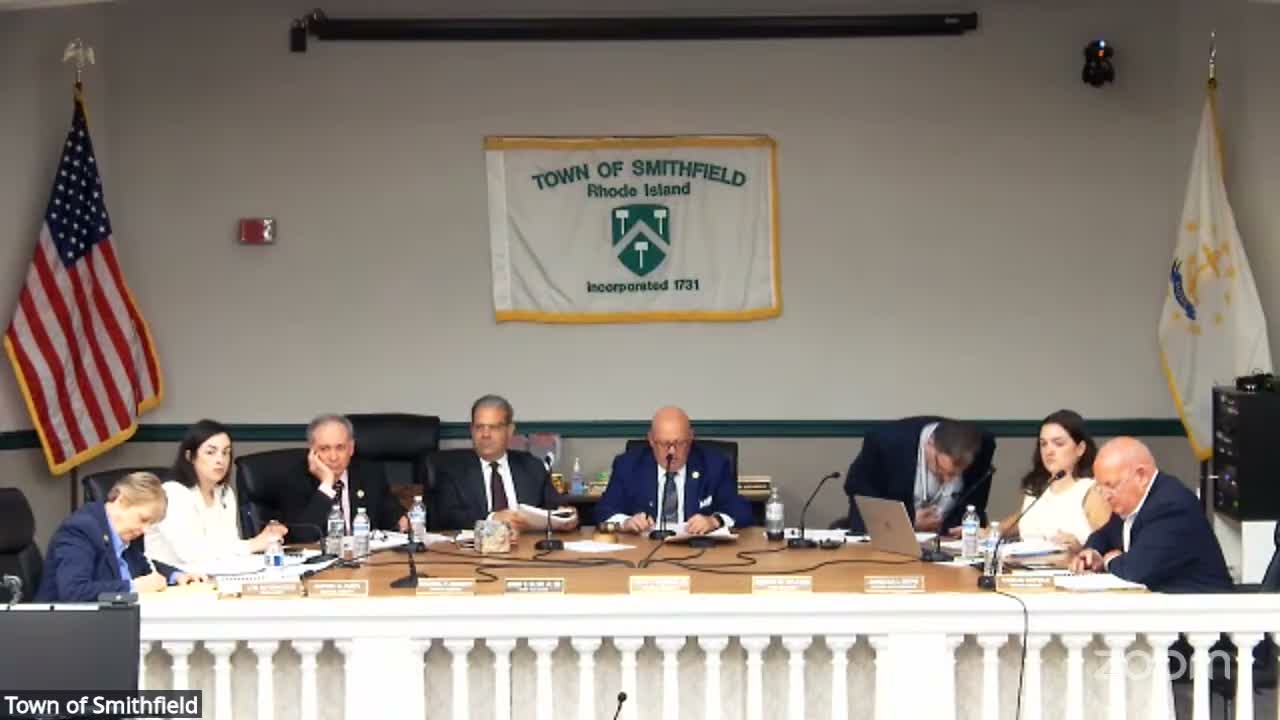
Smithfield’s Town Council voted 3–2 on Tuesday to raise the by‑right maximum hotel‑room threshold in the Economic Growth Overlay District (EGOD) from 100 to 150 rooms, clearing the way for an extended‑stay hotel developer who said the change is needed for its prototype building.
The amendment is a numeric change to the EGOD table of uses; planning staff said other development standards — setbacks, parking, height and lot coverage — remain unchanged. The applicant’s attorney, John C. Revens Jr., told the council the amendment solely changes the allowable maximum by right and that a development proposal would still need to pass the planning department’s development‑plan review. "The ordinance only makes that one adjustment," Revens said.
Greg Heflin, vice president of ParkSilver Development, said the company’s prototype is a roughly 122‑room extended‑stay hotel and that the business model requires that scale to be operationally and financially viable. "Our prototype is 122 rooms," Heflin said; if the ordinance did not change, he told councilors the company would pursue another site.
Residents and council members expressed worries about traffic on Route 7, the corridor’s safety record, and the effect of extended‑stay properties on local policing needs. One councilor summarized police data shared at the meeting: "There's about 400 calls per year at the three hotels," a figure staff said came from five years of call‑for‑service logs; opponents said more granular breakdowns (types of calls, arrests, and how many calls are associated with transient housing programs) are needed to assess public‑safety risk.
Supporters said the parcel in the EGOD overlay has sat vacant for more than a decade and that a new hotel could bring customers to local restaurants and capture lodging demand in northern Rhode Island. Council proponents also noted regional studies indicating room shortages in some markets and argued the project would generate construction activity and local tax revenue.
Council debate focused on whether zoning should be tailored to a single developer’s proposal or whether projects should conform to existing zoning standards. After discussion, the council adopted the planning‑board‑recommended amendment by roll call, 3 in favor and 2 opposed.
Next steps: the amendment changes what is allowable by right in the EGOD overlay. Any specific project will still proceed to planning‑board development‑plan review and require documentation of stormwater, traffic, and other site specifics before construction permits are issued.
The hotel amendment was the second major zoning decision at Tuesday’s meeting, following the council’s adoption earlier in the night of an ordinance defining and barring data centers.
The amendment is a numeric change to the EGOD table of uses; planning staff said other development standards — setbacks, parking, height and lot coverage — remain unchanged. The applicant’s attorney, John C. Revens Jr., told the council the amendment solely changes the allowable maximum by right and that a development proposal would still need to pass the planning department’s development‑plan review. "The ordinance only makes that one adjustment," Revens said.
Greg Heflin, vice president of ParkSilver Development, said the company’s prototype is a roughly 122‑room extended‑stay hotel and that the business model requires that scale to be operationally and financially viable. "Our prototype is 122 rooms," Heflin said; if the ordinance did not change, he told councilors the company would pursue another site.
Residents and council members expressed worries about traffic on Route 7, the corridor’s safety record, and the effect of extended‑stay properties on local policing needs. One councilor summarized police data shared at the meeting: "There's about 400 calls per year at the three hotels," a figure staff said came from five years of call‑for‑service logs; opponents said more granular breakdowns (types of calls, arrests, and how many calls are associated with transient housing programs) are needed to assess public‑safety risk.
Supporters said the parcel in the EGOD overlay has sat vacant for more than a decade and that a new hotel could bring customers to local restaurants and capture lodging demand in northern Rhode Island. Council proponents also noted regional studies indicating room shortages in some markets and argued the project would generate construction activity and local tax revenue.
Council debate focused on whether zoning should be tailored to a single developer’s proposal or whether projects should conform to existing zoning standards. After discussion, the council adopted the planning‑board‑recommended amendment by roll call, 3 in favor and 2 opposed.
Next steps: the amendment changes what is allowable by right in the EGOD overlay. Any specific project will still proceed to planning‑board development‑plan review and require documentation of stormwater, traffic, and other site specifics before construction permits are issued.
The hotel amendment was the second major zoning decision at Tuesday’s meeting, following the council’s adoption earlier in the night of an ordinance defining and barring data centers.
Don't Miss a Word: See the Full Meeting!
Go beyond summaries. Unlock every video, transcript, and key insight with a Founder Membership.
✓
Get instant access to full meeting videos
✓
Search and clip any phrase from complete transcripts
✓
Receive AI-powered summaries & custom alerts
✓
Enjoy lifetime, unrestricted access to government data
30-day money-back guarantee
