Assembly hearing pushes scalable, finance‑focused approach to home hardening as costs, insurance concerns mount
May 06, 2026 | California State Assembly, House, Legislative, California
This article was created by AI summarizing key points discussed. AI makes mistakes, so for full details and context, please refer to the video of the full meeting. Please report any errors so we can fix them. Report an error »
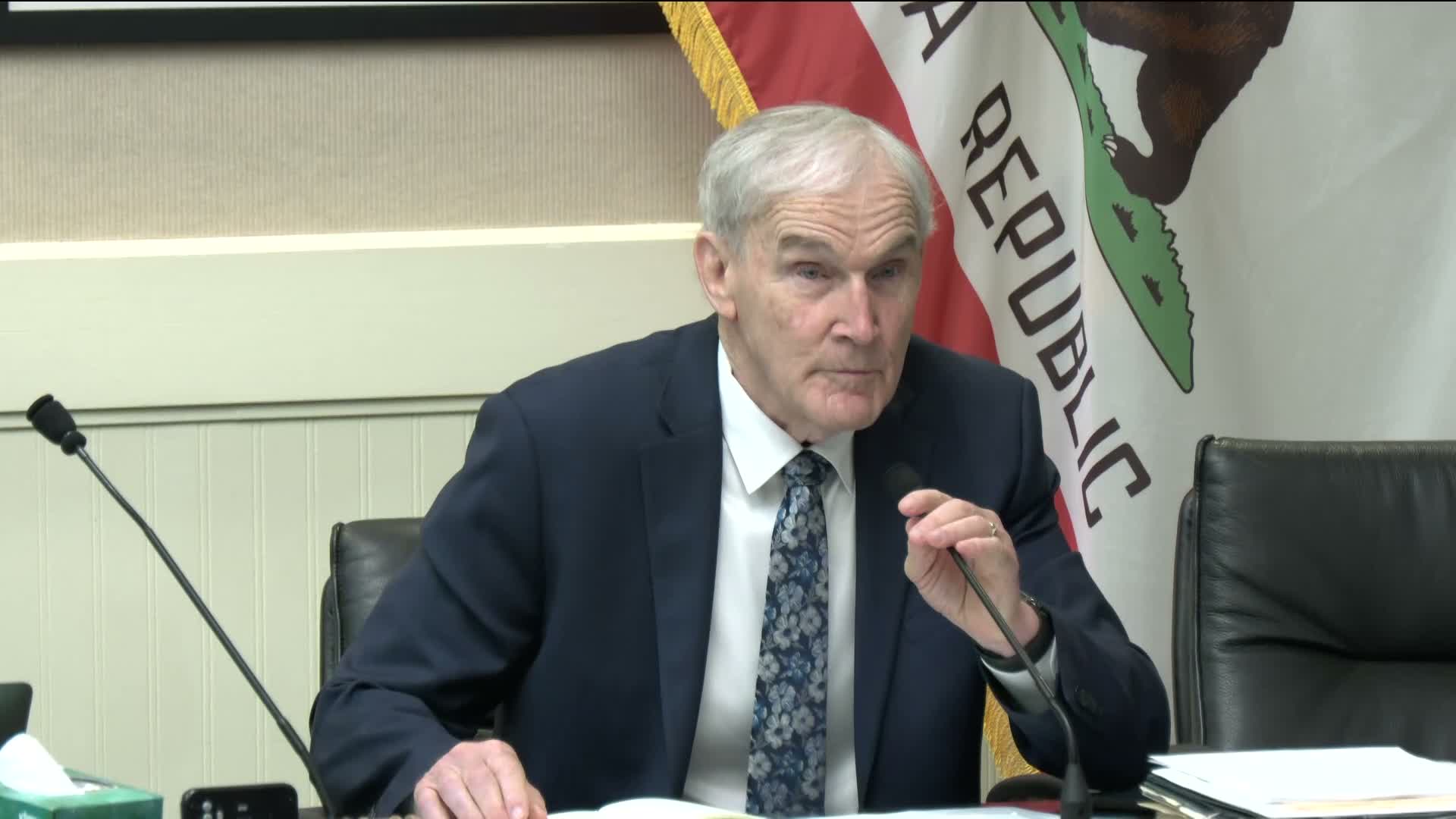
The California State Assembly’s Budget Subcommittee No. 4 held an oversight hearing on home hardening and defensible space on May 6, 2026, urging a coordinated, finance‑driven push to scale protections for homes in high wildfire‑hazard areas.
The hearing opened with Chair Bennett inviting experts from state agencies, research organizations and local wildfire groups to testify on the state’s pilot programs, lessons learned and potential next steps. Witnesses described a common problem: large numbers of at‑risk homes, high per‑home costs under current pilots, and administrative hurdles that limit how far state grant dollars can stretch.
Why it matters: testimony and pilot results presented at the hearing showed that targeted home hardening and defensible‑space work can substantially reduce the chance a house will ignite during an ember shower and — if applied at neighborhood scale — can lower the risk of conflagration and improve insurance availability. Committee members framed the debate around how to deploy limited taxpayer dollars to maximize the number of households helped and how to pair public dollars with private finance to reach many more homes.
Key findings and figures
- Research and post‑fire analysis: Steve Hawkes of the Insurance Institute for Business and Home Safety (IBHS) told the committee that embers, radiant heat and flames drive most structure ignitions and that “once a home ignites, it’s greater than 90% chance, almost really 94% chance that it will be a complete loss.” IBHS’s Wildfire Prepared Home standard emphasizes a noncombustible, ember‑resistant zone in the first five feet around a home plus material upgrades to roof, vents, siding and windows.
- Pilot program costs: Cal OES and CWMP pilot communities reported average retrofit costs in the pilots of about $49,000 for structural components and about $12,000 per parcel for defensible‑space treatments, yielding an aggregate pilot average frequently cited at roughly $61,000 per property when both elements are applied. LAO and several witnesses warned that those per‑home averages make universal grant coverage unaffordable at statewide scale.
- Lower‑cost baseline options: At the same time, IBHS and local implementers described lower‑cost, retrofit‑focused ‘‘prepared’’ packages (examples cited near $15,000 per retrofit in limited local efforts) that target the most critical ember vulnerabilities and could be paired with low‑interest financing to widen uptake.
- Financing and scaling strategies: Multiple witnesses recommended a blended capital model: low‑interest loans or loan‑loss reserves to leverage private capital for middle‑income homeowners, targeted grants to close remaining gaps for low‑income residents, and small upfront incentives (tax credits, modest grants, or insurance discounts) to catalyze community uptake.
- Neighborhood approach and leverage: Local fire‑safe councils and the Marin Wildfire Prevention Authority stressed clustering retrofits and using neighborhood programs like Firewise to lower per‑home costs through aggregated contracting, social pressure and shared outreach. Marin’s program manager reported that modest grants (around $2,500) have leveraged $6–$7 in private resident investment in that county’s work.
- Administrative and federal barriers: Cal OES explained that FEMA environmental and historic preservation reviews and reimbursement rules have slowed pilot construction and cash flow, and that reliance on federally administered grants can delay work; pilot projects that depended on FEMA reimbursement reported long approval timetables that constrained rollout.
- Standards and messaging: Witnesses and agency leads emphasized the need for a single, science‑based minimum standard (centered on ember resistance for the first five feet plus validated building‑component upgrades) and for coordinated statewide outreach and marketing to avoid homeowner confusion (the hearing repeatedly contrasted technical terms such as “zone 0” with consumer‑friendly language like “ember resistant” or “ember ready”).
Representative quotes
- "Once a home ignites, it's greater than 90% chance, almost really 94% chance that it will be a complete loss," said Steve Hawkes of IBHS, underscoring the importance of preventing ignition in the first place.
- "The role of the state is not to pay for 1,000,000 homeowners to do home hardening," said Eric Horn of Mega Fire Action. "The role of the state is to target high‑leverage interventions at every point in the customer journey to make home‑hardening adoption easy, appealing, and affordable."
- Chair Bennett urged a coordinated outreach push: "We need a giant marketing campaign" to build consistent consumer understanding and buy‑in across jurisdictions.
Policy options discussed
- Target a minimum, evidence‑based 'ember‑resistant' baseline for all homes in the highest hazard tiers (first five feet and vent/roof protections), paired with financing options that convert a large upfront cost into manageable monthly payments.
- Use catalytic state funds as loan‑loss reserves and modest grants to leverage private capital (the energy sector example was raised, where loan programs produced multi‑fold leverage of public dollars).
- Prioritize cluster/neighborhood deployments where community effects are strongest, using Firewise and local joint powers authorities to aggregate demand and lower installation costs.
- Reduce reliance on slow federal reimbursement for program timelines where possible, while continuing to pursue federal funds where they can be drawn down efficiently.
What comes next
Committee leaders asked agencies and stakeholders to submit follow‑up suggestions and recommended topics for future hearings. Agencies signaled ongoing work to finalize grant guidelines for Prop 4 implementation, refine targeting and program design, strengthen defensible‑space inspection capacity, and coordinate a uniform, science‑based standard and clearer consumer messaging.
The committee left the record open for written input and indicated it would return to oversight and budget choices as the May revision and the 2026–27 budget process move forward.
The hearing opened with Chair Bennett inviting experts from state agencies, research organizations and local wildfire groups to testify on the state’s pilot programs, lessons learned and potential next steps. Witnesses described a common problem: large numbers of at‑risk homes, high per‑home costs under current pilots, and administrative hurdles that limit how far state grant dollars can stretch.
Why it matters: testimony and pilot results presented at the hearing showed that targeted home hardening and defensible‑space work can substantially reduce the chance a house will ignite during an ember shower and — if applied at neighborhood scale — can lower the risk of conflagration and improve insurance availability. Committee members framed the debate around how to deploy limited taxpayer dollars to maximize the number of households helped and how to pair public dollars with private finance to reach many more homes.
Key findings and figures
- Research and post‑fire analysis: Steve Hawkes of the Insurance Institute for Business and Home Safety (IBHS) told the committee that embers, radiant heat and flames drive most structure ignitions and that “once a home ignites, it’s greater than 90% chance, almost really 94% chance that it will be a complete loss.” IBHS’s Wildfire Prepared Home standard emphasizes a noncombustible, ember‑resistant zone in the first five feet around a home plus material upgrades to roof, vents, siding and windows.
- Pilot program costs: Cal OES and CWMP pilot communities reported average retrofit costs in the pilots of about $49,000 for structural components and about $12,000 per parcel for defensible‑space treatments, yielding an aggregate pilot average frequently cited at roughly $61,000 per property when both elements are applied. LAO and several witnesses warned that those per‑home averages make universal grant coverage unaffordable at statewide scale.
- Lower‑cost baseline options: At the same time, IBHS and local implementers described lower‑cost, retrofit‑focused ‘‘prepared’’ packages (examples cited near $15,000 per retrofit in limited local efforts) that target the most critical ember vulnerabilities and could be paired with low‑interest financing to widen uptake.
- Financing and scaling strategies: Multiple witnesses recommended a blended capital model: low‑interest loans or loan‑loss reserves to leverage private capital for middle‑income homeowners, targeted grants to close remaining gaps for low‑income residents, and small upfront incentives (tax credits, modest grants, or insurance discounts) to catalyze community uptake.
- Neighborhood approach and leverage: Local fire‑safe councils and the Marin Wildfire Prevention Authority stressed clustering retrofits and using neighborhood programs like Firewise to lower per‑home costs through aggregated contracting, social pressure and shared outreach. Marin’s program manager reported that modest grants (around $2,500) have leveraged $6–$7 in private resident investment in that county’s work.
- Administrative and federal barriers: Cal OES explained that FEMA environmental and historic preservation reviews and reimbursement rules have slowed pilot construction and cash flow, and that reliance on federally administered grants can delay work; pilot projects that depended on FEMA reimbursement reported long approval timetables that constrained rollout.
- Standards and messaging: Witnesses and agency leads emphasized the need for a single, science‑based minimum standard (centered on ember resistance for the first five feet plus validated building‑component upgrades) and for coordinated statewide outreach and marketing to avoid homeowner confusion (the hearing repeatedly contrasted technical terms such as “zone 0” with consumer‑friendly language like “ember resistant” or “ember ready”).
Representative quotes
- "Once a home ignites, it's greater than 90% chance, almost really 94% chance that it will be a complete loss," said Steve Hawkes of IBHS, underscoring the importance of preventing ignition in the first place.
- "The role of the state is not to pay for 1,000,000 homeowners to do home hardening," said Eric Horn of Mega Fire Action. "The role of the state is to target high‑leverage interventions at every point in the customer journey to make home‑hardening adoption easy, appealing, and affordable."
- Chair Bennett urged a coordinated outreach push: "We need a giant marketing campaign" to build consistent consumer understanding and buy‑in across jurisdictions.
Policy options discussed
- Target a minimum, evidence‑based 'ember‑resistant' baseline for all homes in the highest hazard tiers (first five feet and vent/roof protections), paired with financing options that convert a large upfront cost into manageable monthly payments.
- Use catalytic state funds as loan‑loss reserves and modest grants to leverage private capital (the energy sector example was raised, where loan programs produced multi‑fold leverage of public dollars).
- Prioritize cluster/neighborhood deployments where community effects are strongest, using Firewise and local joint powers authorities to aggregate demand and lower installation costs.
- Reduce reliance on slow federal reimbursement for program timelines where possible, while continuing to pursue federal funds where they can be drawn down efficiently.
What comes next
Committee leaders asked agencies and stakeholders to submit follow‑up suggestions and recommended topics for future hearings. Agencies signaled ongoing work to finalize grant guidelines for Prop 4 implementation, refine targeting and program design, strengthen defensible‑space inspection capacity, and coordinate a uniform, science‑based standard and clearer consumer messaging.
The committee left the record open for written input and indicated it would return to oversight and budget choices as the May revision and the 2026–27 budget process move forward.
View the Full Meeting & All Its Details
This article offers just a summary. Unlock complete video, transcripts, and insights as a Founder Member.
✓
Watch full, unedited meeting videos
✓
Search every word spoken in unlimited transcripts
✓
AI summaries & real-time alerts (all government levels)
✓
Permanent access to expanding government content
30-day money-back guarantee
