Upper Adams committee sends AI policy to first read after clarifying chart, scope and discipline questions
May 06, 2026 | Upper Adams SD, School Districts, Pennsylvania
This article was created by AI summarizing key points discussed. AI makes mistakes, so for full details and context, please refer to the video of the full meeting. Please report any errors so we can fix them. Report an error »
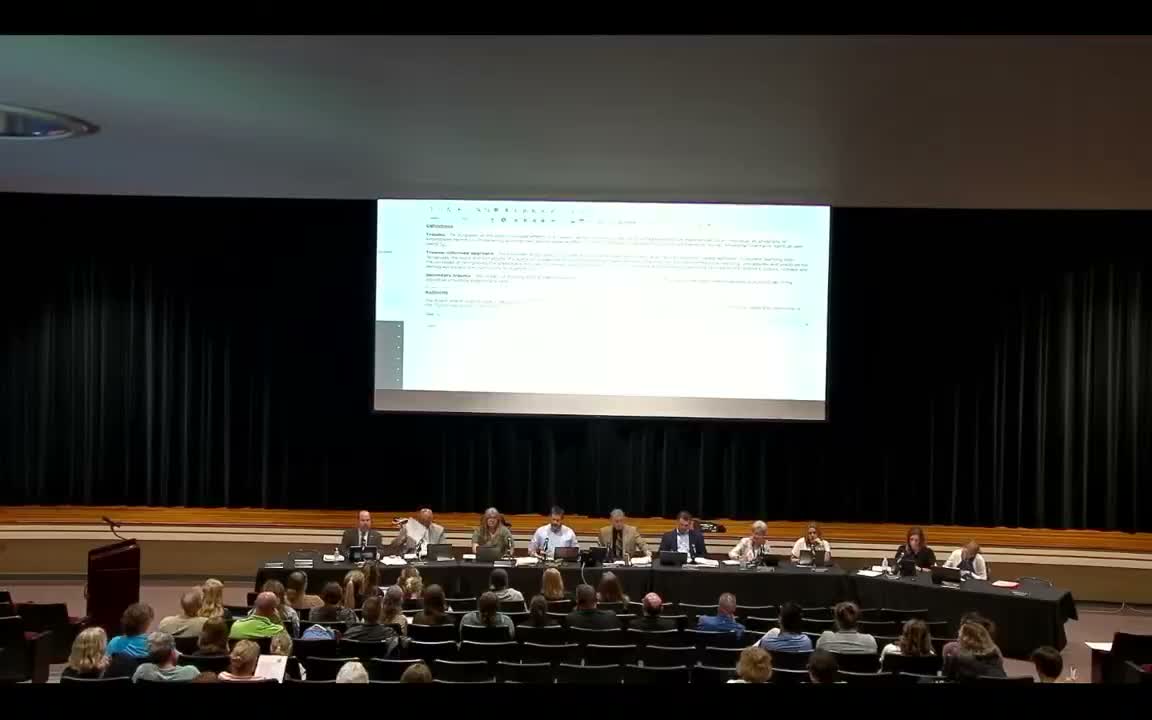
The Upper Adams School District policy committee voted to send a draft artificial-intelligence policy to first reading after members and staff discussed wording clarifications, a usage chart, and disciplinary implications for inappropriate AI use.
The chair proposed a small wording change in the Authority section for clarity, suggesting the sentence read that access to AI "does not imply endorsement by the district of any particular artificial intelligence tool or resource." The chair said the edit was for clarity and not to change the policy's meaning.
Staff described a chart in the draft policy intended to make permitted and prohibited AI use explicit for teachers and students; the plan is to laminate the chart for teacher reference. A staff member emphasized the need for human oversight: "There has to be human oversight and there has to be human voice and human eyes on it," and said teachers would use the chart as a guide to set classroom expectations.
Committee members discussed whether the policy's direction that "students at all grade levels receive age-appropriate instruction as needed" would be unduly prescriptive for primary grades. Staff and principals present said "as needed" and the chart provide flexibility; the chair and several committee members said they would not interpret the policy as directing a uniform curriculum for all grades.
The chair also raised a drafting concern about the policy's "Consequences for Inappropriate Use" section, noting the policy's language listing usage restrictions, loss of access, disciplinary action or referral to legal authorities but observing it did not explicitly mention grade penalties. Staff pointed to existing discipline policy (2-18) and the high-school handbook, which already list academic-dishonesty sanctions including alternative assignments, partial or no credit, and other options.
After discussion, committee members said they were comfortable moving the AI policy to first reading so administrators and the AI committee can refine final wording and the guidance chart.
The chair proposed a small wording change in the Authority section for clarity, suggesting the sentence read that access to AI "does not imply endorsement by the district of any particular artificial intelligence tool or resource." The chair said the edit was for clarity and not to change the policy's meaning.
Staff described a chart in the draft policy intended to make permitted and prohibited AI use explicit for teachers and students; the plan is to laminate the chart for teacher reference. A staff member emphasized the need for human oversight: "There has to be human oversight and there has to be human voice and human eyes on it," and said teachers would use the chart as a guide to set classroom expectations.
Committee members discussed whether the policy's direction that "students at all grade levels receive age-appropriate instruction as needed" would be unduly prescriptive for primary grades. Staff and principals present said "as needed" and the chart provide flexibility; the chair and several committee members said they would not interpret the policy as directing a uniform curriculum for all grades.
The chair also raised a drafting concern about the policy's "Consequences for Inappropriate Use" section, noting the policy's language listing usage restrictions, loss of access, disciplinary action or referral to legal authorities but observing it did not explicitly mention grade penalties. Staff pointed to existing discipline policy (2-18) and the high-school handbook, which already list academic-dishonesty sanctions including alternative assignments, partial or no credit, and other options.
After discussion, committee members said they were comfortable moving the AI policy to first reading so administrators and the AI committee can refine final wording and the guidance chart.
Don't Miss a Word: See the Full Meeting!
Go beyond summaries. Unlock every video, transcript, and key insight with a Founder Membership.
✓
Get instant access to full meeting videos
✓
Search and clip any phrase from complete transcripts
✓
Receive AI-powered summaries & custom alerts
✓
Enjoy lifetime, unrestricted access to government data
30-day money-back guarantee
