Committee advances bill expanding pharmacists’ authority for limited testing and treatment; members debate scope and safeguards
May 05, 2026 | 2026 Legislature Arizona, Arizona
This article was created by AI summarizing key points discussed. AI makes mistakes, so for full details and context, please refer to the video of the full meeting. Please report any errors so we can fix them. Report an error »
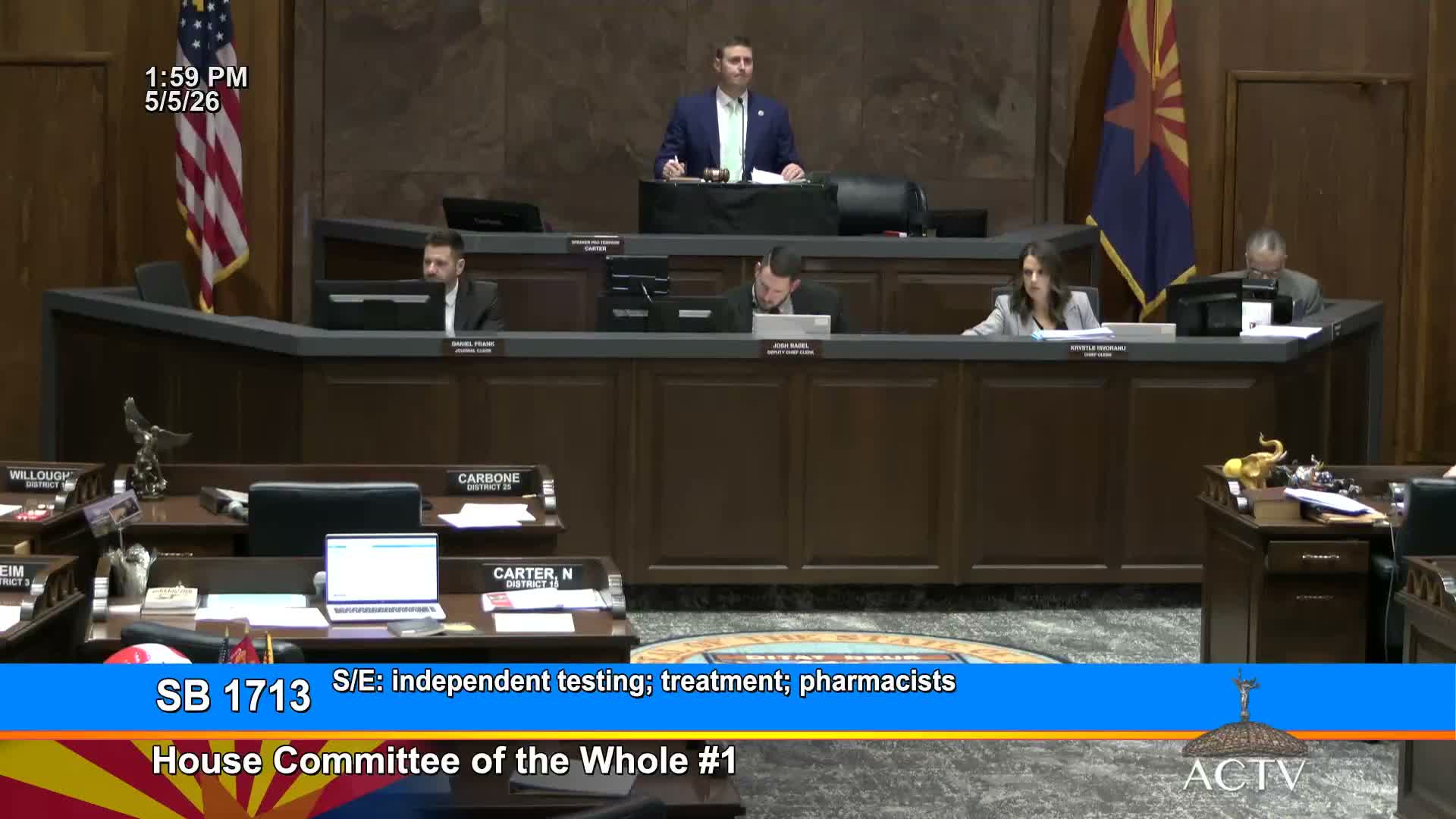
The House Committee of the Whole on May 5 recommended that Senate Bill 1713, as amended, "do pass," advancing language that would allow trained pharmacists to provide specified testing and limited treatment services (for example, flu and strep testing and certain point‑of‑care treatments) under statewide protocols and reporting requirements.
Proponents portrayed the bill as an access‑to‑care measure, especially for rural communities with limited primary‑care availability. Representative Bliss said the measure "is about transparency and accountability and Medicaid spending" in committee and argued safeguards in the amendments will ensure communication with primary care providers and enable Arizona to qualify for rural health transformation funding. Representative Blackman, speaking from his experience as a veteran, said the bill "alleviates" access problems in rural areas and urged support.
Opponents cautioned about expanding clinical scope. Representative Liguori noted that "PharmD education is designed to implement a care plan in collaboration with the patient and other health care professionals" and warned the bill should not allow pharmacists to diagnose or prescribe independently. Liguori also expressed concern at provisions that open the services to patients as young as 12, citing potential risks.
The committee adopted committee and floor amendments intended to add guardrails on protocols, privacy, and board appointments to a task force charged with statewide protocol recommendations. Supporters said participation would be voluntary for pharmacists and that protocols would be required to include privacy space and primary‑care coordination.
Why it matters: The bill addresses access to basic testing and rapid treatment in locations where primary care is scarce, and sponsors said it could increase rural health funding. Critics argued the measure treads into diagnostic territory that should remain with credentialed medical providers, especially for minors.
What’s next: SB 1713 was advanced by the committee and placed on the calendar for further consideration; the bill will proceed to subsequent readings where floor debate may revisit scope and safeguards.
Proponents portrayed the bill as an access‑to‑care measure, especially for rural communities with limited primary‑care availability. Representative Bliss said the measure "is about transparency and accountability and Medicaid spending" in committee and argued safeguards in the amendments will ensure communication with primary care providers and enable Arizona to qualify for rural health transformation funding. Representative Blackman, speaking from his experience as a veteran, said the bill "alleviates" access problems in rural areas and urged support.
Opponents cautioned about expanding clinical scope. Representative Liguori noted that "PharmD education is designed to implement a care plan in collaboration with the patient and other health care professionals" and warned the bill should not allow pharmacists to diagnose or prescribe independently. Liguori also expressed concern at provisions that open the services to patients as young as 12, citing potential risks.
The committee adopted committee and floor amendments intended to add guardrails on protocols, privacy, and board appointments to a task force charged with statewide protocol recommendations. Supporters said participation would be voluntary for pharmacists and that protocols would be required to include privacy space and primary‑care coordination.
Why it matters: The bill addresses access to basic testing and rapid treatment in locations where primary care is scarce, and sponsors said it could increase rural health funding. Critics argued the measure treads into diagnostic territory that should remain with credentialed medical providers, especially for minors.
What’s next: SB 1713 was advanced by the committee and placed on the calendar for further consideration; the bill will proceed to subsequent readings where floor debate may revisit scope and safeguards.
Don't Miss a Word: See the Full Meeting!
Go beyond summaries. Unlock every video, transcript, and key insight with a Founder Membership.
✓
Get instant access to full meeting videos
✓
Search and clip any phrase from complete transcripts
✓
Receive AI-powered summaries & custom alerts
✓
Enjoy lifetime, unrestricted access to government data
30-day money-back guarantee
