Votes at a glance: key third‑reading outcomes in the Arizona House on May 5, 2026
May 05, 2026 | 2026 Legislature Arizona, Arizona
This article was created by AI summarizing key points discussed. AI makes mistakes, so for full details and context, please refer to the video of the full meeting. Please report any errors so we can fix them. Report an error »
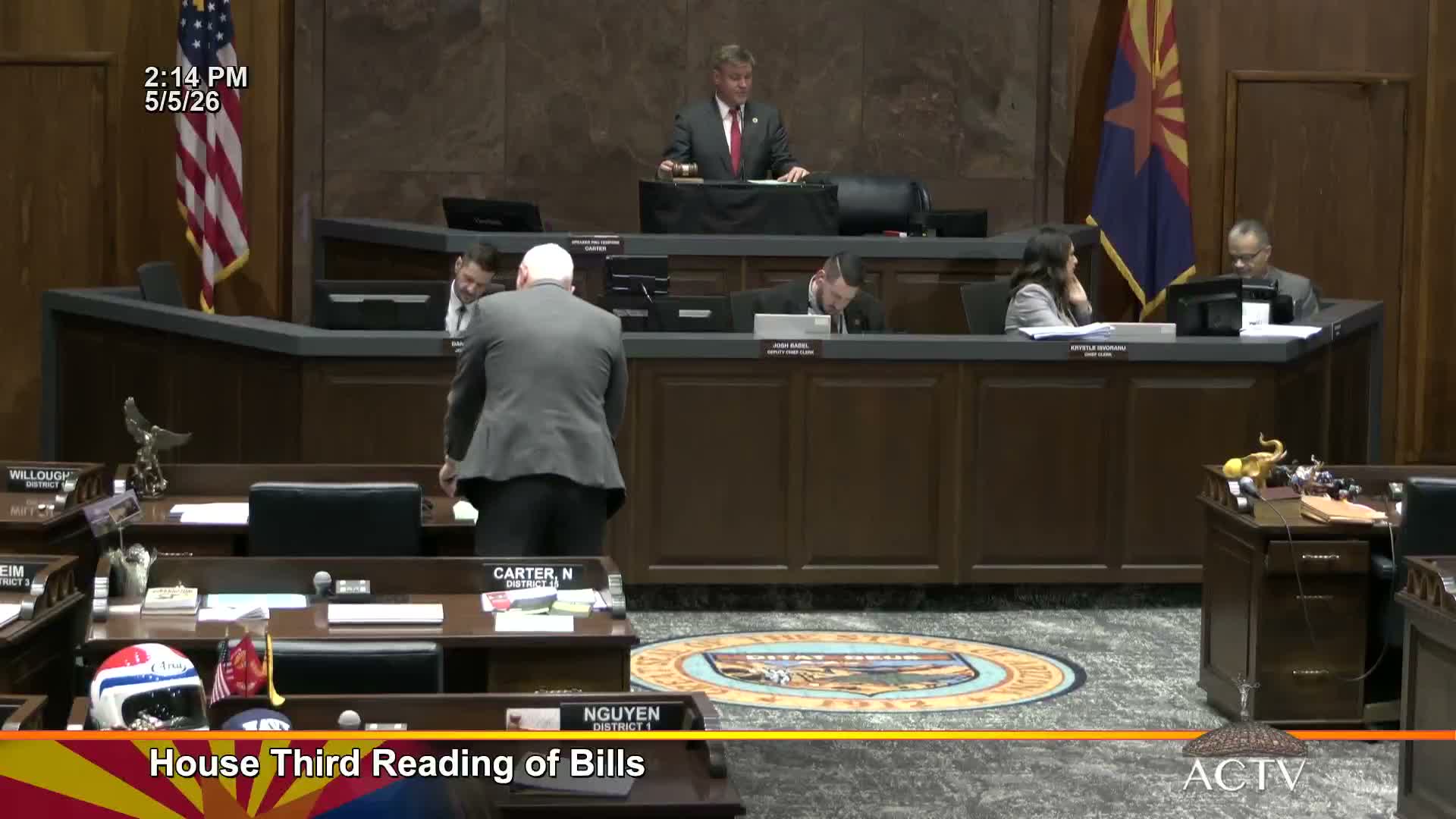
The Arizona House took a number of third‑reading votes on May 5. Below are key outcomes recorded on the floor.
Passed (selected):
- SB 1037 (elections conduct): passed, recorded 31 ayes, 20 nays, 9 not voting. The clerk was instructed to convey the bill to the Senate.
- SB 1171 (health care institutions): passed, recorded 31 ayes, 20 nays, 9 not voting.
- SB 1242 (mental health services — audiovisual hearings): passed, recorded 44 ayes, 7 nays, 9 not voting.
- SB 1270 (public safety personnel defined contribution retirement plan): passed, recorded 51 ayes, 0 nays, 9 not voting.
- SB 1419 (solar energy devices): passed, recorded 51 ayes, 0 nays, 9 not voting.
- SB 1429 (initiative and referendum changes): passed, recorded 31 ayes, 20 nays, 9 not voting.
- SB 1445 (water quality): passed, recorded 31 ayes, 20 nays, 9 not voting.
- SB 1452 (attorney general task force funding clarification): passed, recorded 32 ayes, 19 nays, 9 not voting.
- SB 1478 (liquor code revision): passed, recorded 51 ayes, 0 nays, 9 not voting.
- SB 1566 (residential construction provisions): passed, recorded 31 ayes, 21 nays, 8 not voting.
Failed (selected):
- SB 1006 (campaign contributions/disclosure thresholds): failed, recorded 29 ayes, 22 nays, 9 not voting; Representative Marquez explained his 'no' vote, saying increasing disclosure thresholds reduces transparency.
- SB 1099 (civil actions provision): failed decisively, recorded 8 ayes, 43 nays, 9 not voting after extended floor debate about free‑speech protections and liability.
- SB 1635 (escape and related offenses): failed, recorded 29 ayes, 23 nays, 8 not voting.
Why it matters: The mix of passes and failures affects a broad set of policy areas—elections administration, mental health court procedures, public safety retirement rules, renewable energy incentives, initiative and referendum changes, and construction regulation. Several votes were lopsided while others reflected closer party‑line divisions.
What’s next: Bills that passed will be conveyed to the Senate or the governor as appropriate; bills that failed may be subject to motions to reconsider or amendment in subsequent sessions.
Passed (selected):
- SB 1037 (elections conduct): passed, recorded 31 ayes, 20 nays, 9 not voting. The clerk was instructed to convey the bill to the Senate.
- SB 1171 (health care institutions): passed, recorded 31 ayes, 20 nays, 9 not voting.
- SB 1242 (mental health services — audiovisual hearings): passed, recorded 44 ayes, 7 nays, 9 not voting.
- SB 1270 (public safety personnel defined contribution retirement plan): passed, recorded 51 ayes, 0 nays, 9 not voting.
- SB 1419 (solar energy devices): passed, recorded 51 ayes, 0 nays, 9 not voting.
- SB 1429 (initiative and referendum changes): passed, recorded 31 ayes, 20 nays, 9 not voting.
- SB 1445 (water quality): passed, recorded 31 ayes, 20 nays, 9 not voting.
- SB 1452 (attorney general task force funding clarification): passed, recorded 32 ayes, 19 nays, 9 not voting.
- SB 1478 (liquor code revision): passed, recorded 51 ayes, 0 nays, 9 not voting.
- SB 1566 (residential construction provisions): passed, recorded 31 ayes, 21 nays, 8 not voting.
Failed (selected):
- SB 1006 (campaign contributions/disclosure thresholds): failed, recorded 29 ayes, 22 nays, 9 not voting; Representative Marquez explained his 'no' vote, saying increasing disclosure thresholds reduces transparency.
- SB 1099 (civil actions provision): failed decisively, recorded 8 ayes, 43 nays, 9 not voting after extended floor debate about free‑speech protections and liability.
- SB 1635 (escape and related offenses): failed, recorded 29 ayes, 23 nays, 8 not voting.
Why it matters: The mix of passes and failures affects a broad set of policy areas—elections administration, mental health court procedures, public safety retirement rules, renewable energy incentives, initiative and referendum changes, and construction regulation. Several votes were lopsided while others reflected closer party‑line divisions.
What’s next: Bills that passed will be conveyed to the Senate or the governor as appropriate; bills that failed may be subject to motions to reconsider or amendment in subsequent sessions.
Don't Miss a Word: See the Full Meeting!
Go beyond summaries. Unlock every video, transcript, and key insight with a Founder Membership.
✓
Get instant access to full meeting videos
✓
Search and clip any phrase from complete transcripts
✓
Receive AI-powered summaries & custom alerts
✓
Enjoy lifetime, unrestricted access to government data
30-day money-back guarantee
