Votes at a glance: House passes broad package of bills in concurrence with the Senate
May 05, 2026 | 2026 Legislature CT, Connecticut
This article was created by AI summarizing key points discussed. AI makes mistakes, so for full details and context, please refer to the video of the full meeting. Please report any errors so we can fix them. Report an error »
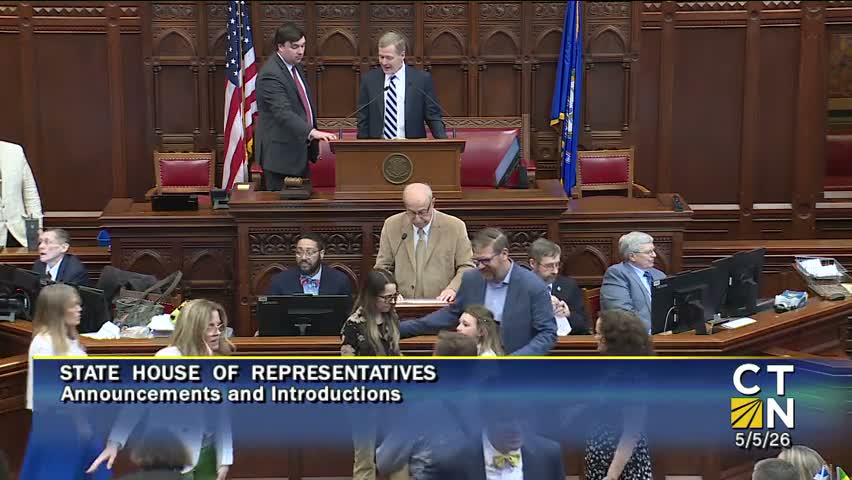
The Connecticut House on May 5 moved a large slate of bills and resolutions, frequently voting in concurrence with the Senate. Highlights from the session:
- Hate-crime consolidation (substitute for Senate Bill 90): Proponents said the measure consolidates more than 20 separate sections into a single dedicated hate-crime chapter, unifies protected classes and directs the Sentencing Commission to review penalty appropriateness. The House voted in concurrence with the Senate; the clerk announced the tally and the bill passed in concurrence.
- Judiciary/probate/claims items (multiple bills and SJ resolutions): The House passed the judicial-branch operations bill (administrative thresholds, juvenile-court procedures, arbitration revisions), a probate court modernization bill (expanded regional jurisdiction, conservator transparency and mentorship), and multiple resolutions remanding or vacating claims-commissioner decisions to allow hearings on the merits. Votes were recorded by roll for each item.
- Trade-name modernization (SB 294): A statewide trade-name registry and authentication updates were approved to streamline lookups and reduce fraud.
- State Marshals Commission reform (SB 291): The chamber approved reforms clarifying commission procedures, transparency, training and reporting requirements.
- Consumer protection and sports-wagering amendments (SB 296): The House approved expanded restitution authority for the Department of Consumer Protection and new offenses tied to manipulating sporting events for wagers.
- Aging omnibus (SBs 123/124/284/287/288): A multi-bill package addressing assisted-living fee hearings, municipal agent conflict checks, elevator-generator thresholds, PPE for home health workers and a limited nursing-home moratorium exception passed with unanimous committee support.
- Elevator/public-safety (SB 369), banking omnibus (SB 218), agriculture/dairy package (SB 148), and many other bills passed in concurrence; the transcript records roll-call tallies for the items called that day.
The House also adopted several resolutions (including a recognition of retiring Senate President Martin Looney) and handled administrative amendments and study directives across agencies. Multiple bills included follow-up reporting requirements to the appropriate committees.
Next steps: Most of the bills passed in concurrence with the Senate and will be enrolled and sent for any required executive action or formal enrollment processes; some measures carry reporting duties or further rulemaking to be executed by departments cited in the statutes.
- Hate-crime consolidation (substitute for Senate Bill 90): Proponents said the measure consolidates more than 20 separate sections into a single dedicated hate-crime chapter, unifies protected classes and directs the Sentencing Commission to review penalty appropriateness. The House voted in concurrence with the Senate; the clerk announced the tally and the bill passed in concurrence.
- Judiciary/probate/claims items (multiple bills and SJ resolutions): The House passed the judicial-branch operations bill (administrative thresholds, juvenile-court procedures, arbitration revisions), a probate court modernization bill (expanded regional jurisdiction, conservator transparency and mentorship), and multiple resolutions remanding or vacating claims-commissioner decisions to allow hearings on the merits. Votes were recorded by roll for each item.
- Trade-name modernization (SB 294): A statewide trade-name registry and authentication updates were approved to streamline lookups and reduce fraud.
- State Marshals Commission reform (SB 291): The chamber approved reforms clarifying commission procedures, transparency, training and reporting requirements.
- Consumer protection and sports-wagering amendments (SB 296): The House approved expanded restitution authority for the Department of Consumer Protection and new offenses tied to manipulating sporting events for wagers.
- Aging omnibus (SBs 123/124/284/287/288): A multi-bill package addressing assisted-living fee hearings, municipal agent conflict checks, elevator-generator thresholds, PPE for home health workers and a limited nursing-home moratorium exception passed with unanimous committee support.
- Elevator/public-safety (SB 369), banking omnibus (SB 218), agriculture/dairy package (SB 148), and many other bills passed in concurrence; the transcript records roll-call tallies for the items called that day.
The House also adopted several resolutions (including a recognition of retiring Senate President Martin Looney) and handled administrative amendments and study directives across agencies. Multiple bills included follow-up reporting requirements to the appropriate committees.
Next steps: Most of the bills passed in concurrence with the Senate and will be enrolled and sent for any required executive action or formal enrollment processes; some measures carry reporting duties or further rulemaking to be executed by departments cited in the statutes.
View the Full Meeting & All Its Details
This article offers just a summary. Unlock complete video, transcripts, and insights as a Founder Member.
✓
Watch full, unedited meeting videos
✓
Search every word spoken in unlimited transcripts
✓
AI summaries & real-time alerts (all government levels)
✓
Permanent access to expanding government content
30-day money-back guarantee
