Nyssa SD 26 committee approves $61.46 million 2026–27 budget as virtual enrollment grows
May 06, 2026 | Nyssa SD 26, School Districts, Oregon
This article was created by AI summarizing key points discussed. AI makes mistakes, so for full details and context, please refer to the video of the full meeting. Please report any errors so we can fix them. Report an error »
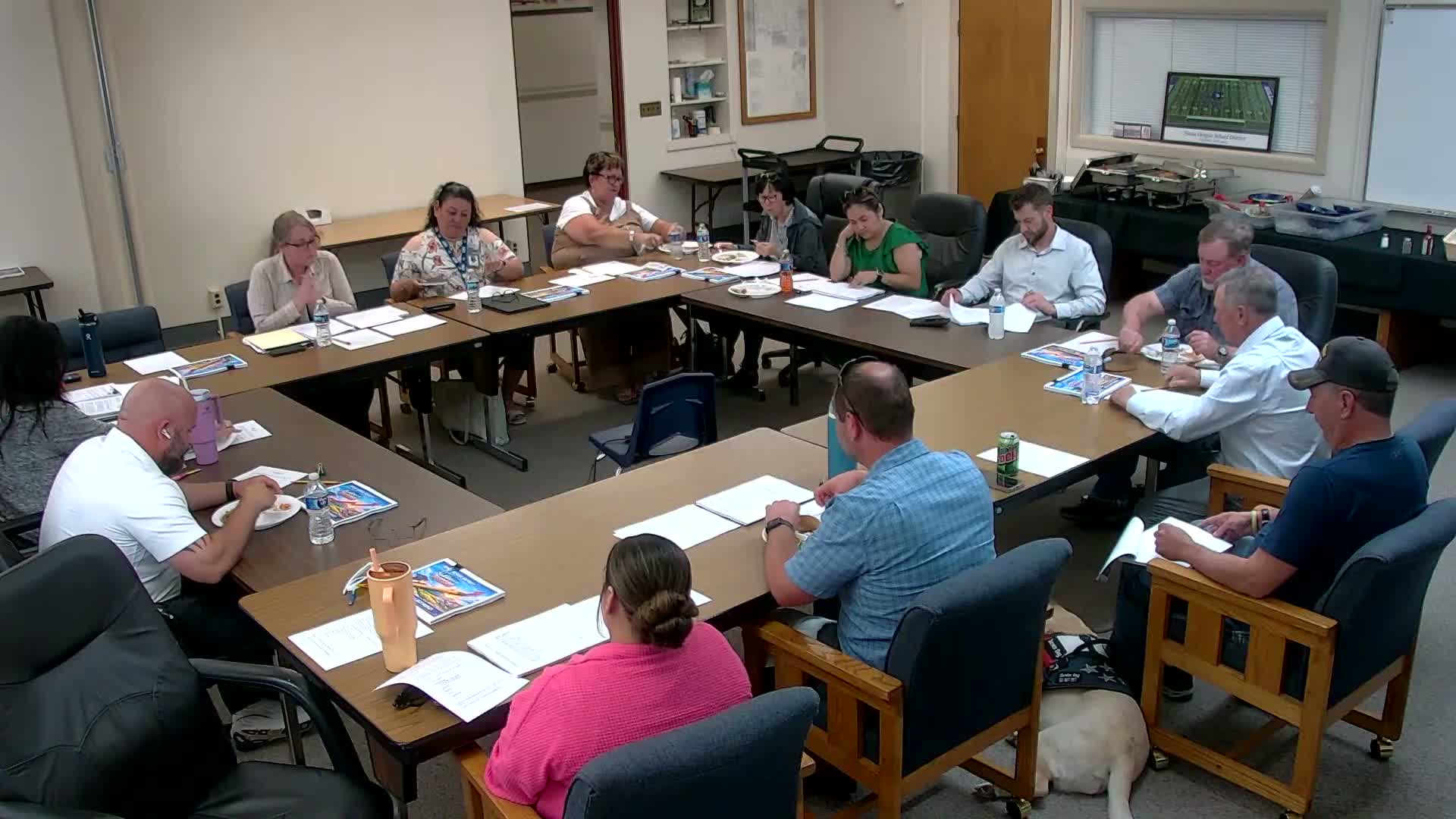
The Nyssa School District 26 budget committee approved a proposed 2026–27 budget of $61,459,954, including a $45,112,072 general fund, by voice vote after presentations from district staff and brief procedural business.
Ryan presented the budget message and top-line figures, telling committee members, "So proposed 26 20 seven's total budget is $61,459,954 including a general fund budget of $45,112,072." He said the budget relies on biennial state school fund allocations and several federal and state grants, including a $2,100,000 Student Investment Account allocation tied to enrollment, and noted an expected decline in some federal funding due to fewer migrant-designated students.
Crystal provided a school finance overview and walked the committee through how the district builds budgets across government fund accounting categories. She noted Nyssa is one of a few Oregon districts showing enrollment growth, driven chiefly by its virtual program: "We are 1 of very few districts in Oregon who have increased enrollment," she said, and that growth prompted multiple staff additions for the virtual school, including a special education teacher, an autism consultant, an occupational therapist, a 0.5 FTE counselor and a registrar.
The budget funds several facility and equipment projects, including a new roof and HVAC for the cafeteria, upgrades to high school science rooms and development of a facility complex to support CTE and virtual program space. Crystal said the district will transfer roughly $4.3 million to Fund 440 (capital improvements) and noted a planned transfer of $125,000 to the bus replacement fund and $50,000 annually to a turf replacement fund with a 10-year goal of $500,000.
Officials flagged cost pressures: food services are projected to remain over budget because of rising food and labor costs, and personnel expenditures have grown under a new classified salary schedule. To address the food-service deficit, the general fund will transfer approximately $155,000 to the food-service fund; Crystal said that transfer is intended to bring the food-service fund to break-even next year.
Crystal also said the district received a competitive summer-learning grant of $300,000 per year for three years to expand PreK–12 summer programming; initial registrations were about 160. She added that the Student Investment Account (SIA) allocation rose to $2.1 million because of virtual enrollment and that she will present a supplemental budget request in June to reflect that additional revenue.
The committee asked for clarifications on several specifics, including interest remaining on a voter-approved bond (Crystal cited a remaining balance of $5,046,200 and said she would report the interest rate later), details on how transfers to Fund 440 are set (guided by a five-year facility improvement plan), and how SIA funds are being used (Crystal said the funds cover counselors, a nurse, an SRO and reductions in class sizes).
After the presentations and questions, Chair entertained a motion to approve the proposed budget; the motion was seconded and approved by voice vote. No roll-call tally was recorded in the transcript.
Votes at a glance
- Agenda adoption: motion moved and approved by voice vote.
- Officer elections: nominations held; vice chair elected (Dave nominated and confirmed by voice vote in the procedural segment).
- Budget approval: motion to approve the 2026–27 budget moved, seconded and approved by voice vote.
What’s next
Crystal said she will present any supplemental budget adjustments to the board in June to reflect the $2.1 million SIA allocation and will follow up with requested details on bond interest and other numeric clarifications.
Ryan presented the budget message and top-line figures, telling committee members, "So proposed 26 20 seven's total budget is $61,459,954 including a general fund budget of $45,112,072." He said the budget relies on biennial state school fund allocations and several federal and state grants, including a $2,100,000 Student Investment Account allocation tied to enrollment, and noted an expected decline in some federal funding due to fewer migrant-designated students.
Crystal provided a school finance overview and walked the committee through how the district builds budgets across government fund accounting categories. She noted Nyssa is one of a few Oregon districts showing enrollment growth, driven chiefly by its virtual program: "We are 1 of very few districts in Oregon who have increased enrollment," she said, and that growth prompted multiple staff additions for the virtual school, including a special education teacher, an autism consultant, an occupational therapist, a 0.5 FTE counselor and a registrar.
The budget funds several facility and equipment projects, including a new roof and HVAC for the cafeteria, upgrades to high school science rooms and development of a facility complex to support CTE and virtual program space. Crystal said the district will transfer roughly $4.3 million to Fund 440 (capital improvements) and noted a planned transfer of $125,000 to the bus replacement fund and $50,000 annually to a turf replacement fund with a 10-year goal of $500,000.
Officials flagged cost pressures: food services are projected to remain over budget because of rising food and labor costs, and personnel expenditures have grown under a new classified salary schedule. To address the food-service deficit, the general fund will transfer approximately $155,000 to the food-service fund; Crystal said that transfer is intended to bring the food-service fund to break-even next year.
Crystal also said the district received a competitive summer-learning grant of $300,000 per year for three years to expand PreK–12 summer programming; initial registrations were about 160. She added that the Student Investment Account (SIA) allocation rose to $2.1 million because of virtual enrollment and that she will present a supplemental budget request in June to reflect that additional revenue.
The committee asked for clarifications on several specifics, including interest remaining on a voter-approved bond (Crystal cited a remaining balance of $5,046,200 and said she would report the interest rate later), details on how transfers to Fund 440 are set (guided by a five-year facility improvement plan), and how SIA funds are being used (Crystal said the funds cover counselors, a nurse, an SRO and reductions in class sizes).
After the presentations and questions, Chair entertained a motion to approve the proposed budget; the motion was seconded and approved by voice vote. No roll-call tally was recorded in the transcript.
Votes at a glance
- Agenda adoption: motion moved and approved by voice vote.
- Officer elections: nominations held; vice chair elected (Dave nominated and confirmed by voice vote in the procedural segment).
- Budget approval: motion to approve the 2026–27 budget moved, seconded and approved by voice vote.
What’s next
Crystal said she will present any supplemental budget adjustments to the board in June to reflect the $2.1 million SIA allocation and will follow up with requested details on bond interest and other numeric clarifications.
Don't Miss a Word: See the Full Meeting!
Go beyond summaries. Unlock every video, transcript, and key insight with a Founder Membership.
✓
Get instant access to full meeting videos
✓
Search and clip any phrase from complete transcripts
✓
Receive AI-powered summaries & custom alerts
✓
Enjoy lifetime, unrestricted access to government data
30-day money-back guarantee
