Assembly panel advances bill asking Instructional Quality Commission to add digital-safety guidance for students
May 06, 2026 | California State Assembly, House, Legislative, California
This article was created by AI summarizing key points discussed. AI makes mistakes, so for full details and context, please refer to the video of the full meeting. Please report any errors so we can fix them. Report an error »
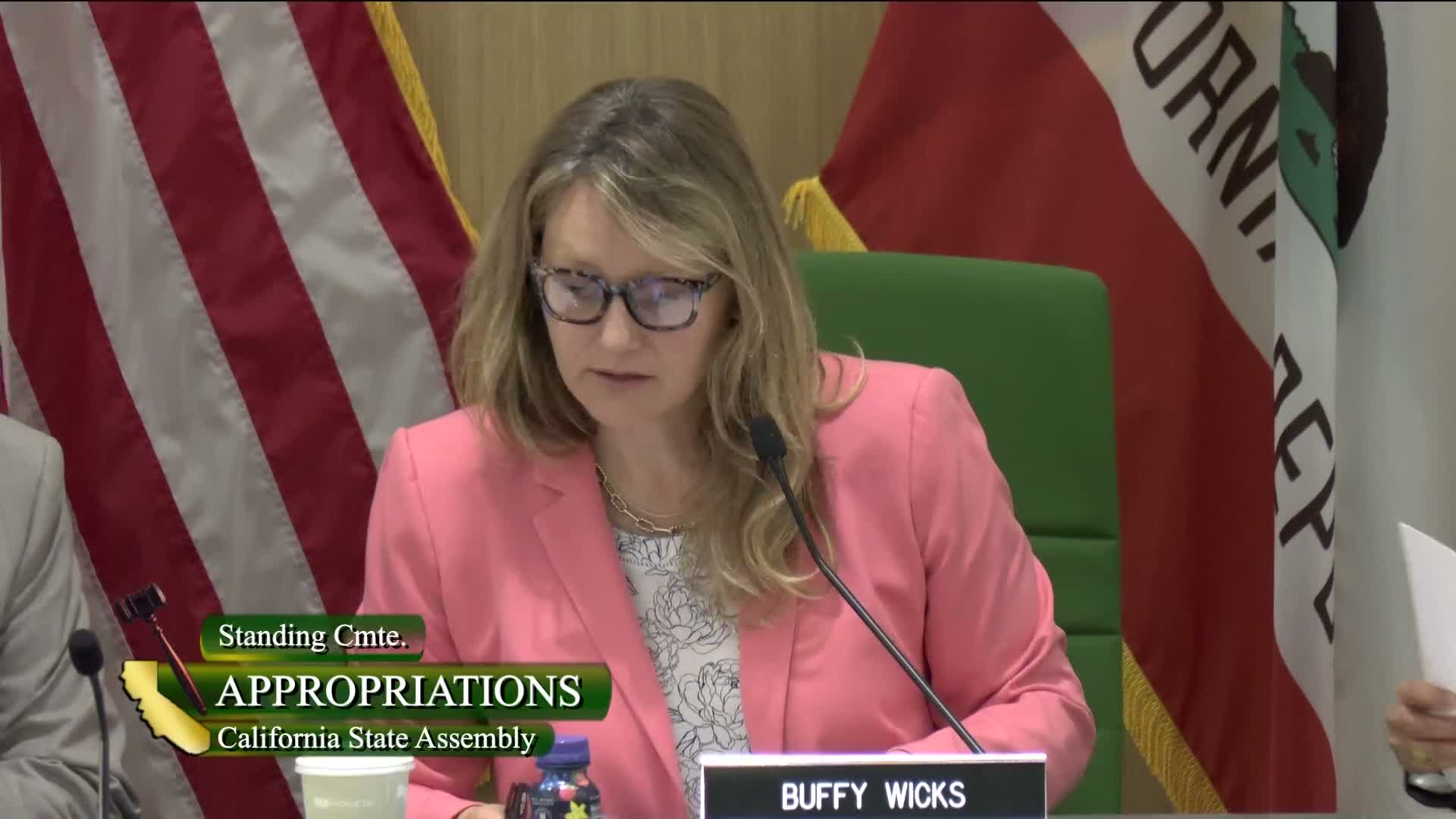
Assemblymember Rodriguez asked the California Instructional Quality Commission to consider modernizing health education guidance to help students recognize and respond to online harms, advancing AB 1792 out of the Assembly Appropriations Committee on May 6.
"AI is everywhere," the bill
uthor said, arguing that millions of AI-generated sexualized images, including thousands that appear to involve minors, are circulating online and that schools should be equipped to teach students how to protect themselves. The author emphasized the bill "is about preparation, not fear" and described it as a "smart, low-cost investment" that "does not create a new program or mandate." (Assemblymember Rodriguez)
Jose Torres, representing TechNet, testified as a sponsor and urged the committee to ensure the state's health education framework keeps pace with how students interact in digital spaces. "This bill reflects that reality by ensuring that California's health education framework remains current and responsive," Torres said, recommending age-appropriate guidance on digital safety, digital violence and digital consent.
The bill would direct the Instructional Quality Commission to consider incorporating such guidance into future updates of the health education framework; proponents said the approach is flexible, allowing educators and experts to adapt materials as technology evolves. Both the author and sponsor characterized the change as guidance rather than a new mandate or program, saying any costs would be "minor and absorbable."
Committee members moved and seconded the measure; Chair announced the motion to "do pass." The chair noted the item was advanced "out" with Republicans not voting, per the committee roll call procedure.
What happens next: AB 1792 will be returned to committee for final steps as it moves through the Legislature; the Instructional Quality Commission would be the entity instructed to consider the guidance if the bill becomes law.
"AI is everywhere," the bill
uthor said, arguing that millions of AI-generated sexualized images, including thousands that appear to involve minors, are circulating online and that schools should be equipped to teach students how to protect themselves. The author emphasized the bill "is about preparation, not fear" and described it as a "smart, low-cost investment" that "does not create a new program or mandate." (Assemblymember Rodriguez)
Jose Torres, representing TechNet, testified as a sponsor and urged the committee to ensure the state's health education framework keeps pace with how students interact in digital spaces. "This bill reflects that reality by ensuring that California's health education framework remains current and responsive," Torres said, recommending age-appropriate guidance on digital safety, digital violence and digital consent.
The bill would direct the Instructional Quality Commission to consider incorporating such guidance into future updates of the health education framework; proponents said the approach is flexible, allowing educators and experts to adapt materials as technology evolves. Both the author and sponsor characterized the change as guidance rather than a new mandate or program, saying any costs would be "minor and absorbable."
Committee members moved and seconded the measure; Chair announced the motion to "do pass." The chair noted the item was advanced "out" with Republicans not voting, per the committee roll call procedure.
What happens next: AB 1792 will be returned to committee for final steps as it moves through the Legislature; the Instructional Quality Commission would be the entity instructed to consider the guidance if the bill becomes law.
View the Full Meeting & All Its Details
This article offers just a summary. Unlock complete video, transcripts, and insights as a Founder Member.
✓
Watch full, unedited meeting videos
✓
Search every word spoken in unlimited transcripts
✓
AI summaries & real-time alerts (all government levels)
✓
Permanent access to expanding government content
30-day money-back guarantee
