Board hears annual student progression plan updates, including grading and redo policy changes
May 05, 2026 | Lake, School Districts, Florida
This article was created by AI summarizing key points discussed. AI makes mistakes, so for full details and context, please refer to the video of the full meeting. Please report any errors so we can fix them. Report an error »
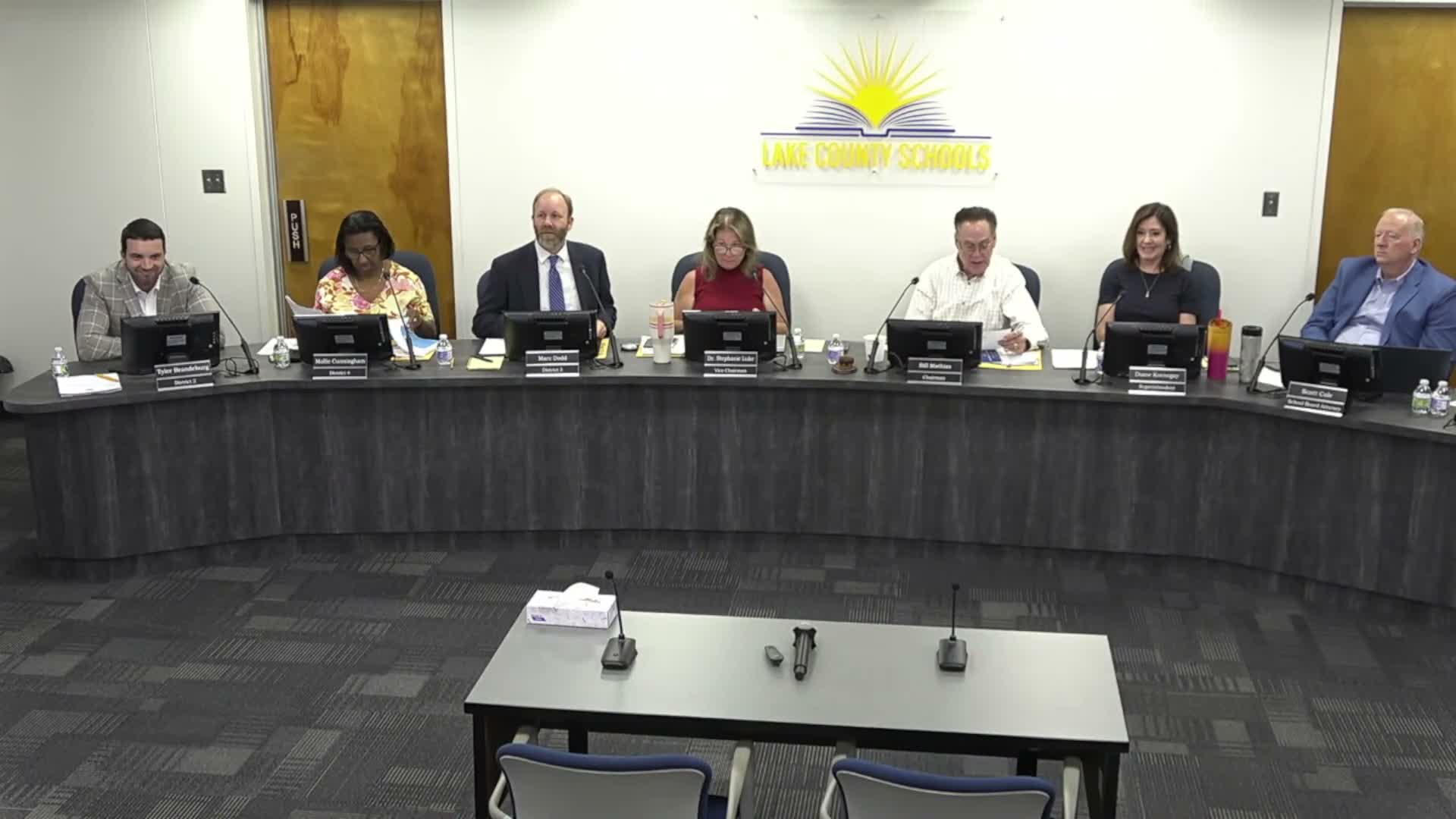
District staff presented the annual Student Progression Plan update for 2026-27 on May 4, noting the revisions are largely statute-driven and procedural.
Francis, who presented the item, said several edits are non-substantive (correcting assessment names such as WIDA and STAR/FAST PM) and that the state's removal of the former "certificate of completion" requires the district to create a "high school credit completion award" for students who meet credit/GPA but not assessment requirements. "So really, all that changed is the name," Francis said, describing the adjustment as administrative.
More substantive discussion focused on grading and redo policies. The draft adds a uniform parameter for daily late work (maximum 10% grade reduction per day not turned in) and expands long-term assignment language to align parameters across grade levels. The plan requires departments and administrative teams to define local "best practices" for redo opportunities, with the intention that administrators will sign off and help standardize expectations.
Board members raised concerns about potential inconsistency across schools and grade bands, the feasibility of providing relearning opportunities near grading deadlines, and supports for chronic non-completers. Staff said grade-change procedures and intervention processes (attendance teams, counselor supports, NTSS processes) will be used alongside the redo approach.
Why it matters: Changes affect grading, promotion and remediation practices across the district. The plan aims to balance a consistent district framework with school- and department-level flexibility.
Next steps: The Student Progression Plan will return to the board for formal adoption after additional refinement and as state guidance (including any new statute changes) is finalized.
Francis, who presented the item, said several edits are non-substantive (correcting assessment names such as WIDA and STAR/FAST PM) and that the state's removal of the former "certificate of completion" requires the district to create a "high school credit completion award" for students who meet credit/GPA but not assessment requirements. "So really, all that changed is the name," Francis said, describing the adjustment as administrative.
More substantive discussion focused on grading and redo policies. The draft adds a uniform parameter for daily late work (maximum 10% grade reduction per day not turned in) and expands long-term assignment language to align parameters across grade levels. The plan requires departments and administrative teams to define local "best practices" for redo opportunities, with the intention that administrators will sign off and help standardize expectations.
Board members raised concerns about potential inconsistency across schools and grade bands, the feasibility of providing relearning opportunities near grading deadlines, and supports for chronic non-completers. Staff said grade-change procedures and intervention processes (attendance teams, counselor supports, NTSS processes) will be used alongside the redo approach.
Why it matters: Changes affect grading, promotion and remediation practices across the district. The plan aims to balance a consistent district framework with school- and department-level flexibility.
Next steps: The Student Progression Plan will return to the board for formal adoption after additional refinement and as state guidance (including any new statute changes) is finalized.
Don't Miss a Word: See the Full Meeting!
Go beyond summaries. Unlock every video, transcript, and key insight with a Founder Membership.
✓
Get instant access to full meeting videos
✓
Search and clip any phrase from complete transcripts
✓
Receive AI-powered summaries & custom alerts
✓
Enjoy lifetime, unrestricted access to government data
30-day money-back guarantee
