Finance committee adopts amendment tightening ban on synthetic kratom; bill passes 13–11
May 06, 2026 | Finance, House of Representatives, Committees , Legislative, New Hampshire
This article was created by AI summarizing key points discussed. AI makes mistakes, so for full details and context, please refer to the video of the full meeting. Please report any errors so we can fix them. Report an error »
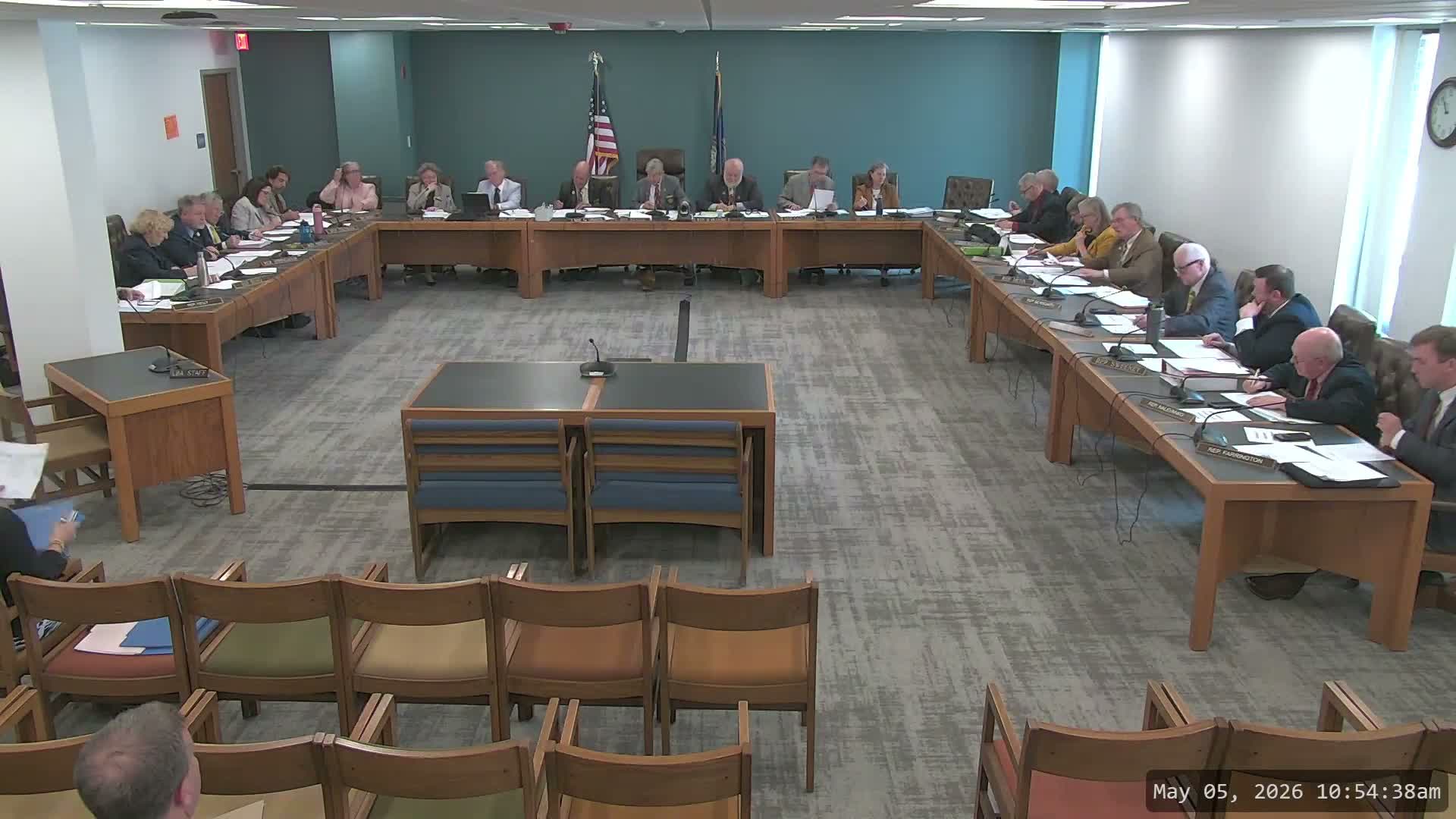
The Finance Committee voted to advance Senate Bill 557, a measure to prohibit synthetic and semi‑synthetic kratom products, after adopting amendment 17‑98 that defines regulated products as those containing more than 1,000 parts per million of the active chemical. Representative Campbells introduced the bill and Representative Sweeney moved the amendment and the motion that the bill ‘ought to pass’ as amended; the committee adopted the amendment and then approved the bill by recorded voice vote, 13–11.
Supporters, including Representative Stringham, told the committee the state has seen “devastating” harms tied to concentrated kratom derivative products and said removing those products from shelves would quickly reduce availability. “They’re having opioid‑like reactions to them, addictions, and … increasing expenditures above $50 a day sometimes to continue the use of this,” Stringham said.
Representative Sweeney, who sponsored the amendment, said the change focuses enforcement on concentrated products and avoids banning traditional kratom leaf. “This brings it back to what the senate passed version is,” Sweeney said, arguing manufacturers already label parts‑per‑million so retailers can comply.
Opponents warned the amendment’s 1,000 ppm cutoff could capture natural‑leaf products and impede medical research. “Natural leaf kratom can be up to 0.2% of the active ingredient, and that’s 2,000 parts per million,” Representative Run said. He said shifting enforcement and costs to local police and state law‑enforcement could be burdensome and that federal scheduling could make the state action redundant.
Representative Mackin Phillips recounted local incidents and said the measure protects hospitals and communities from the downstream costs of widely available concentrated products.
The committee record shows the amendment passed 13–11 and the final committee vote on the amended bill was 13–11. A minority report (opting for OTP — ought to pass without amendment) was announced by Representative Run; he said he would file that report by the end of the day.
The committee’s adoption of amendment 17‑98 moves the bill into the legislative process with the narrower, parts‑per‑million definition in place. The bill now proceeds to the next steps in the House calendar.
Supporters, including Representative Stringham, told the committee the state has seen “devastating” harms tied to concentrated kratom derivative products and said removing those products from shelves would quickly reduce availability. “They’re having opioid‑like reactions to them, addictions, and … increasing expenditures above $50 a day sometimes to continue the use of this,” Stringham said.
Representative Sweeney, who sponsored the amendment, said the change focuses enforcement on concentrated products and avoids banning traditional kratom leaf. “This brings it back to what the senate passed version is,” Sweeney said, arguing manufacturers already label parts‑per‑million so retailers can comply.
Opponents warned the amendment’s 1,000 ppm cutoff could capture natural‑leaf products and impede medical research. “Natural leaf kratom can be up to 0.2% of the active ingredient, and that’s 2,000 parts per million,” Representative Run said. He said shifting enforcement and costs to local police and state law‑enforcement could be burdensome and that federal scheduling could make the state action redundant.
Representative Mackin Phillips recounted local incidents and said the measure protects hospitals and communities from the downstream costs of widely available concentrated products.
The committee record shows the amendment passed 13–11 and the final committee vote on the amended bill was 13–11. A minority report (opting for OTP — ought to pass without amendment) was announced by Representative Run; he said he would file that report by the end of the day.
The committee’s adoption of amendment 17‑98 moves the bill into the legislative process with the narrower, parts‑per‑million definition in place. The bill now proceeds to the next steps in the House calendar.
Don't Miss a Word: See the Full Meeting!
Go beyond summaries. Unlock every video, transcript, and key insight with a Founder Membership.
✓
Get instant access to full meeting videos
✓
Search and clip any phrase from complete transcripts
✓
Receive AI-powered summaries & custom alerts
✓
Enjoy lifetime, unrestricted access to government data
30-day money-back guarantee
