Board upholds Planning Commission approval of River’s Edge but continues final action to June 2 for groundwater addendum and offset details
May 05, 2026 | San Luis Obispo County, California
This article was created by AI summarizing key points discussed. AI makes mistakes, so for full details and context, please refer to the video of the full meeting. Please report any errors so we can fix them. Report an error »
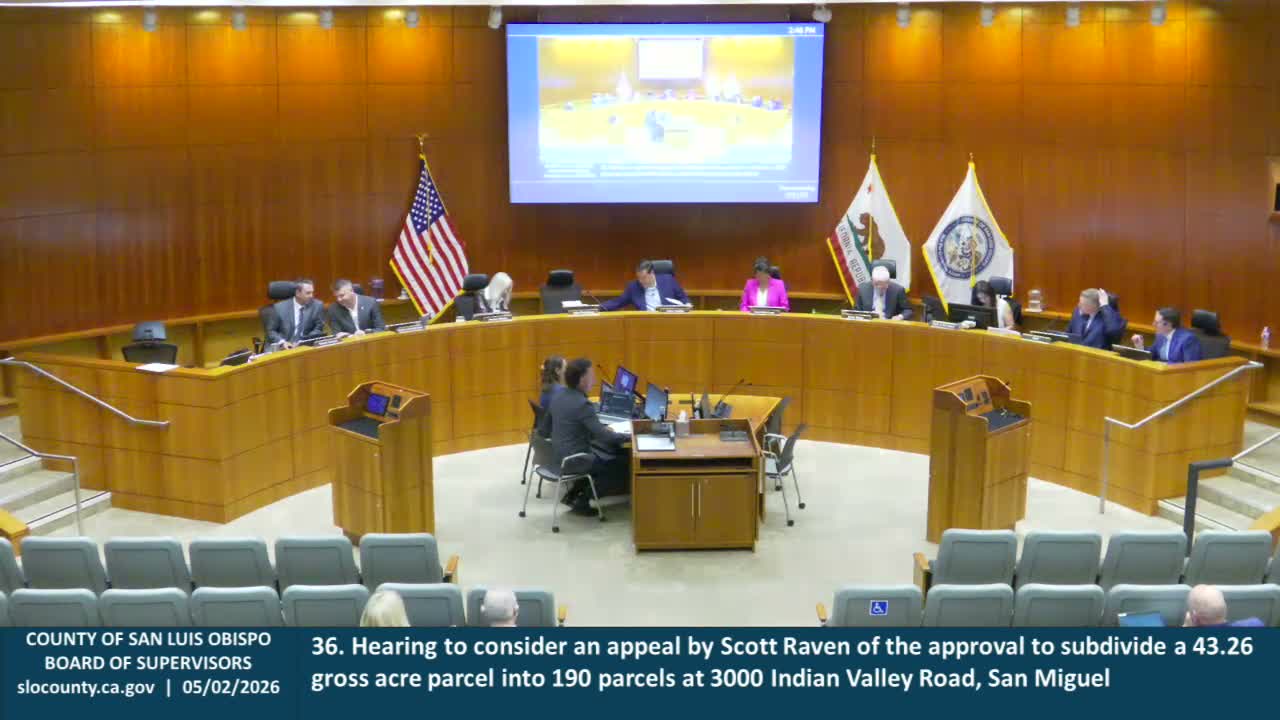
The Board of Supervisors on May 5 moved to uphold the Planning Commission’s approval of the River’s Edge vesting tentative tract map and conditional use permit, but continued the matter to June 2 to allow targeted follow‑up work on groundwater offsets and CEQA documentation.
Planning staff summarized the River’s Edge project — a phased mixed‑use development in San Miguel on roughly 43 acres including 181 residential lots, open space, and a commercial parcel — and recommended that the board find the project consistent with the 2016 San Miguel Community Plan EIR. Appellants argued the project exceeds assumptions in the certified EIR (unit counts and potential ADUs), raised groundwater overdraft concerns and questioned whether the EIR’s mitigation framework (including earlier offset programming) remains adequate.
Groundwater staff: Blaine Realy, the county’s groundwater sustainability director, told the board that groundwater conditions vary across the Paso Robles basin and that monitoring wells near San Miguel have been relatively stable over the past 15 years. He noted the basin is designated in critical overdraft overall, but that the localized hydrology and conservation actions (including fallowing programs) factor into project‑level analysis. Planning recommended an addendum to the certified EIR if the board approves the project to document why existing environmental conclusions remain valid.
Board action and conditions: After extended deliberation, the board voted to deny the appeal and continue final action to June 2 with three staff directives: (1) prepare an addendum to the 2016 EIR that documents how the project fits within the previously analyzed development horizon and why no new significant impacts exist; (2) work with the applicant and the Groundwater Sustainability office to memorialize a voluntary fallowing/offset commitment (the applicant signaled willingness to pursue fallowing on roughly 65 acres to generate offsets) and draft a condition of approval that ensures the offset is enforceable (e.g., restrictive covenant); and (3) add the standard indemnity condition for appeals. The continuation gives staff and the applicant a limited period to agree on language and technical review so the board can take final action with clarified findings.
Why it matters: The decision finds substantial evidence in the certified community plan EIR and staff analyses supporting the project’s environmental determinations but recognizes that the regional groundwater context and recent data merit a brief, documented addendum and a clear, enforceable offset arrangement to reduce litigation risk and ensure consistency with county groundwater management goals.
Next steps: Planning will prepare the CEQA addendum language and a proposed condition implementing the applicant’s voluntary offset/fallowing arrangement for review by the Groundwater Sustainability office and counsel, then return the item to the Board on June 2, 2026, for final action.
Planning staff summarized the River’s Edge project — a phased mixed‑use development in San Miguel on roughly 43 acres including 181 residential lots, open space, and a commercial parcel — and recommended that the board find the project consistent with the 2016 San Miguel Community Plan EIR. Appellants argued the project exceeds assumptions in the certified EIR (unit counts and potential ADUs), raised groundwater overdraft concerns and questioned whether the EIR’s mitigation framework (including earlier offset programming) remains adequate.
Groundwater staff: Blaine Realy, the county’s groundwater sustainability director, told the board that groundwater conditions vary across the Paso Robles basin and that monitoring wells near San Miguel have been relatively stable over the past 15 years. He noted the basin is designated in critical overdraft overall, but that the localized hydrology and conservation actions (including fallowing programs) factor into project‑level analysis. Planning recommended an addendum to the certified EIR if the board approves the project to document why existing environmental conclusions remain valid.
Board action and conditions: After extended deliberation, the board voted to deny the appeal and continue final action to June 2 with three staff directives: (1) prepare an addendum to the 2016 EIR that documents how the project fits within the previously analyzed development horizon and why no new significant impacts exist; (2) work with the applicant and the Groundwater Sustainability office to memorialize a voluntary fallowing/offset commitment (the applicant signaled willingness to pursue fallowing on roughly 65 acres to generate offsets) and draft a condition of approval that ensures the offset is enforceable (e.g., restrictive covenant); and (3) add the standard indemnity condition for appeals. The continuation gives staff and the applicant a limited period to agree on language and technical review so the board can take final action with clarified findings.
Why it matters: The decision finds substantial evidence in the certified community plan EIR and staff analyses supporting the project’s environmental determinations but recognizes that the regional groundwater context and recent data merit a brief, documented addendum and a clear, enforceable offset arrangement to reduce litigation risk and ensure consistency with county groundwater management goals.
Next steps: Planning will prepare the CEQA addendum language and a proposed condition implementing the applicant’s voluntary offset/fallowing arrangement for review by the Groundwater Sustainability office and counsel, then return the item to the Board on June 2, 2026, for final action.
View the Full Meeting & All Its Details
This article offers just a summary. Unlock complete video, transcripts, and insights as a Founder Member.
✓
Watch full, unedited meeting videos
✓
Search every word spoken in unlimited transcripts
✓
AI summaries & real-time alerts (all government levels)
✓
Permanent access to expanding government content
30-day money-back guarantee
